
Oak gall wasp
Neuroterus noxiosus
Description
How to identify
The oak gall wasp (Neuroterus noxiosus) belongs to the order Hymenoptera and the family Cynipidae. These are tiny insects, typically measuring 2–3 mm in length, often difficult to spot in their adult stage.
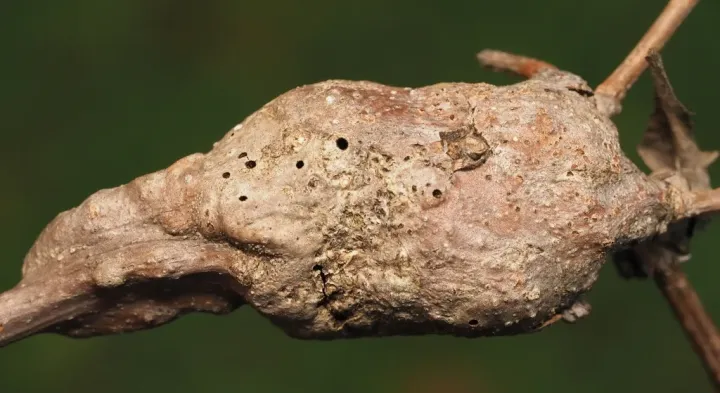
Identification is primarily achieved by recognizing the galls they induce on oak tissues. The adult wasps are rarely observed directly due to their small size and elusive behavior.
The species exhibits a complex life cycle often involving heterogony, where alternating generations produce distinct types of galls on different parts of the host plant.
The larvae are legless, grub-like, and cream-colored, living entirely within the plant tissue, which provides them with both nutrition and structural protection.
Distinguishing species within the Cynipidae family often requires examining the morphology of the galls, as each wasp species creates a specific, unique shape on the host plant.
What it damages
The primary hosts are various species of oak (Quercus). The wasp targets young leaves, buds, and shoots, inducing pathological growth through chemical signaling.
Galls serve as a significant sink for plant nutrients, diverting resources away from the tree's growth and energy storage, which causes physiological stress.
Heavy infestations reduce the surface area available for photosynthesis, leading to stunted growth, leaf chlorosis, and premature leaf drop during the growing season.
While mature, healthy trees can often tolerate moderate galling, young or stressed trees may suffer branch dieback or reduced vitality after several years of infestation.
The cumulative effect of gall wasp activity makes oak trees more susceptible to secondary stressors, including wood-boring insects and fungal pathogens.
When it appears
Adult wasps typically emerge in early spring, synchronized with the budburst of the oak tree to ensure the larvae have access to young, succulent tissues.
The development of the summer generation takes place throughout the growing season, with galls expanding as the larvae feed and mature.
By autumn, the life cycle stages are completed. Depending on the species and climate, the wasps either emerge to hibernate or remain as pupae within the galls over the winter.
Environmental factors, particularly temperature, play a crucial role in the timing of emergence and the overall success rate of each generation.
Monitoring the phenology of the host plant is essential for predicting periods of peak activity and potential damage from the wasp population.
Signs of infestation
The most evident signs of an infestation are the galls found on leaves or buds, which appear as rounded, spiny, or scale-like growths of varying sizes.
Gall coloration ranges from light green to red or brown, often reflecting the developmental stage of the insect residing inside the protective chamber.
Dissecting a gall reveals the larval chamber, where the wasp larva feeds on the nutrient-rich tissue that the tree was manipulated to produce.
Distorted, curled, or stunted leaf development is a common indicator that a large number of galls are interfering with normal vascular function.
In cases of severe infestation, premature leaf fall in mid-summer is a clear sign that the tree's photosynthetic capacity has been significantly impaired.
Control measures
Sanitation is key; collecting and destroying fallen leaves and heavily infested twigs helps reduce the overwintering population of the wasps.
Biological control methods involve encouraging natural predators and parasitoid wasps that keep gall wasp populations in check within forest ecosystems.
In managed landscapes or nurseries, systemic insecticides may be applied if infestation levels threaten the health or aesthetic value of the trees.
Enhancing tree vigor through proper irrigation, mulching, and fertilization improves the tree's natural ability to withstand and recover from pest attacks.
- Regular inspections of young oaks during spring bud development.
- Manual removal and disposal of galls from susceptible specimen trees.
- Maintaining high biodiversity to support natural enemies of gall wasps.
Taxonomy
- Latin name
- Neuroterus noxiosus
- Order
- Hymenoptera
- Family
- Cynipidae
- EPPO code
- NEUTNO
Discussion
No discussions yet — be the first.