
Oak gall wasp
Neuroterus batatus
Description
How to identify
Neuroterus batatus is a small insect belonging to the Cynipidae family, commonly known as gall wasps, within the order Hymenoptera.
The species exhibits a complex life cycle characterized by an alternation of generations, involving both asexual and sexual phases.
Adult females of the asexual generation are typically wingless or have reduced wings, while the sexual generation consists of fully winged individuals capable of flight.
These wasps are minute, usually measuring only a few millimeters in length, making them extremely difficult to spot in the forest canopy.
The taxonomic classification relies on the structure of the galls they induce, as the adult morphological characteristics are quite conserved among related species.
What it damages
The primary hosts for Neuroterus batatus are oak trees, where the wasps induce the formation of abnormal tissue growth known as galls.
The galls act as a metabolic sink, diverting vital nutrients from the host plant to support the development of the wasp larvae living inside.
Young trees in nurseries are particularly vulnerable to infestations, which can cause stem deformation and stunted growth.
While mature, healthy trees can usually withstand light infestations, significant gall formation can cause branch dieback and weaken the tree's overall vigor.
Repeated stress from heavy infestations makes the oak trees more susceptible to secondary pests and various pathogenic fungi.
When it appears
The life cycle begins in early spring when the adult wasps emerge and deposit eggs into the developing tissues of the oak buds or young shoots.
As the season progresses through the summer, the larvae feed inside the protective environment of the growing galls.
Pupation typically occurs inside the galls later in the summer or autumn, depending on the specific environmental conditions of the region.
The wasps remain within the galls throughout the winter months, providing protection against harsh environmental factors.
Successful synchronization of the emergence of adults with the availability of tender oak tissues is crucial for the continuation of the species' population.
Signs of infestation
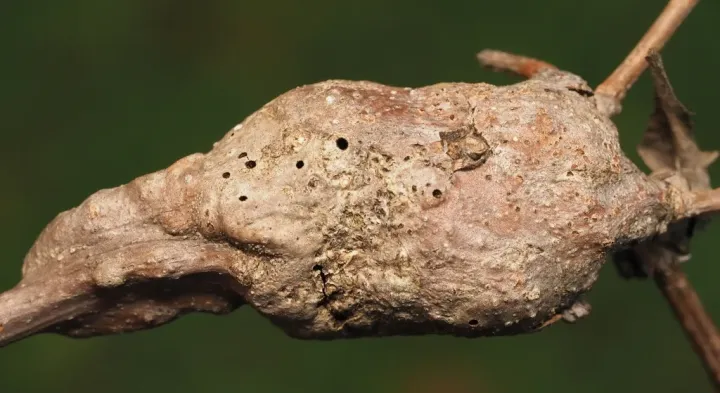
The most distinctive sign of Neuroterus batatus is the presence of woody, potato-shaped galls on the branches of oak trees.
- Galls often appear as irregular, swollen growths that may be green initially, turning woody or brown over time.
- Internally, the galls are structured with multiple larval chambers that protect the developing insects.
- Branches may show signs of localized thickening or bending where the galls have formed.
- Exits holes on the surface of the gall indicate that the adult wasp has successfully emerged.
- Premature leaf senescence on specific branches can sometimes be linked to the presence of large gall clusters.
Control measures
Physical removal and destruction of infested branches during the dormant winter season is the most effective management strategy.
Proper sanitation involving the burning of collected galls prevents the next generation of wasps from emerging and re-infesting the trees.
Promoting a healthy ecosystem that supports natural predators, such as parasitoid wasps, can significantly reduce the overall pest population.
Cultural practices such as adequate irrigation and fertilization help maintain tree vigor, allowing the oaks to better resist the impact of gall formation.
In high-value ornamental or nursery settings, systemic insecticides may be used during the adult flight period, though this is rarely necessary in forest stands.
Taxonomy
- Latin name
- Neuroterus batatus
- Order
- Hymenoptera
- Family
- Cynipidae
- EPPO code
- NEUTBA
Discussion
No discussions yet — be the first.