
Meadow spittlebug (or common froghopper)
Neophilaenus lineatus
Description
How to identify
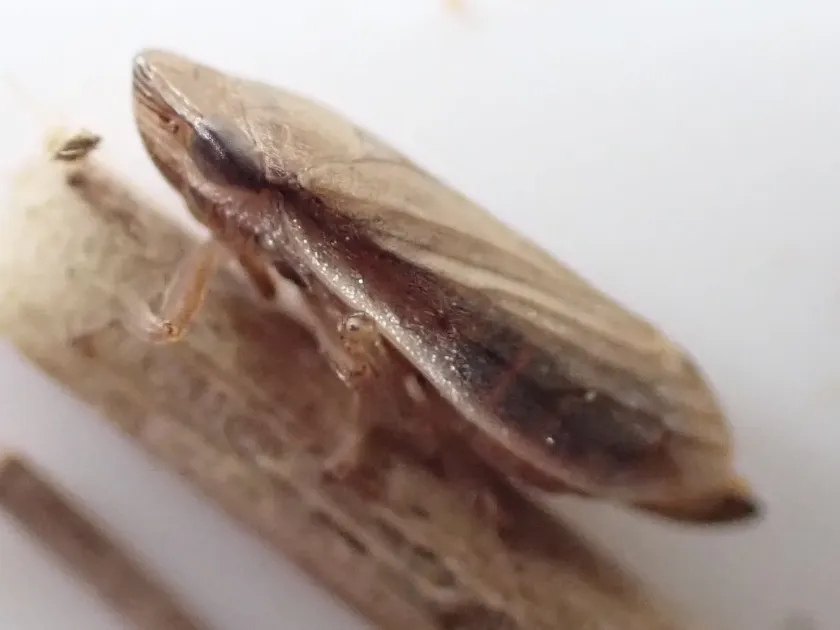
Neophilaenus lineatus is a species of insect belonging to the family Aphrophoridae (order Hemiptera). Commonly known as the striped spittlebug, it is characterized by an elongated body, measuring approximately 5–7 mm, typically with a yellowish-brown coloration and distinct longitudinal stripes on the wings.
The larval stage is highly recognizable due to the production of a white, frothy secretion, often referred to as "cuckoo spit." This foam serves as a vital microhabitat, protecting the nymph from dehydration and potential predators while it feeds.
The life cycle includes the egg, five nymphal instars, and the adult stage (imago). The species overwinters exclusively as eggs, which are deposited by females into the plant tissue or sheath of host plants.
Adults are proficient jumpers and highly mobile, allowing them to disperse quickly across fields. They are generally most active during warm, sunny periods and prefer environments with dense vegetation and sufficient humidity.
Identification is straightforward during late spring: the presence of frothy masses on the stems or leaves of grasses is a definitive sign of their activity.
What it damages
The primary hosts of Neophilaenus lineatus are members of the Poaceae (grass) family. In agricultural landscapes, it frequently infests crops such as wheat, barley, rye, oats, and various forage grasses.
Both nymphs and adults feed by inserting their stylets into the plant's vascular tissue to extract phloem sap. This feeding process depletes the plant's energy reserves and disrupts its overall physiological health.
Beyond direct sap depletion, this insect acts as a vector for various phytoplasmas and viruses. These pathogens can cause severe stunting, leaf discoloration, and significant yield reduction in infected cereal crops.
Crops in the tillering and jointing stages are particularly susceptible. The damage caused during these critical periods often leads to malformed ears and lower grain quality.
High population densities can cause localized yellowing and wilting of the host plants, which, if left unmanaged, may spread across large portions of a field.
When it appears
Eggs begin to hatch in mid-to-late spring, typically peaking in April or May, depending on regional temperature patterns. This is the period when nymphs establish themselves on the host plants.
The nymphal period lasts for several weeks, during which they remain relatively sedentary, covered by their protective foam. The transition to the adult stage usually occurs by early summer.
Adults are most abundant from June through July. During this time, they migrate between plants and begin the reproductive phase, seeking suitable sites for oviposition.
There is typically one generation per year. As autumn approaches, the adults lay eggs that will remain dormant throughout the winter until the following spring.
Weather conditions significantly influence the population dynamics. Warm, moist springs often result in higher survival rates for emerging nymphs, while prolonged dry spells can limit population expansion.
Signs of infestation
The most distinctive sign of infestation is the appearance of small, frothy blobs of liquid on the foliage and stems of grass plants. These are clear indicators of the nymphs feeding underneath.
Infested foliage often exhibits chlorosis, where leaves turn yellow or develop pale spots due to the removal of nutrients and potential injection of toxic saliva.
In cases of severe infestation, affected plants may show signs of wilting or stunted growth compared to healthy plants in the same area.
The presence of adult spittlebugs is easily detected when walking through a crop; they readily jump away, creating a noticeable disturbance in the field.
Significant infestations can lead to patches of thin or withered crops, which are easily visible during field scouting and indicate a need for pest assessment.
Control measures
Effective management begins with strict field hygiene, including the removal of weeds and grasses along field margins that serve as overwintering sites for eggs.
Adjusting sowing dates can help ensure that young crops pass through their most vulnerable growth stages before the peak emergence of nymphs, thus mitigating potential damage.
Balanced fertilization, particularly with potassium and phosphorus, helps plants withstand sap-sucking damage and recover more efficiently from stress.
If economic thresholds are exceeded, targeted application of appropriate insecticides can effectively control the population, focusing on the early stages of development.
- Monitor fields regularly using sticky traps for adult activity.
- Ensure proper residue management to destroy egg-laying habitats.
- Promote biodiversity to encourage natural predators like spiders and wasps.
- Use selective insecticides to minimize impact on beneficial insects.
Taxonomy
- Latin name
- Neophilaenus lineatus
- Order
- Hemiptera (bugs, aphids, leafhoppers)
- Family
- Aphrophoridae
- EPPO code
- NEOPLI
Discussion
No discussions yet — be the first.