
Meadow spittlebug
Neophilaenus campestris
Description
How to identify
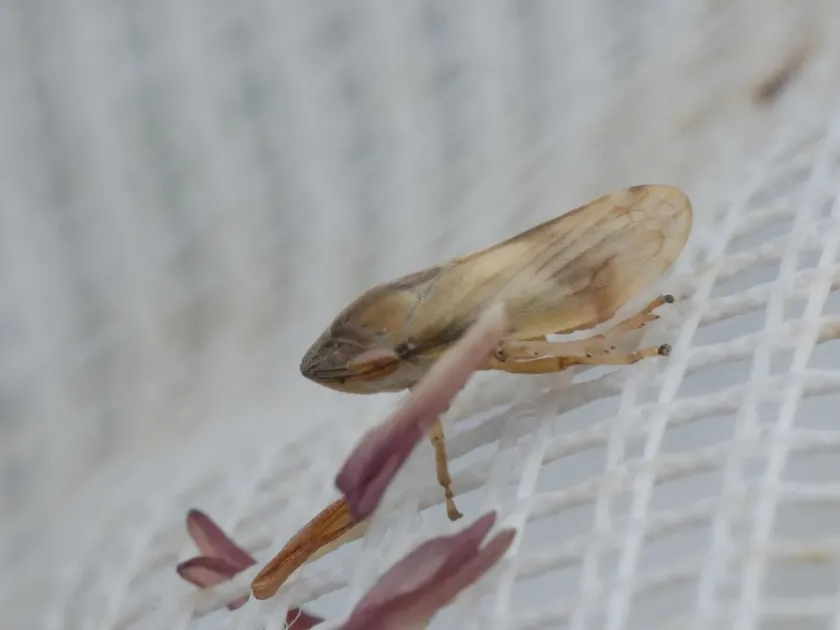
The meadow spittlebug, scientifically known as Neophilaenus campestris, is a member of the Aphrophoridae family within the Hemiptera order. Adult insects typically measure 6-7 mm in length and have an elongated, wedge-shaped body.
Their coloration varies from yellowish-gray to brown, providing excellent camouflage against the stems and leaves of host plants. The head is relatively broad with large, distinct eyes situated on the sides.
The nymphal stage is uniquely adapted, as larvae produce a frothy, saliva-like substance. This protective "spittle" mass shields the delicate nymphs from desiccation, heat, and potential predators.
Development involves one generation per year. The insect overwinters in the egg stage, with females laying eggs on plant stems or within organic debris near the base of the vegetation.
Upon hatching in the spring, the nymphs immediately begin feeding on plant sap, eventually undergoing several molts until they reach the adult stage in early summer.
What it damages
This pest is highly polyphagous, attacking a wide range of crops including cereals, legumes, sugar beets, and various ornamental plants. It infests both grasses and broad-leaved species with equal intensity.
Feeding occurs by piercing the plant tissues and extracting nutrient-rich sap. This constant depletion of sap leads to stunted growth, reduced vigor, and significant yield losses in heavy infestations.
Beyond direct feeding damage, the spittlebug acts as a vector for various phytoplasmas and plant viruses. These pathogens can cause severe systemic diseases, leading to foliage deformation and necrosis.
In cereal crops, infestations often manifest as twisted leaves and malformed heads, which severely compromises the grain filling process and overall harvest quality.
The accumulation of foam on the plant can also create an environment conducive to the development of secondary fungal infections, further damaging the weakened plant tissues.
Signs of infestation
The most diagnostic sign of a meadow spittlebug infestation is the presence of white, foamy masses ("cuckoo spit") clinging to stems, leaf axils, or flower buds of the host plants.
Infested plants frequently exhibit signs of chlorosis, where leaves turn yellow or develop mottled patterns due to the withdrawal of essential fluids by the insects.
Stunted development and curling of the leaves are common indicators that a population of nymphs is actively feeding on the plant's internal sap supply.
Adults are highly mobile and can be detected by their powerful, explosive jumps when the host plant is disturbed, making them clearly visible to field scouts.
Field patches that show signs of premature wilting or uncharacteristic leaf distortion should be inspected closely to confirm the presence of the spittlebug nymphs.
Control measures
Effective management requires a combination of cultural practices and targeted chemical interventions to minimize the impact on crop production.
Cultural control is primary, focusing on the destruction of weeds in field margins and the removal of plant debris that might harbor eggs during the winter months.
Deep plowing in the autumn can bury overwintering eggs deep in the soil, effectively preventing or significantly reducing the spring emergence of the first generation.
- Mowing down field edges and fallow lands to reduce the overall population pressure.
- Applying systematic insecticides if pest populations exceed the defined economic injury level.
- Encouraging natural predators such as ladybirds and lacewings that feed on both nymphs and adults.
Consistent monitoring during the spring and early summer is crucial for timely decision-making and the prevention of widespread crop damage.
Taxonomy
- Latin name
- Neophilaenus campestris
- Order
- Hemiptera (bugs, aphids, leafhoppers)
- Family
- Aphrophoridae
- EPPO code
- NEOPCA
Discussion
No discussions yet — be the first.