
Meadow spittlebug
Neophilaenus
Description
How to identify
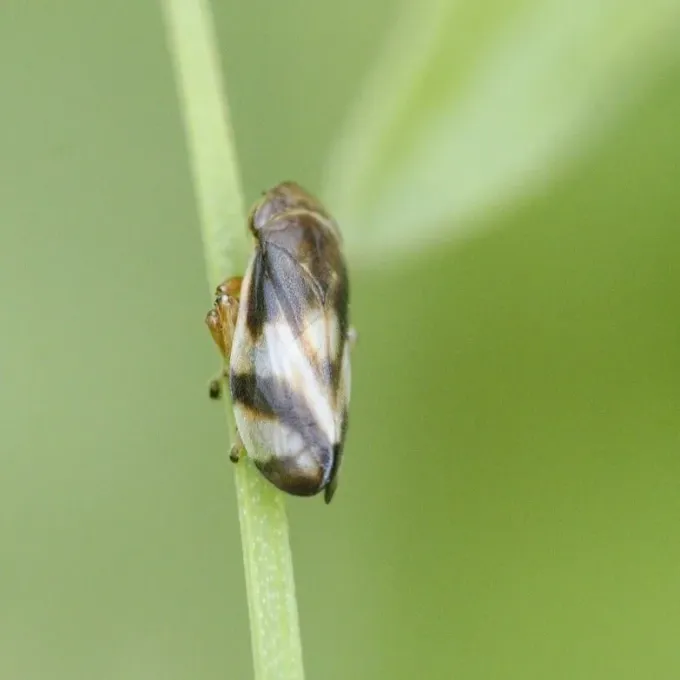
The meadow spittlebug (Neophilaenus lineatus) is a species of insect belonging to the order Hemiptera and the family Aphrophoridae. Adults are typically 5–7 mm long with elongated bodies and distinctive longitudinal stripes on their wings.
Nymphs are primarily identified by the white frothy mass they produce, commonly referred to as "cuckoo spit." This foam provides a humid microenvironment and protects them from predators and desiccation.
The biological cycle follows a hemimetabolous development process. Overwintering occurs in the egg stage, with eggs embedded into the stems or leaves of host plants by the female during the previous autumn.
These insects are highly adaptable to diverse ecological conditions. They are commonly found in grasslands, meadows, and pastures, where they thrive on various species of grasses and herbaceous plants.
Distinguishing Neophilaenus species from other spittlebugs requires an examination of the head structure and the specific patterns of the wings, which are diagnostic features for professional agronomists.
What it damages
This pest affects a wide range of agricultural crops, including cereals (wheat, barley), grasses, alfalfa, and clover. High population densities can cause significant damage to the vegetative mass.
Both nymphs and adults feed by inserting their piercing-sucking mouthparts into the plant tissue to extract sap. This process disrupts the transport of nutrients and water within the plant.
Damage symptoms include stunted growth, leaf deformation, and chlorosis. The removal of large quantities of sap leads to a general weakening of the plant, directly reducing the total yield and quality.
Meadow spittlebugs are also known vectors for various plant pathogens. They can transmit phytoplasmas and viruses, which often prove more damaging to crops than the direct feeding of the insects themselves.
The impact is most severe during the spring and early summer when plants are in their peak growth phase and are highly susceptible to environmental stress caused by insect feeding.
When it appears
The life cycle begins in early spring when eggs hatch into nymphs. This typically aligns with the onset of favorable temperatures and the beginning of active plant growth in April or May.
Nymphs develop over several weeks, going through five distinct instars while remaining within their protective foam nests. This stage of the cycle is the most visible to field observers.
Adults emerge in mid-summer, usually around late June or July. Unlike the sedentary nymphs, adults are highly mobile, capable of jumping and flying over significant distances to find new hosts.
The adult phase lasts until late summer or autumn, during which mating takes place. The females then oviposit on the host plants, ensuring the survival of the population through the winter months.
In temperate climates, the meadow spittlebug typically completes one generation per year, although favorable warm weather can sometimes lead to slight variations in timing.
Signs of infestation
The most reliable diagnostic sign is the presence of white, frothy foam patches located on the stems or at the base of leaves. These foam nests are easily visible during field inspections.
Affected plants often show clear symptoms of distress, such as curled, twisted, or yellowing leaves. In severe infestations, the entire growth tip of the plant may start to wilt and die back.
Close examination of the feeding sites may reveal small necrotic spots or discolored tissue caused by the insect’s salivary secretions, which contain enzymes that degrade plant cells.
Patches of reduced crop density or stunted plants in a field are strong indicators of a localized infestation that requires closer monitoring and potential intervention.
- White frothy "spit" masses on plant parts.
- Curled, deformed, and chlorotic leaves.
- Visible wilting of the growing tips.
- Presence of necrotic feeding spots on stems.
- Overall decline in plant vigor and biomass.
Control measures
Integrated pest management starts with cultural practices: maintaining crop rotation, controlling weeds that serve as alternative hosts, and ensuring optimal soil fertilization to increase plant resistance.
Chemical intervention is necessary if pest populations exceed economic thresholds. Pyrethroids and neonicotinoid insecticides are often effective, but should be applied selectively to protect pollinators.
Timing is critical, as nymphs are often shielded by their foam, making them harder to target with contact insecticides. Applications are best made when pests are most exposed or during early adult emergence.
Biological control agents, such as predatory beetles, wasps, and spiders, play a vital role in maintaining the balance of the ecosystem and suppressing the spittlebug population naturally.
Regular scouting using sweep nets or yellow sticky traps is essential to monitor population dynamics and to decide whether chemical application is economically justified for the season.
Taxonomy
- Latin name
- Neophilaenus
- Order
- Hemiptera (bugs, aphids, leafhoppers)
- Family
- Aphrophoridae
- EPPO code
- NEOPSP
Discussion
No discussions yet — be the first.