
Wood soldier fly
Neoexaireta spinigera
Description
How to identify
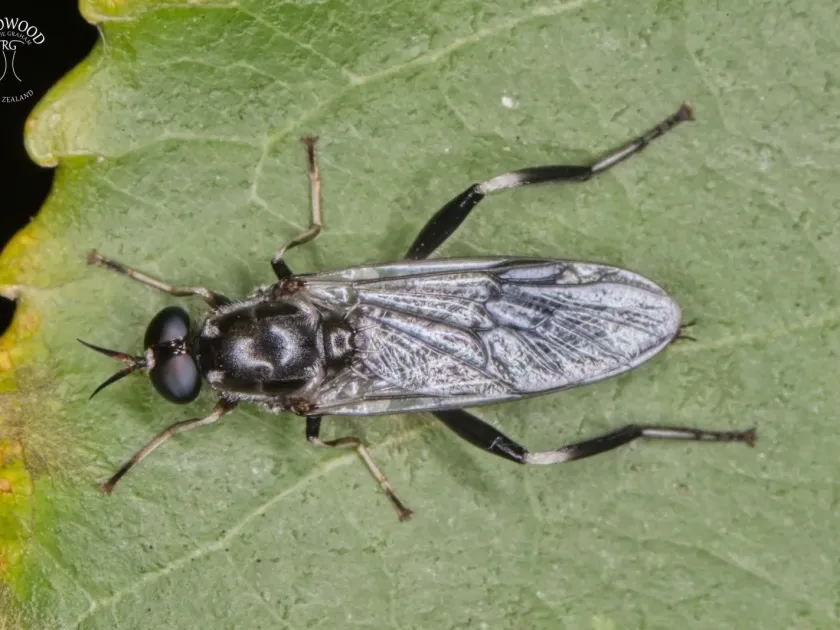
The Wood soldier fly (Neoexaireta spinigera) is a member of the Stratiomyidae family within the order Diptera. It is recognized by its distinct appearance and specific physical traits.
Adult flies typically exhibit a metallic sheen on their bodies, often accented by darker bands. Their wings are transparent, featuring a complex venation pattern that serves as a key identifying characteristic.
The larvae are flattened and encased in a hardened cuticle, which provides protection against environmental stressors. They lack a prominent head, and their mouthparts are specialized for consuming decaying organic matter and woody tissue.
Coloration of the larvae ranges from grey to brownish, serving as effective camouflage when buried in bark or damp wood. Adults generally measure between 8 to 12 millimeters in length.
The biology of this species is intrinsically linked to moist, decaying wood environments, which are essential for larval development and successful completion of their life cycle.
What it damages
The primary damage is caused by the larvae, which burrow into the cambium layer of weakened trees. This activity disrupts the vascular system and restricts the flow of nutrients.
This pest preferentially targets trees that have pre-existing wounds, decay, or damage from fungal pathogens. Healthy, intact bark usually serves as an effective barrier against infestation.
Larval boring activity leads to the degradation of the vascular cambium, which results in stunted growth, branch dieback, and eventually, the death of the affected plant tissue.
Entry points created by the larvae often facilitate secondary infections by bacteria and fungi, which can accelerate the structural failure and decline of the tree.
In nursery settings, heavy infestations can lead to significant economic losses, as young saplings are highly sensitive to the disruption of their primary transport tissues.
When it appears
Adult activity peaks during the late spring and continues throughout the summer months. They thrive in warm, humid conditions that characterize mid-summer weather patterns.
The life cycle involves a period of dormancy, usually occurring in the larval stage during the winter months. Pupation takes place in the spring, leading to the emergence of the next generation of adults.
There can be one or two generations per season depending on the local climate and temperature. Optimal breeding conditions are frequently found in shaded, moist garden areas.
The flight period of the adults aligns with the flowering season of many plants, as they rely on nectar as a primary food source for survival.
As temperatures drop in autumn, larvae prepare for winter by moving deeper into the wood or organic detritus to seek shelter from the cold.
Signs of infestation
The most visible sign of infestation is the presence of small, characteristic holes in the bark of the trunk or larger branches, often accompanied by sap flow.
Fine, brownish frass or "sawdust" accumulating on the surface of the bark is a clear indicator that larvae are actively boring into the tree tissue.
Bark may appear loose, discolored, or blistered in areas where larval feeding has compromised the tissue. Tapping these areas may reveal hollow spaces beneath.
General tree health decline, such as premature yellowing of leaves or the death of apical branches, is a common symptom in more advanced stages of the infestation.
- Circular emergence or boring holes in the bark.
- Exudation of plant sap or gum from the trunk.
- Accumulation of fine frass at the base of the tree.
- Patchy dieback of branches in the upper canopy.
Control measures
Cultural management is the first line of defense. Maintaining tree vigor through proper watering and fertilization ensures that trees can better resist pest incursions.
Sanitation is critical: regularly prune and remove dead or diseased branches, as these are the primary sites where the Wood soldier fly populations flourish.
Manual cleaning of the trunk to remove loose, dead bark can effectively eliminate larval clusters without the need for chemical interventions.
When infestation levels exceed the threshold, systemic insecticides applied during the peak flight season can prevent adult flies from laying eggs on vulnerable bark surfaces.
Encouraging natural predators, including insectivorous birds and predatory wasps, provides sustainable, long-term control of this pest in a balanced garden ecosystem.
Taxonomy
- Latin name
- Neoexaireta spinigera
- Order
- Diptera (flies)
- Family
- Stratiomyidae
- EPPO code
- NEOXSI
Discussion
No discussions yet — be the first.