
Neoexaireta spinigera
Neoexaireta
Description
How to identify
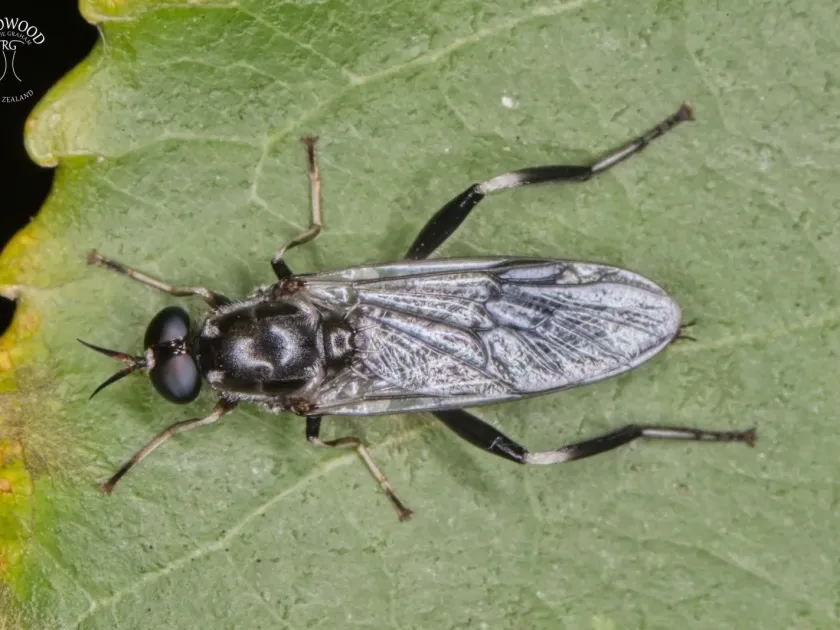
Neoexaireta spinigera is a species of soldier fly belonging to the family Stratiomyidae. The adult fly is typically small with a metallic sheen, making it distinct within the garden ecosystem.
The larvae are flattened and often covered in coarse bristles, an evolutionary adaptation that allows them to navigate within narrow spaces inside stems or leaf debris.
As a member of the Stratiomyidae family, the life cycle involves a complete metamorphosis. The species is highly adapted to environments with high organic content and moisture.
Adults are primarily nectar feeders, often seen visiting flowers, while the larvae are the destructive stage, typically found in decaying or damp plant matter.
Identification often requires careful inspection of the larval head structure and the wing venation patterns of the adults to differentiate them from other harmless soldier flies.
What it damages
This pest primarily impacts ornamental plants and certain vegetables, targeting those that are already stressed, damaged, or undergoing minor decay.
The larvae bore into the stems or roots of susceptible plants, creating cavities that weaken the structural integrity of the crop and hinder nutrient transport.
Bulbous plants and various perennials with succulent stems are the most common hosts for this species in garden settings.
While their natural role is to break down organic matter, in high densities, they can transition from decomposing waste to living plant tissues, causing significant economic damage.
The presence of larvae often facilitates the entry of secondary fungal or bacterial pathogens, which can exacerbate the damage caused by the insect itself.
When it appears
Adult activity peaks during the late spring and summer months, coinciding with warmer temperatures that favor rapid larval development.
The pest is most active during periods of high humidity and rainfall, as larvae require damp environments to survive and feed effectively.
Winter survival occurs primarily in the larval or pupal stage, hidden within the soil or deep within protective plant debris until the next growing season.
Successful emergence of the next generation usually depends on consistent spring warmth, signaling the start of the breeding cycle for adult flies.
Continuous monitoring is advised throughout the growing season, especially after periods of heavy rain when plant tissues may become softened.
Signs of infestation
Sudden wilting of stems or localized yellowing of leaves, despite adequate watering, is often the first indicator of a larval infestation inside the plant.
Internal inspection of a suspected stem will reveal longitudinal tunneling and frass (larval waste), which clearly distinguishes this pest from fungal wilt.
The surface of the plant may show localized soft spots or rot, often accompanied by a distinct smell indicating bacterial decay initiated by larval feeding.
The visual presence of metallic-colored soldier flies hovering around the base of plants serves as a precursor warning that egg-laying may be occurring nearby.
In severe infestations, the collapse of the entire stem or plant is a common outcome, as the internal structures are completely consumed by the larvae.
Control measures
The most effective management strategy is sanitation; removing and disposing of plant debris prevents the buildup of larval populations in the garden.
Improving soil drainage and reducing excessive humidity around the root zones significantly lowers the suitability of the environment for larval development.
Biological control methods, including the use of entomopathogenic fungi or nematodes, are highly effective in managing larval numbers without harming beneficial insects.
Chemical intervention should be reserved for high-population scenarios and should involve targeted applications to the base of the plant to minimize collateral damage.
- Regular cleanup of organic debris.
- Enhancing soil ventilation.
- Installing yellow sticky traps for adults.
- Encouraging natural predators like ground beetles.
Taxonomy
- Latin name
- Neoexaireta
- Order
- Diptera (flies)
- Family
- Stratiomyidae
- EPPO code
- NEOXSP
Discussion
No discussions yet — be the first.