
Lobster cockroach
Nauphoeta cinerea
Description
How to identify
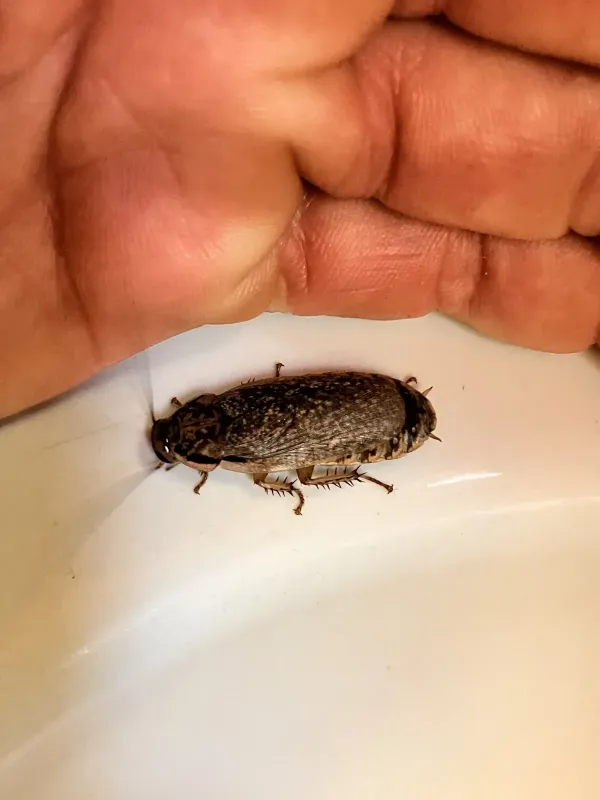
The Lobster cockroach (Nauphoeta cinerea) belongs to the order Blattodea and the family Blaberidae. These insects have flattened bodies, usually 20–30 mm long, with a distinct gray-brown color and a marbled pattern on their wings.
Adults possess fully developed wings but are not strong fliers, preferring to move rapidly across surfaces. This species is known for its high reproductive rate and extreme adaptability to various indoor environments.
Their biology is characterized by ovoviviparity, where the female carries the ootheca internally until the nymphs hatch, which ensures a high survival rate for the offspring compared to other species.
The lifecycle consists of egg, nymph, and adult stages. Under optimal temperatures of +25...+30°C, the development from egg to reproductive maturity takes approximately 3 to 4 months, leading to exponential population growth.
In greenhouses and indoor nurseries, these cockroaches thrive in areas with high humidity, often nesting in soil, organic debris, or beneath greenhouse benches and equipment.
What it damages
As omnivorous pests, Lobster cockroaches damage vegetative plant parts in greenhouses, primarily feeding on leaf epidermis and young shoots, which is especially detrimental to seedlings.
They can burrow into soft plant tissues, causing secondary decay by damaging the plant structure and facilitating the spread of various bacterial and fungal pathogens.
Damage is caused not only by direct feeding but also by the deposition of frass (excrement), which promotes the growth of mold on leaf surfaces, thereby inhibiting essential photosynthesis.
In cases of heavy infestations, these pests can destroy young plantings entirely by feeding on the root collar and stems, leading to the total death of the affected specimens.
Furthermore, in storage areas, they contaminate seed stocks and organic fertilizers, significantly reducing their quality and suitability for future agricultural use.
Signs of infestation
A primary indicator of infestation is the presence of small, dark fecal pellets located on the underside of leaves and within the immediate root zone of the plants.
Mechanical damage to leaf blades, including irregular holes or ragged edges, is a frequent sign, especially since these insects are predominantly active during the night.
The presence of a distinct, musty odor produced by cockroach pheromone glands often indicates a high population density developing within the greenhouse structure.
The discovery of shed exoskeletons (exuviae) in the growing medium or attached to plant stems confirms an active and reproducing colony in the vicinity of the damaged area.
Observing the insects during a nighttime inspection using a flashlight on the soil surface or underneath organic mulch is the most definitive proof of their presence.
Control measures
The primary control strategy involves environmental management: reducing substrate moisture levels and maintaining strict sanitation to remove all organic debris that provides food and harborages.
Utilizing insecticidal baits containing compounds such as fipronil or boric acid is an effective way to suppress cockroach populations without the need for broad-spectrum spraying.
Biological control agents, specifically entomopathogenic nematodes, can be applied to the soil to target and eliminate the nymphs and adults hiding in the growing medium.
Sealing cracks, gaps, and structural openings in the greenhouse is essential to prevent the migration of cockroaches from adjacent storage facilities or external environments.
If an infestation reaches critical levels, targeted chemical applications of contact insecticides may be necessary, provided that harvest intervals and safety regulations are strictly followed.
Taxonomy
- Latin name
- Nauphoeta cinerea
- Family
- Blaberidae
- EPPO code
- NAUHCI
Discussion
No discussions yet — be the first.