
Giant forest cockroach
Blaberus giganteus
Description
How to identify
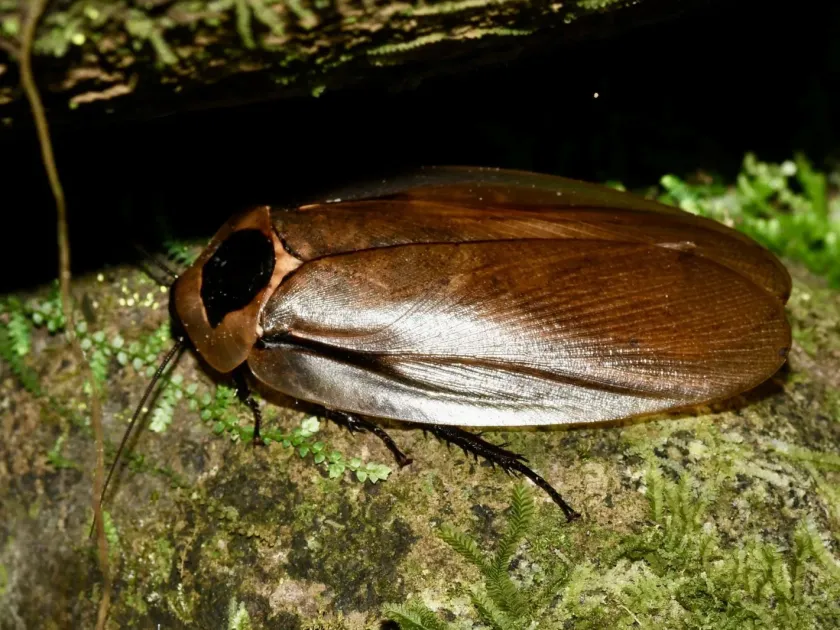
The Giant forest cockroach is one of the largest cockroach species globally, belonging to the Blaberidae family, with adults reaching up to 10 cm in length.
Their bodies are flattened and brown, featuring a distinctive dark pattern on the pronotum which acts as camouflage in forest floor litter.
Nymphs undergo several molting stages, gradually increasing in size while maintaining a similar morphology to the adults, often hiding in dark, humid cracks.
In non-tropical regions, this species is restricted to heated environments like greenhouses, where they find ideal conditions for survival and reproduction.
They are primarily nocturnal insects, making it difficult to detect them during the day as they seek refuge under pots, mulch, or within soil substrates.
What it damages
Although typically detritivores, these cockroaches can turn into crop pests in dense populations, feeding on the stems, roots, and leaves of greenhouse plants.
Young seedlings are particularly vulnerable, as the insects can easily chew through tender stalks, causing rapid wilting and permanent plant death.
Large infestations can damage decorative indoor plants and vegetable crops, leaving behind unsightly holes and gnawed tissues that affect market quality.
Feeding activities often facilitate the entry of secondary pathogens, leading to root rot and other fungal infections that further compromise plant health.
Beyond physical damage, they contaminate growing areas with their excrement, which can harbor harmful bacteria and attract other secondary pests.
Signs of infestation
Small, dark fecal pellets scattered around the base of plants are one of the most reliable indicators of a cockroach presence in a greenhouse environment.
Evidence of nocturnal feeding includes irregular, jagged edges on leaves and excavated holes at the base of stems that were not present previously.
The presence of exuviae (shed exoskeletons) under benches, pots, or trays indicates that a growing population is molting and maturing within the facility.
A distinctive musky odor, caused by the secretions of the cockroaches, becomes noticeable when the insect density reaches a significant level.
Direct sightings during nocturnal inspections using a flashlight reveal the insects, which quickly scurry into shadows when exposed to light.
Control measures
Sanitation is the most effective preventative measure: regularly removing plant debris and organic waste eliminates their food sources and shelter sites.
Applying insecticide baits containing active ingredients like fipronil or hydramethylnon in protected containers is highly effective at reducing populations.
Installing fine-mesh screens on greenhouse vents prevents adult cockroaches from entering from outdoor environments or surrounding vegetation.
Sticky traps placed strategically around the growing area can serve as both a monitoring tool and a way to reduce the number of roaming adults.
Biological control agents, such as entomopathogenic nematodes applied to the substrate, can effectively manage the larval stages living within the soil.
Taxonomy
- Latin name
- Blaberus giganteus
- Family
- Blaberidae
- EPPO code
- BLABGI
Discussion
No discussions yet — be the first.