
Argentine cockroach
Blaptica dubia
Description
How to identify
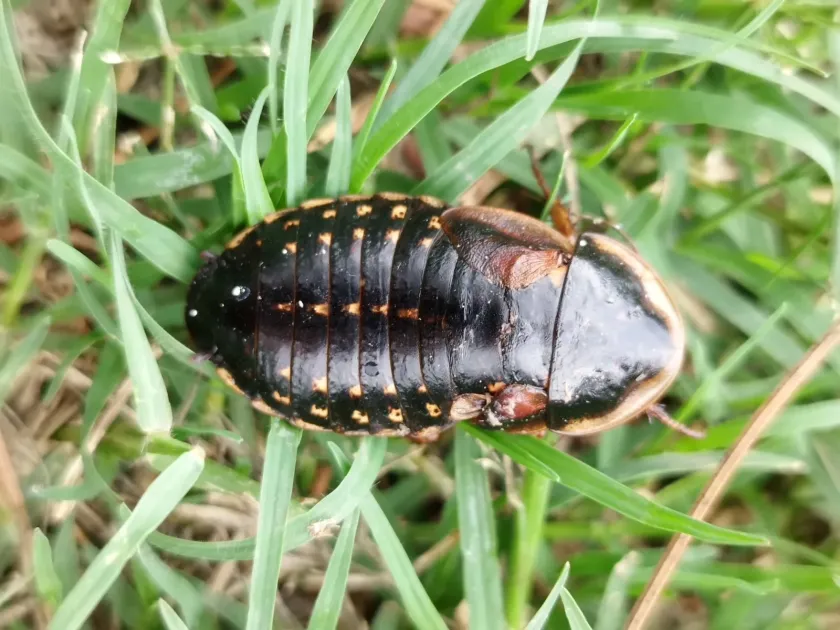
The Argentine cockroach (Blaptica dubia) belongs to the order Blattodea and the family Blaberidae. These are large insects; males reach 4–5 cm in length and possess fully developed wings, while females are wingless with vestigial wing pads.
Adult coloration ranges from dark brown to almost black, often featuring orange or yellowish markings on the pronotum. Nymphs resemble adult females but are significantly smaller in size and lack sexual maturity.
Unlike common domestic cockroaches, this species prefers substrates with high moisture content and moderate temperatures. In their native habitat, they lead a cryptic lifestyle, dwelling in leaf litter and organic debris.
The species is ovoviviparous, meaning they give birth to live young, distinguishing them from many other cockroach species that deposit oothecae externally. The maturation period of offspring is highly dependent on ambient temperature.
This species is not a specialized agricultural pest, but when populations explode in greenhouse conditions, they can cause incidental damage by feeding on organic matter.
What it damages
The Argentine cockroach is not a primary phytophage and rarely inflicts direct damage on healthy crops, as it strongly prefers decaying plant debris over fresh tissue.
The primary concern in protected cultivation is that dense aggregations may occasionally consume young seedlings, seeds, or soft plant tissues when other food sources are scarce.
Beyond feeding, cockroaches can contaminate soil mixtures with their frass (feces), which creates an environment conducive to the growth of pathogenic bacteria and mold fungi.
High population densities in greenhouses disrupt agrotechnical operations, making plant maintenance more difficult and creating unsanitary conditions that indirectly impact overall yields.
In commercial agriculture, this species is generally treated as a nuisance organism that requires intervention only if population thresholds are significantly exceeded.
When it appears
Insect activity is directly linked to temperature: metabolic rates slow significantly below 20°C (68°F), and the developmental cycle stretches considerably in cooler environments.
Peak activity occurs during spring and summer months when greenhouse conditions maintain the stable heat and humidity necessary for rapid reproduction.
Reproduction in greenhouses can occur year-round due to stable climate control, making this insect a potentially persistent factor if conditions remain favorable.
Optimal reproduction conditions include temperatures ranging from 25°C to 30°C (77–86°F) and relative humidity above 60%, both of which are common in commercial nurseries.
Reduction in pest activity can be achieved by artificially creating unfavorable conditions, such as reducing soil moisture or lowering room temperatures.
Signs of infestation
The first indicator of presence is the accumulation of frass, appearing as tiny dark granules on the soil surface or within the lower leaf axils of plants.
A telltale sign of an established colony is the presence of discarded chitinous exoskeletons left behind by nymphs after each molting phase, indicating active growth.
Visual identification of individuals is difficult due to their nocturnal behavior; however, inspecting dark, shaded areas, trays, or mulch layers usually reveals their presence.
Irregular feeding damage on leaves or stems near the soil surface often coincides with other signs of cockroach activity in the immediate vicinity.
A characteristic musky odor within the greenhouse environment can also serve as an indirect indicator of high cockroach density in enclosed areas.
Control measures
The primary control strategy involves strict sanitation: regular removal of plant debris and maintaining clean walkways prevents the formation of an accessible food base.
The application of biological control agents, such as entomopathogenic fungi or nematodes, can be effective in targeting nymphal stages within the substrate.
Mechanical trapping using adhesive strips or baits is a viable method to reduce population numbers without resorting to harsh chemical applications.
Regulating irrigation (controlled moisture levels) helps create an environment less suitable for the development of moisture-dependent nymphs in the soil layer.
Chemical insecticidal treatment is recommended only as a last resort during critical infestations, always ensuring compliance with mandatory pre-harvest intervals for all crops.
Taxonomy
- Latin name
- Blaptica dubia
- Family
- Blaberidae
- EPPO code
- BLPTDU
Discussion
No discussions yet — be the first.