
Diploptera cockroach
Diploptera
Description
How to identify
The Diploptera cockroach, scientifically known as Diploptera punctata, is a unique insect species belonging to the family Blaberidae. It is world-renowned in the scientific community for being the only known viviparous cockroach species, meaning it gives birth to live young.
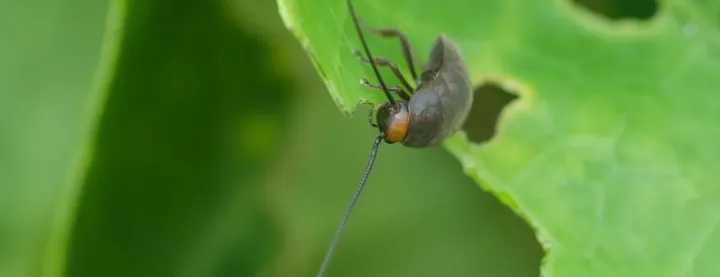
Adults typically measure between 10 and 15 millimeters in length. Their bodies are oval-shaped, dark brown, and equipped with well-developed wings. These features allow them to navigate diverse environments, including warm and humid human-made structures.
The biological cycle is defined by a specialized gestation process. The female carries embryos in a brood sac, nourishing them with a protein-rich secretion. This adaptation leads to high survival rates even in fluctuating environmental conditions.
These insects are primarily nocturnal and prefer habitats with stable high humidity and temperature. In agricultural settings like greenhouses, they find ideal conditions for nesting and reproduction, often hiding in organic mulch or under equipment.
Identification in the field relies on spotting the adults during their active nighttime hours or detecting their droppings, which are small, dark, and often concentrated near food sources or nesting areas.
What it damages
While primarily scavengers, Diploptera cockroaches can become problematic in greenhouses when organic food sources become scarce. They are known to feed on young seedlings, tender shoots, and the leaves of ornamental or vegetable crops.
The damage caused is often mechanical; the pests chew through plant tissue, which causes stunted growth and deformities in developing plants. This is particularly harmful during the early stages of plant development when tissues are soft and high in nutrients.
By consuming roots or stems, these insects can compromise the vascular integrity of the plant, leading to wilting and death. Such localized damage can destroy entire nursery trays if the population density is high.
Furthermore, these cockroaches act as vectors for various plant pathogens. By moving between rotting organic matter and healthy crops, they facilitate the spread of bacterial soft rots and fungal infections on plant surfaces.
The presence of their excrement on leaves reduces the aesthetic and commercial value of ornamental plants, necessitating costly cleaning or discarding of the affected produce to maintain quality standards.
Control measures
Effective management of Diploptera populations starts with strict sanitation. Removing decaying plant material, excess mulch, and debris from greenhouse floors significantly reduces the carrying capacity of the environment for these insects.
Monitoring using sticky traps is a fundamental strategy. By placing these in known harborage areas, greenhouse managers can detect infestations early and target pesticide applications only where necessary to minimize environmental impact.
Chemical control involving insecticidal baits or spray applications of pyrethroids can be utilized when populations exceed economic thresholds. Treatments are most successful when performed at night, aligning with the nocturnal behavior of the pests.
Biological control options, such as the application of entomopathogenic fungi like Beauveria bassiana or predatory nematodes, offer sustainable ways to suppress population growth without relying solely on chemical pesticides.
Physical exclusion remains a key preventative measure. Sealing entry points such as screens on ventilation fans and gaps in door frames helps maintain a pest-free zone, preventing the migration of cockroaches from outside into sensitive cultivation areas.
Taxonomy
- Latin name
- Diploptera
- Family
- Blaberidae
- EPPO code
- DIPPSP
Discussion
No discussions yet — be the first.