
Antillean cockroach
Byrsotria fumigata
Description
How to identify
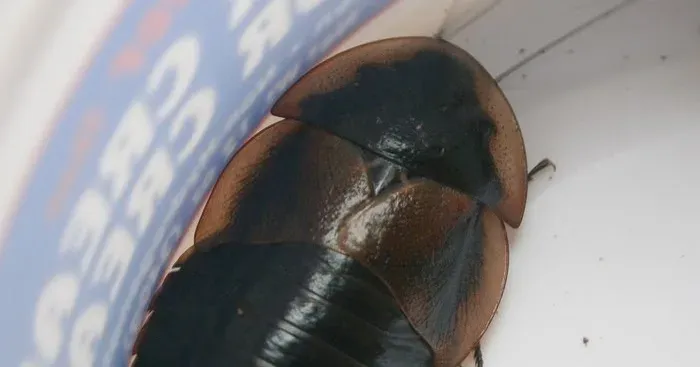
The Antillean cockroach (Byrsotria fumigata) belongs to the Blaberidae family. Adult specimens are relatively large, typically measuring between 40 and 50 mm in length, with a coloration ranging from dark brown to black.
The species exhibits clear sexual dimorphism. Males are equipped with fully developed wings and are capable of short flights, whereas females possess only vestigial wings and remain restricted to ground-level habitats.
Nymphs resemble smaller versions of adults and lack wings and sexual organs. They go through multiple molting stages, gradually increasing in size and intensity of pigmentation as they mature.
These insects are social and nocturnal, preferring dark, humid hiding spots. In agricultural environments, they often shelter under plant debris, in rotting mulch, or within moist topsoil.
Correct identification is essential for management, as they are often confused with other cockroach species. Key features include their shape and their preference for high-moisture environments.
What it damages
The Antillean cockroach is primarily a pest in greenhouses and tropical agricultural settings. It acts as a polyphage, feeding on organic matter as well as living plant tissues.
It causes damage by chewing on tender shoots, foliage, and root systems of ornamental plants and vegetable seedlings. Young, succulent plants are at the highest risk of being decimated by populations.
Beyond physical damage, these cockroaches are known vectors for various fungal and bacterial pathogens. They transport spores on their bodies, facilitating the spread of disease within the greenhouse.
Root damage is particularly insidious, as it affects the plant's ability to absorb nutrients. This often leads to wilting, stunted growth, and the eventual death of the affected crop.
In large-scale greenhouse production, their activity can significantly reduce the market value of plants, making them a serious economic threat to nursery operations.
When it appears
The activity of the Antillean cockroach is highly dependent on temperature and moisture. They thrive in conditions with temperatures above 20–25°C and high humidity.
In temperature-controlled greenhouses, these pests can reproduce year-round, posing a continuous threat to crops regardless of the season or external climate conditions.
In outdoor tropical or subtropical agricultural zones, their activity peaks during the rainy season when moisture levels in the soil are high, supporting the survival of nymphs.
As nocturnal insects, they remain concealed during the day, coming out at night to feed. Their preference for hidden spots during the day makes their presence difficult to detect early.
The developmental cycle is relatively slow, but their high reproductive rate ensures that once established, a population can be very difficult to eradicate without aggressive control measures.
Signs of infestation
The presence of frass (small, dark granular droppings) near the base of pots or plant stems is a primary indicator of an infestation. This is often the first visual clue for growers.
Damaged plant tissue, characterized by irregularly chewed leaf margins and scarred root zones, provides strong evidence of cockroach activity in the immediate vicinity.
Discovery of discarded exoskeletons (exuviae) is a clear sign that a population is actively molting and growing within the facility, suggesting a large number of individuals.
Unexpected plant wilting, even when soil moisture is adequate, frequently points to root system damage caused by these pests nesting in the soil media.
A distinct, musky odor may be present in infested areas, which is a defensive secretion produced by the cockroaches when they are disturbed by human activity or chemical treatment.
Control measures
Integrated Pest Management (IPM) is the most effective strategy. Sanitation is critical; removing plant litter, organic mulch, and debris eliminates the food sources and hiding places.
The use of insecticide-impregnated baits is highly effective, as they target the insects while minimizing the direct exposure of plants to harsh chemical sprays.
Biological control agents, including entomopathogenic fungi, can be applied to the soil to target nymphs during their vulnerable growth stages without harming the plants.
Chemical intervention should be reserved for severe infestations and must be applied in strict accordance with safety guidelines to protect both the crops and the workers.
- Strict sanitation and waste removal.
- Use of sticky traps to monitor populations.
- Maintenance of proper soil moisture levels.
- Quarantining of new plant material.
Taxonomy
- Latin name
- Byrsotria fumigata
- Family
- Blaberidae
- EPPO code
- BYROFU
Discussion
No discussions yet — be the first.