
Blaberus
Blaberus
Description
How to identify
Blaberus is a genus of insects belonging to the order Blattodea and the family Blaberidae. These large tropical insects can occasionally become invasive in agricultural environments and greenhouses.
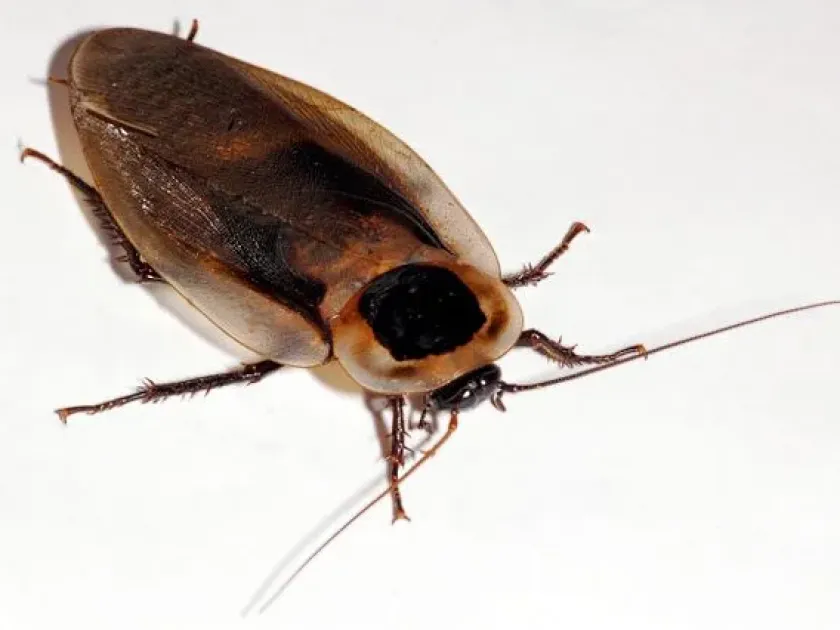
Adult individuals have a flattened body, which can reach lengths of 7–8 cm. Their coloration typically ranges from light brown to dark brown, often featuring a dark pronotum patch.
The life cycle involves incomplete metamorphosis: egg, nymph, and adult. Females carry the ootheca internally within a brood sac, which provides protection for the offspring.
Nymphs go through several instars, gradually increasing in size and developing adult characteristics, including wing formation in mature individuals.
In indoor agricultural settings, these insects prefer warm, humid environments rich in organic matter, where they find refuge during daylight hours.
What it damages
Blaberus are generalist feeders and can damage a variety of crops, including ornamental plants, vegetables, and young seedlings in greenhouse environments.
The primary damage occurs when they consume young shoots, succulent leaves, or cause physical destruction to root systems and surface-level plant structures.
Beyond direct mechanical injury, Blaberus can act as vectors for various plant pathogens, facilitating the spread of secondary infections among greenhouse crops.
High population densities can lead to the complete destruction of delicate seedlings, resulting in significant economic losses for growers.
They are primarily nocturnal, often leaving behind ragged leaf margins and chewed stems, which makes early detection challenging for farmers.
Signs of infestation
A key sign of infestation is the presence of small, black granular frass (excrement) found under foliage or near the base of plant stems.
The discovery of shed chitinous exoskeletons (exuviae) is a clear indication that a population is actively developing and growing within the facility.
Specific damage patterns include irregular holes in leaves, bitten young sprouts, and stems that have been severed at the soil surface level.
Visual identification of the insects themselves is most successful at night when using a flashlight to inspect dark, moist corners of the greenhouse.
Finding clusters of insects in damp crevices, under pots, or within piles of organic plant waste is a strong indicator of a localized infestation.
Control measures
Effective sanitation is the most critical step in managing Blaberus; removing organic debris and waste eliminates both food sources and hiding places.
Sealing cracks and crevices in greenhouse structures and installing physical barriers are essential to prevent the migration of these insects into the crop area.
The use of sticky traps baited with appropriate attractants can help monitor population levels and reduce the number of roaming adults.
In cases of significant outbreaks, registered contact-stomach insecticides suitable for use in protected cultivation should be applied according to local regulations.
Biological control options, such as the application of entomopathogenic fungi or beneficial nematodes, can effectively target nymphs and adults within the growing medium.
Taxonomy
- Latin name
- Blaberus
- Family
- Blaberidae
- EPPO code
- BLABSP
Discussion
No discussions yet — be the first.