
Trapezoid cockroach
Blaberus trapezoideus
Description
How to identify
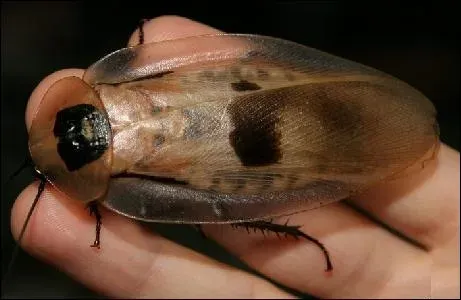
The trapezoid cockroach (Blaberus trapezoideus) is a large tropical insect belonging to the Blaberidae family. Adult specimens are recognizable by a distinct, trapezoid-shaped dark marking on their pronotum, which gives them their common name.
These insects thrive in environments with high humidity and consistent warmth, making greenhouses and tropical plant collections their preferred habitats. Being ovoviviparous, the females reproduce effectively within protected, stable environments.
They are primarily nocturnal, hiding during the day in crevices, underneath pots, or within dense organic debris. Their flat morphology allows them to inhabit very narrow spaces, often remaining undetected until the population grows significantly.
The life cycle involves multiple nymphal stages. These nymphs resemble adults but lack wings and are typically smaller in size. Under optimal greenhouse temperatures, they can reach maturity in a relatively short period, accelerating population spread.
Observation of this species often requires inspection using a flashlight during dark hours, as their shy nature leads them to quickly retreat into dark corners when disturbed or exposed to light.
What it damages
While often associated with decaying organic matter, Blaberus trapezoideus can become a significant pest when populations exceed control thresholds. They feed on soft plant tissues, including fresh shoots, young leaves, and tender roots.
Direct mechanical damage is characterized by ragged edges on leaves and stems. This physical injury significantly weakens the plants, making them more susceptible to drought, nutritional deficiencies, and environmental stress.
Indirect damage is perhaps more critical: the cockroaches act as vectors for various plant pathogens. By feeding on both decaying and living tissues, they spread bacteria and fungal spores throughout the greenhouse, leading to localized rot.
Ornamental plants grown in potting mixes rich in organic components are particularly at risk. In dense greenhouse arrangements, the cockroaches move between pots, potentially spreading contamination across the entire collection.
Severe infestations can lead to substantial loss of commercial stock, as the presence of insect excrement and feeding marks ruins the aesthetic and market value of the plants.
Control measures
Integrated pest management (IPM) is essential for controlling the trapezoid cockroach. Sanitation is the first line of defense; removing dead foliage, preventing organic debris accumulation, and managing excess moisture in potting trays are crucial steps.
Sticky traps containing food-based attractants are highly effective for both monitoring current populations and suppressing smaller numbers of cockroaches. Traps should be placed in low-light areas where the insects prefer to travel.
Chemical control should be approached with caution, prioritizing the use of insecticidal baits rather than broad-spectrum sprays. Baits allow targeted control while minimizing the risk of phytotoxicity or harm to the greenhouse environment.
Biological solutions, such as the application of entomopathogenic nematodes or fungi targeted at insect larvae, can provide a sustainable control method. These agents work well in the humid environments preferred by the cockroaches.
Preventive measures include the quarantine of any new plant materials entering the greenhouse. Ensuring that all imported soil or containers are inspected for eggs or nymphs helps prevent the introduction of this pest to new areas.
Taxonomy
- Latin name
- Blaberus trapezoideus
- Family
- Blaberidae
- EPPO code
- BLABTR
Discussion
No discussions yet — be the first.