
Indian muntjac
Muntiacus muntjak
Description
How to identify
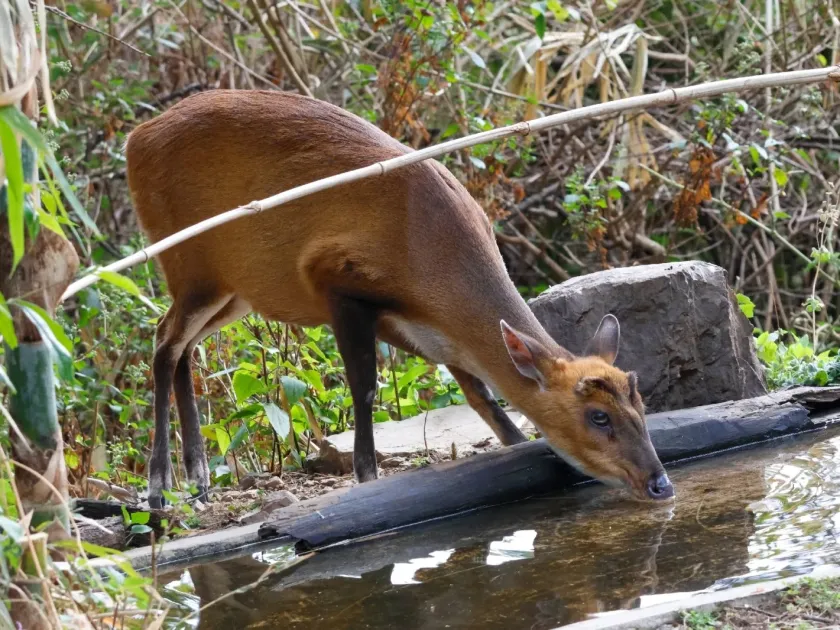
The Indian muntjac (Muntiacus muntjak) is a small deer species from the Artiodactyla order and Cervidae family. Adults are typically 40–65 cm at the shoulder and are known for their compact build.
A distinctive feature of males is their small, simple antlers set on long pedicles covered in hair. They also possess large, elongated upper canines which they use for defense and social interactions.
Their coat color ranges from golden-brown to dark chestnut, often with a paler underbelly. This camouflage makes them difficult to spot in dense vegetation, even when they are nearby.
The biology of the species allows them to inhabit various environments, from tropical forests to human-modified landscapes, where they often forage near agricultural plots.
Muntjacs are highly adaptable animals; females are capable of breeding throughout the year, which can lead to rapid population expansion in suitable habitats.
What it damages
Muntjacs are opportunistic herbivores that pose a significant threat to horticultural crops. They frequently browse on young tree saplings, stripping the bark and damaging sensitive shoots.
Vegetable gardens are particularly susceptible, as muntjacs often consume the growing tips of cabbage, beans, and salad crops, which can stunt plant growth or cause total crop failure.
In addition to foraging, their habit of trampling crops as they navigate through fields causes mechanical damage to stems and soil, reducing the overall yield quality.
Ornamental gardens are also frequently targeted, with the animals consuming flower buds, roses, and shrubs, which forces gardeners to invest in extensive protection measures.
In regions where the Indian muntjac is considered an invasive species, they compete with domestic livestock for grazing land and can drastically alter the local flora.
When it appears
Muntjacs are active year-round, meaning agricultural risks exist throughout every season. They do not hibernate and remain active even during colder months.
Spring is a high-risk period, as the emergence of fresh, nutrient-rich green foliage attracts the deer to cultivated vegetable patches and gardens.
Summer months often see increased activity during dawn and dusk hours, when the animals move onto irrigation-heavy land to search for hydration and soft plant matter.
Autumn brings them to orchards, where they feed on fallen fruits and remaining harvest, potentially contaminating or damaging the stored produce.
During winter, when natural forage is scarce, they become more daring and frequently cause severe damage to trees by debarking them and browsing on dormant buds.
Signs of infestation
The most reliable sign of a muntjac's presence is their specific track. Their hoof prints are narrow and elongated, often accompanied by clear indentations from the dewclaws.
Debarked tree trunks, with damage occurring up to a meter from the ground, are clear indicators that these animals have been browsing on your property.
Small, dark, pellet-like droppings found in clusters are a common sign that the animals have established a regular route across your garden or field.
The males produce a loud, bark-like sound when startled or feeling threatened. Hearing this call at dusk is a sure sign of their proximity to your farmland.
Browsed vegetation with ragged or torn leaf edges, rather than the clean cuts seen with some insects, is characteristic of muntjac feeding habits.
Control measures
The most effective strategy to manage muntjac damage is to install high-tensile fencing at least 1.5 to 1.8 meters tall to prevent them from entering the cultivation area.
Using scent-based repellents designed for deer can provide a temporary deterrent, making your plants less palatable to these browsing animals.
Individual tree protection, such as plastic guards or mesh wraps, is essential for preserving the bark and health of newly planted trees in vulnerable areas.
Eliminating potential food sources by clearing fallen fruits and maintaining tidiness around the farm boundary reduces the area's overall attractiveness to the species.
In areas with high population densities, consulting local wildlife management authorities is recommended to implement sustainable population control measures.
Taxonomy
- Latin name
- Muntiacus muntjak
- Family
- Cervidae
- EPPO code
- MUNTMU
Discussion
No discussions yet — be the first.