
Cowbird
Molothrus
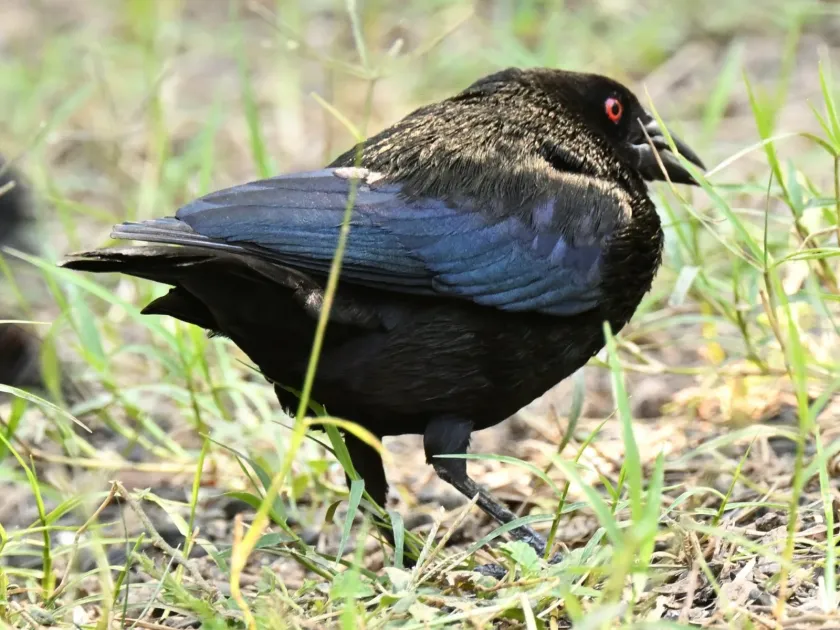
Description
How to identify
The cowbird (genus Molothrus) belongs to the Icteridae family, order Passeriformes. These birds are biologically recognized as obligate brood parasites.
They are relatively small birds with thick, short bills, perfectly adapted to a diet consisting of seeds and various agricultural grains.
Cowbirds are highly gregarious and forage in large flocks, which significantly increases the risk they pose to agricultural fields during peak feeding times.
The males possess dark, iridescent plumage, while females are more subtly colored in shades of gray-brown to aid in concealment.
Their life cycle revolves around finding host nests to lay their eggs, allowing them to focus their energy on foraging during the agricultural season.
What it damages
Cowbirds cause significant economic loss by targeting grain crops such as corn, sorghum, wheat, and rice during the milk and dough stages.
They consume large quantities of seeds directly from the head or ear, often ruining the marketability and yield of the affected plants.
Feeding behavior frequently involves stripping protective husks or damaging stalks, making the crop susceptible to secondary fungal infections.
Large flocks contribute to crop contamination through excessive droppings, which can introduce pathogens into the agricultural environment.
Fields located near roosting sites are particularly vulnerable, as the birds concentrate their feeding efforts in these areas repeatedly.
When it appears
The highest level of bird activity occurs during the summer months, aligning with the grain development stage of the target crops.
In the autumn, as birds gather into massive pre-migratory flocks, the pressure on late-maturing crops often intensifies significantly.
Feeding usually peaks during the early morning and late afternoon hours, when large flocks descend upon the fields to forage aggressively.
The duration of their impact is linked to the regional climate and the phenology of the crops, which determines the food supply window.
As the season progresses toward winter, their reliance on agricultural fields decreases, but they remain a threat until the harvest is completed.
Signs of infestation
The most prominent sign is the appearance of shredded or stripped ears of corn, where the grain has been systematically removed by the birds.
The sight of massive flocks swirling over a field and perching en masse on plants is a clear indicator of a severe pest infestation.
High concentrations of fecal matter on the ground or plant foliage within the rows serve as evidence of frequent usage as a feeding site.
Broken stalks and trampled rows are common observations following the arrival of a large flock of cowbirds in a dense crop stand.
Increased vocalization and noise from the field during the dawn or dusk hours often precede heavy crop damage incidents.
Control measures
Bioacoustic deterrents, such as playing recorded distress calls or predator sounds, are highly effective at disrupting flocking behavior.
Visual deterrents like reflective tape, predator decoys, and scarecrows provide short-term relief, though effectiveness often wanes over time.
Prompt harvesting and the efficient removal of spilled grain significantly reduce the attractiveness of fields to hungry bird flocks.
Propane cannons that produce loud, intermittent blasts are often used, though farmers must vary the timing to prevent bird habituation.
Integrated bird management programs that combine visual and auditory deterrents offer the most sustainable approach to protecting crop investments.
Taxonomy
- Latin name
- Molothrus
- Family
- Icteridae
- EPPO code
- MOLOSP
Discussion
No discussions yet — be the first.