
Minthea rugicollis
Minthea rugicollis
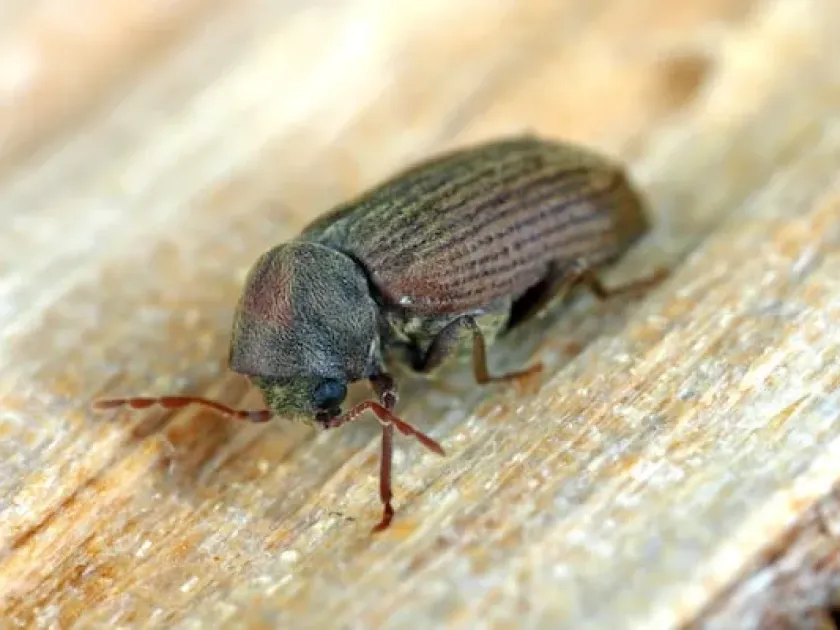
Description
How to identify
Minthea rugicollis is a coleopteran pest belonging to the family Silvanidae, often found in stored products and wood materials in tropical and subtropical regions.
The adult beetle is small, typically measuring between 2 to 3 mm in length, with a flattened, elongated body shape that is characteristic of many grain pests.
The body color ranges from reddish-brown to dark brown, providing camouflage within its typical food sources like grains and plant debris.
The name "rugicollis" refers to the rough, wrinkled appearance of the pronotum, which is distinctly punctured and serves as a key identification feature.
Larvae are pale with dark head capsules, adapted for boring into hard plant matter to feed, making them difficult to detect without careful inspection.
What it damages
This insect is considered a significant pest of stored agricultural products, particularly those with a high starch content such as grain and flour.
It infests a variety of stored goods including cereal grains, processed flour, dried fruits, and occasionally wood products in warehouses.
The damage is caused by both adults and larvae, which tunnel into the grain kernels or dry plant materials to consume the starch and inner layers.
Extensive tunneling results in significant weight loss of the product and reduces the quality, making it unsuitable for human or animal consumption.
Furthermore, their presence is often associated with the growth of molds and other microorganisms due to the moisture created by their metabolic activity.
When it appears
Minthea rugicollis thrives in environments where constant temperature and humidity levels are maintained, such as heated warehouses and silos.
The ideal conditions for rapid population growth include temperatures ranging from 25°C to 30°C and a grain moisture content above 12%.
Under these optimal conditions, the life cycle from egg to adult can be completed in approximately 40 to 60 days, allowing for continuous generations.
In cooler climates, the activity of the beetle decreases significantly, and they often survive by seeking shelter in warm, protected spots within the building structure.
Seasonal outbreaks are most prominent when improper storage conditions coincide with high ambient temperatures, facilitating faster reproductive cycles.
Signs of infestation
The presence of fine flour-like dust around storage bags or at the base of grain piles is the primary sign of an active infestation.
Detection of small circular holes in grain kernels or wood surfaces is a clear indication that the larvae have been feeding inside the substrate.
A musty or fermented odor in the storage area may signal that an infestation has progressed to the point where the product is decaying.
Observing the beetles themselves on the walls, floor, or near the storage containers confirms the need for immediate corrective action.
- Presence of insect feces (frass) within the damaged grain.
- Clumping of grains due to larvae webbing or moisture increase.
- Reduced germination rate if the seed embryo has been consumed.
Control measures
Sanitation is the first line of defense: keeping storage areas clean and free of grain dust and spilled materials helps reduce breeding sites.
Maintaining low moisture levels in stored grain is crucial, as this pest is highly attracted to and thrives in damp, starch-rich environments.
Regular monitoring of stored products through visual inspection and the use of insect traps is recommended to detect populations early.
Warehouse structures should be treated with appropriate contact insecticides before filling them with new agricultural commodities.
For severe infestations, professional fumigation of the warehouse or the affected grain lots remains the most effective method for total pest elimination.
Taxonomy
- Latin name
- Minthea rugicollis
- Order
- Coleoptera (beetles)
- Family
- Lyctidae
- EPPO code
- MINTRU
Discussion
No discussions yet — be the first.