
Brown powderpost beetle
Lyctus brunneus
Description
How to identify
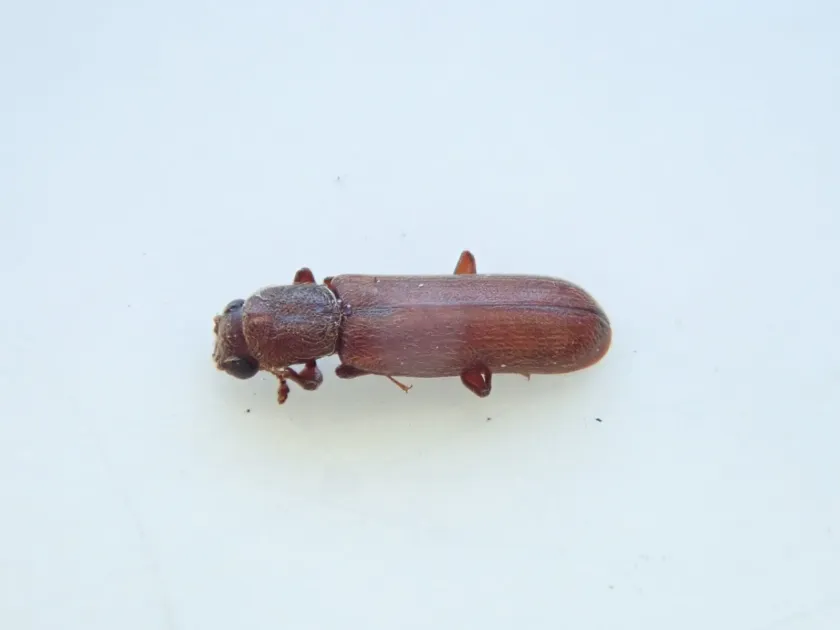
The brown powderpost beetle (Lyctus brunneus) is a destructive pest belonging to the family Bostrichidae within the order Coleoptera. Adult beetles are small, typically ranging from 3 to 5 mm in length, with a slender, reddish-brown to dark brown body.
A distinctive physical characteristic is that the head is almost entirely hidden beneath the pronotum, giving the beetle a hood-like appearance, which is common among bostrichid beetles.
The larvae are white, C-shaped, and possess well-developed thoracic legs. They spend their entire life cycle deep within the wood, which makes them difficult to spot until significant structural damage has occurred.
Their biology is highly dependent on starch content. The beetles specifically target the sapwood of seasoned hardwoods, as the starch provides the necessary energy for the rapid growth of the larvae.
The life cycle duration is variable, typically lasting between one and three years, largely influenced by environmental conditions such as wood moisture content, temperature, and the nutritional quality of the infested timber.
What it damages
This beetle primarily attacks dry, seasoned hardwoods, including oak, ash, walnut, and beech, making it a major concern for the timber industry, furniture manufacturers, and historical preservation.
Infestations are frequently found in warehouses, sawmills, and residential homes where hardwood furniture, flooring, or structural elements are present.
Larvae create intricate, winding tunnels throughout the wood grain as they feed. Over time, these tunnels destroy the integrity of the wood, effectively turning the interior into a fine powder.
The economic impact is significant, as the damage often renders high-value furniture or antique pieces irreparable, while structural timber requires costly replacements or professional reinforcement.
- Hardwood furniture (oak, walnut)
- Flooring and structural woodwork
- Antique artifacts and collectibles
- Stored kiln-dried lumber
Signs of infestation
The most reliable sign of an infestation is the presence of tiny, circular exit holes, approximately 1–2 mm in diameter, which appear on the surface as adults emerge from the wood.
Beneath these exit holes, you will often find small piles of "frass"—a fine, flour-like powder that is the waste product pushed out by the feeding larvae.
In cases of advanced infestation, the wood may feel fragile and exhibit structural collapse, as the interior has been completely compromised by the labyrinth of larval galleries.
During quiet periods, it is sometimes possible to hear a faint ticking or rasping sound produced by the larvae as they consume the wood fibers inside the material.
Adult beetles may also be seen crawling on surfaces or gathering near windows during their emergence season, which typically occurs during the warmer months of the year.
Control measures
Preventative measures are critical; treat new timber with insecticide-based preservatives to create a toxic barrier that prevents females from laying eggs on the wood surface.
For existing infestations, professional fumigation is the most effective method, as it uses gaseous chemicals to penetrate deep into the wood and reach all life stages of the pest.
For smaller items or localized damage, injecting specific chemical treatments into the exit holes can be effective, provided the solution reaches the internal galleries.
Heat treatment is a highly effective, eco-friendly solution; kiln-drying the wood to reach internal temperatures of at least 60°C for a sustained period ensures the death of larvae.
Maintaining low moisture levels and applying durable finishes, such as varnish or high-quality paint, can seal the wood and effectively discourage the beetles from attacking the surface.
Taxonomy
- Latin name
- Lyctus brunneus
- Order
- Coleoptera (beetles)
- Family
- Lyctidae
- EPPO code
- LYCTBR
Discussion
No discussions yet — be the first.