
Variegated brown lacewing
Micromus variegatus
Description
How to identify
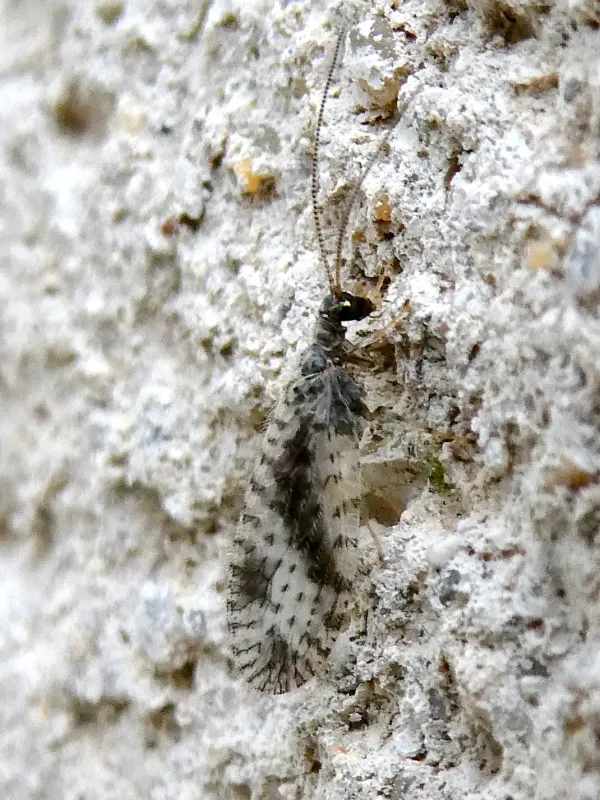
The variegated brown lacewing (Micromus variegatus) is a member of the Hemerobiidae family within the Neuroptera order. It is easily distinguished by the complex, variegated pattern on its wings.
Adults are small, brownish insects with long, filiform antennae. Their cryptic coloration allows them to blend in perfectly with tree bark, making them difficult to spot during daylight hours.
The larvae are elongated and covered in fine setae, possessing sickle-shaped mandibles typical of predatory lacewings, though their feeding habits can occasionally impact plant tissues.
Accurate identification requires examination of wing venation patterns, which serve as the primary taxonomic diagnostic feature for this specific species within the Hemerobiidae family.
These insects are primarily crepuscular or nocturnal, meaning they are most active during dawn or dusk, often remaining inactive and hidden under bark throughout the heat of the day.
What it damages
While many lacewings are recognized as beneficial predators, Micromus variegatus can become a pest in specific agricultural settings, feeding on soft plant tissues during its developmental stages.
The primary hosts include various fruit trees, such as apples, pears, and plums, where larvae and adults may graze on emerging buds and tender young foliage.
Damage caused by these insects can compromise the integrity of the plant's surface, potentially allowing for the entry of secondary pathogens, including fungal and bacterial infections.
In intensive orchard environments, heavy infestations may result in reduced plant vigor, delayed growth of shoots, and a significant impact on total fruit yield.
The most severe damage typically occurs during the early growing season when plants are putting all their resources into developing new growth and reproductive structures.
When it appears
The lifecycle of the variegated brown lacewing is highly dependent on ambient temperatures, with activity commencing as soon as spring temperatures begin to rise consistently.
Multiple generations can occur throughout a single growing season, leading to overlapping populations that can persist in the environment for several months if conditions are favorable.
The overwintering stage usually consists of adults or pupae sequestered in protected niches, such as crevices in tree bark or under thick layers of leaf litter.
Population peaks are generally observed in late spring and early summer, coinciding with the peak period of vegetative growth in host fruit trees.
As autumn progresses and daylight hours decrease, the insects move toward hibernation sites, entering a state of diapause to survive the winter months.
Signs of infestation
Early signs of an infestation include small, irregular necrotic spots or hollowed-out tissue on buds, which indicate feeding activity by the lacewing larvae.
Eggs may be found on the undersides of leaves, often placed singly or in small clusters, requiring a careful, systematic search to identify in the field.
Curling or distortion of young, succulent shoots is a common symptom of larval feeding, as the plant attempts to react to the localized damage caused by the insects.
Presence of adults can be confirmed using light traps at night or by performing vegetation beating/sweeping, which dislodges the insects from their daytime hiding spots.
Premature leaf drop or yellowing on specific branches can also point to high population densities, especially if the infestation remains untreated for an extended period.
Control measures
Effective management of Micromus variegatus requires an integrated pest management (IPM) approach that balances chemical and non-chemical control tactics.
Cultural practices, such as removing loose, dead bark from tree trunks during the dormant season, can significantly reduce the number of suitable overwintering sites.
Biological control agents, including parasitic wasps or specialized entomopathogenic fungi, can be used to naturally lower population levels without harming beneficial insects.
- Pruning and destroying heavily infested branches.
- Using sticky bands to trap climbing larvae.
- Applying contact-based insecticides during peak emergence periods.
Ongoing monitoring using pheromone or light traps is essential to determine the timing of intervention, ensuring that control measures are both targeted and cost-effective.
Taxonomy
- Latin name
- Micromus variegatus
- Family
- Hemerobiidae
- EPPO code
- MICUVA
Discussion
No discussions yet — be the first.