
Micromus subanticus
Micromus subanticus
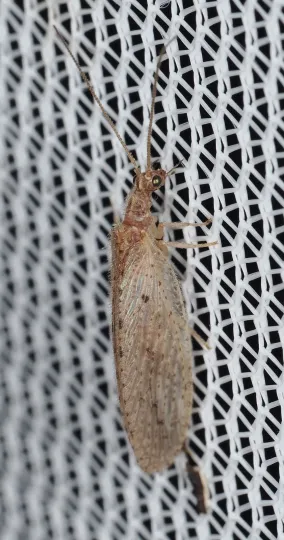
Description
How to identify
Micromus subanticus belongs to the order Neuroptera, family Hemerobiidae, commonly known as brown lacewings. These insects are characterized by their delicate, net-veined wings that are typically folded over the body like a roof when at rest.
The adult stage is generally light brown or greyish, providing effective camouflage on bark or leaf surfaces. They are relatively small insects with chewing mouthparts that are primarily used to graze on available plant tissues or prey.
The larvae are distinctively elongated and highly mobile, featuring sickle-shaped mandibles used for piercing and sucking fluids. This morphological adaptation makes them significant consumers in their habitat.
The life cycle encompasses complete metamorphosis, including egg, three larval stages, pupa (within a cocoon), and the adult stage. The development rate is heavily influenced by environmental temperature and moisture.
Correct identification often requires microscopic analysis of venation patterns, as the species is frequently confused with other closely related members of the Hemerobiidae family in the field.
What it damages
The damage caused by Micromus subanticus involves both direct tissue consumption and physiological stress placed on the host plant due to persistent feeding on growing points.
A wide variety of crops can be targeted, particularly fruit trees, berry bushes, and certain leafy vegetables. The pest tends to favor soft, immature tissues where nutrients are readily accessible.
Infestation typically leads to leaf distortion, stunted growth of apical shoots, and an overall reduction in plant vigor, which directly impacts yield quality and quantity.
Feeding wounds create pathways for secondary pathogens, including bacteria and fungi, which can exacerbate the damage by causing local necrosis and tissue decay.
Establishing the economic threshold is crucial for management, as low populations may not warrant chemical intervention, whereas high populations necessitate prompt protective measures.
When it appears
Activity usually begins in the spring, once temperatures rise sufficiently to trigger the emergence of overwintering adults and the onset of the first seasonal generation.
The population peaks during the summer months, taking advantage of optimal metabolic conditions to complete several generations within a single growing season, often reaching its maximum density mid-summer.
As autumn approaches and temperatures drop, the metabolic activity of the pests declines significantly, prompting them to seek protected microhabitats for successful overwintering.
Weather fluctuations, especially extreme heat or sudden cold snaps, can interrupt the cycle and potentially reduce population growth in localized agricultural zones.
Regular field scouting using visual inspection or pheromone-based monitoring tools allows agronomists to track population dynamics and predict potential outbreaks effectively.
Signs of infestation
One of the earliest signs of infestation is the appearance of curled or chlorotic apical leaves, indicating that the pest is feeding on the tender growth areas of the plant.
The presence of larvae or their excrement on the underside of leaves is a clear diagnostic indicator, as these materials often serve as a substrate for opportunistic sooty molds.
Visible reduction in shoot elongation and overall asymmetrical growth patterns are common structural indicators of damage within the crop canopy.
In severe infestations, the cumulative impact of feeding can lead to necrotic patches that are visible to the naked eye upon closer inspection of the leaf surface.
- Distorted apical leaves;
- Presence of larvae on leaf undersides;
- Development of secondary sooty mold;
- Significant retardation of shoot growth.
Control measures
Integrated Pest Management (IPM) is the recommended approach, focusing on a combination of cultural practices, biological control agents, and, if necessary, chemical interventions.
Cultural methods involve maintaining healthy soil conditions to boost plant resistance, diligent weed control to eliminate alternative hosts, and proper sanitation of crop residues.
When infestation levels exceed the economic threshold, the application of systemic insecticides is typically required to protect the plant from within and provide residual control.
Encouraging or releasing beneficial insect predators can help naturally regulate populations of Micromus subanticus, reducing the overall reliance on broad-spectrum chemicals.
Strict adherence to application protocols and rotating chemical modes of action is essential to ensure long-term effectiveness and prevent the development of pesticide resistance.
Taxonomy
- Latin name
- Micromus subanticus
- Family
- Hemerobiidae
- EPPO code
- MICUSU
Discussion
No discussions yet — be the first.