
Micromus posticus
Micromus posticus
Description
How to identify
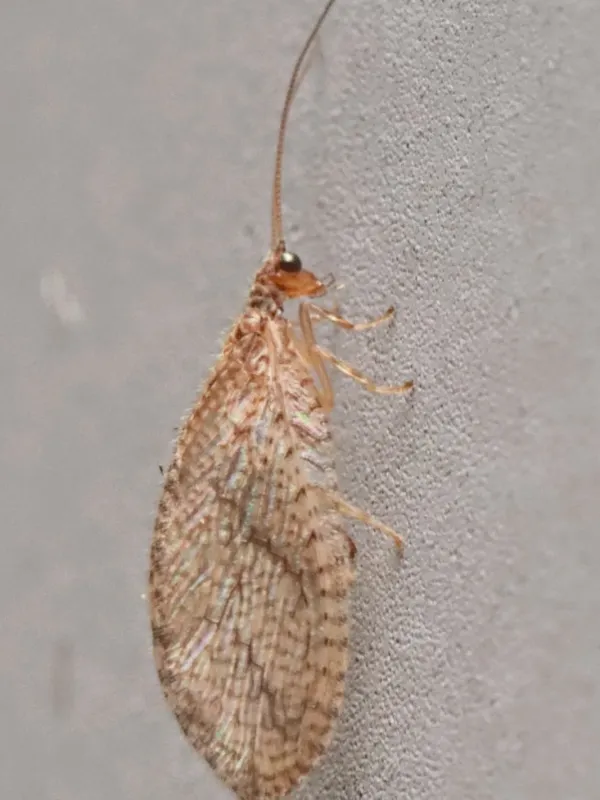
Micromus posticus is a member of the Hemerobiidae family, commonly known as brown lacewings. It belongs to the order Neuroptera and is recognized by its delicate, intricately veined, brown-colored wings that fold over the back like a tent.
Adults are nocturnal insects with a flexible body structure. Their coloration allows them to blend seamlessly with tree bark, making them difficult to spot during daylight hours when they rest on trunks or branches.
The larvae are active, elongated predators with strong, sickle-shaped mandibles. They are highly efficient at hunting small arthropods like aphids, mealybugs, and spider mites, which they grasp and consume.
Development involves complete metamorphosis: the egg, larval stages (instars), pupa within a silken cocoon, and the adult stage. This biological cycle is well-adapted to surviving various environmental conditions.
These insects are found throughout diverse habitats, particularly in orchards and deciduous forests, where they actively contribute to the regulation of pest populations.
What it damages
Micromus posticus is fundamentally a beneficial insect, not a pest. It plays a critical role in agricultural ecosystems by preying upon harmful organisms that would otherwise cause significant damage to crops.
There is no evidence of Micromus posticus causing economic damage to plants. Any incidental markings on leaves are insignificant compared to the service they provide by eliminating massive numbers of pests.
They target a wide range of prey, including aphids, whiteflies, and various types of mites. By maintaining a high population of brown lacewings, gardeners can reduce the need for synthetic pesticide applications.
In modern integrated pest management, these insects are considered valuable assets. Protecting their habitat is a primary strategy for sustainable crop production and landscape maintenance.
Farmers and gardeners should learn to distinguish this beneficial predator from actual plant pests to avoid accidental harm to the ecosystem's natural balance.
Control measures
No control measures are needed for Micromus posticus. In fact, active efforts should be made to encourage their presence and colonization within the garden or field to foster a self-regulating environment.
Avoiding the use of broad-spectrum insecticides is the most effective way to support their populations. These chemicals often kill beneficial predators more quickly than the pests themselves.
Maintaining floral diversity near crops provides necessary supplemental food (nectar) for adult lacewings, ensuring they remain in the area throughout the growing season.
If chemical interventions against genuine pests are absolutely necessary, select targeted or biorational pesticides that have a minimal residual effect on beneficial insects like Micromus posticus.
By prioritizing biological control methods and habitat conservation, growers can ensure that natural enemies continue to suppress pest numbers effectively without further human interference.
Taxonomy
- Latin name
- Micromus posticus
- Family
- Hemerobiidae
- EPPO code
- MICUPO
Discussion
No discussions yet — be the first.