
Micromus angulatus
Micromus angulatus
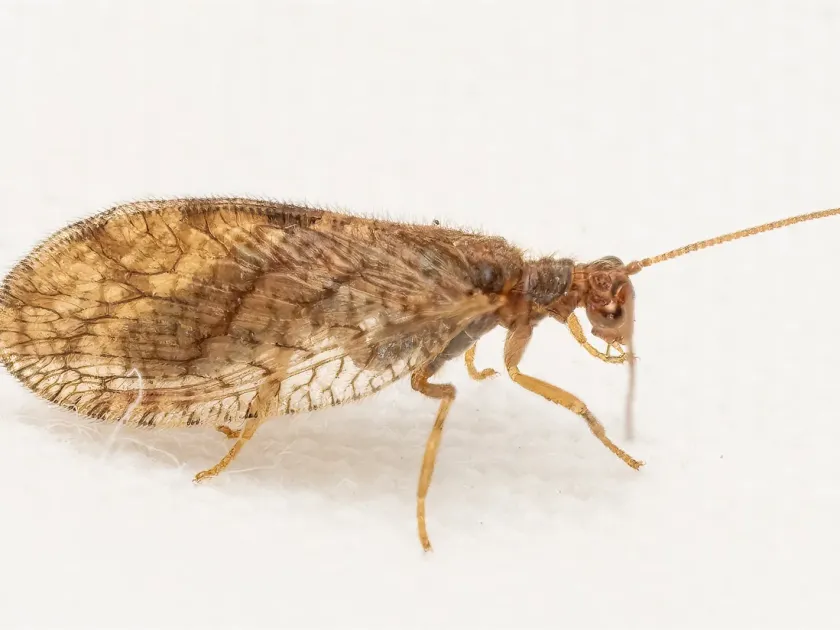
Description
How to identify
Micromus angulatus belongs to the order Neuroptera and the family Hemerobiidae, commonly known as brown lacewings. These insects are characterized by their delicate, net-like wing venation.
The adult form is relatively small, with a body length typically ranging from 5 to 10 millimeters. Their coloration is brownish or yellowish, which provides excellent camouflage against tree bark.
The larvae are active predators with elongated bodies and specialized sickle-shaped mandibles used for piercing their prey, primarily aphids and mites.
Like many neuropterans, these insects are highly adaptable to various environmental conditions, playing a significant role in ecological pest regulation.
Taxonomic identification requires careful examination of wing structure, as many species within the Hemerobiidae family look very similar to one another.
What it damages
Micromus angulatus is not considered a pest; rather, it is a beneficial predator that helps control populations of aphids and other small soft-bodied insects in garden and agricultural ecosystems.
It does not feed on plant tissues, meaning it causes no direct damage to crops, vegetables, or ornamental plants during its life cycle.
In certain complex ecosystems, it may compete with other predators for food, but this is a natural process that rarely negatively impacts agricultural productivity.
Because they are natural enemies of common garden pests, they are highly valued by farmers and gardeners practicing integrated pest management.
The presence of these insects is generally an indicator of a balanced and healthy ecosystem where natural predation is functioning effectively.
When it appears
The activity of Micromus angulatus typically starts in early spring as temperatures rise and the first aphid colonies appear on plants.
Peak abundance is observed throughout the summer months when food resources are most plentiful, matching the developmental cycles of their prey.
As autumn approaches, adult insects seek overwintering sites, such as bark crevices, leaf litter, or other sheltered spots, where they remain until the following spring.
The number of generations per year is largely dependent on the regional climate, food availability, and local weather patterns during the growing season.
Warmer winters generally allow for a higher survival rate, which can lead to larger early-season populations in the subsequent year.
Signs of infestation
Signs of their presence are usually detected by observing larvae within aphid colonies on the undersides of leaves or along stems.
Adult brown lacewings are often attracted to light sources at night, which can be monitored using light traps in orchard or field environments.
Unlike phytophagous insects, they leave no visible bite marks or necrotic spots on plant surfaces, as their feeding habits are strictly predacious.
A noticeable decline in aphid populations without the use of chemical sprays often indicates that predators like Micromus angulatus are successfully active.
Visual identification of the larvae and adults in the field confirms the presence of this beneficial species in the local environment.
Control measures
Direct control measures against Micromus angulatus are neither required nor recommended, as it is a beneficial organism that contributes to biological pest control.
The primary management strategy is to avoid broad-spectrum insecticides that kill beneficial insects, as this can lead to secondary pest outbreaks.
Practicing selective pest control, such as using horticultural oils or soaps only where necessary, helps preserve the population of these predatory lacewings.
Enhancing habitat complexity, such as maintaining hedgerows or wild flower strips, supports sustainable populations of these beneficial insects throughout the year.
- Avoidance of harmful pesticides.
- Promotion of integrated pest management (IPM).
- Support for natural habitat and biodiversity.
Taxonomy
- Latin name
- Micromus angulatus
- Family
- Hemerobiidae
- EPPO code
- MICUAN
Discussion
No discussions yet — be the first.