
Metopsia clypeata
Metopsia clypeata
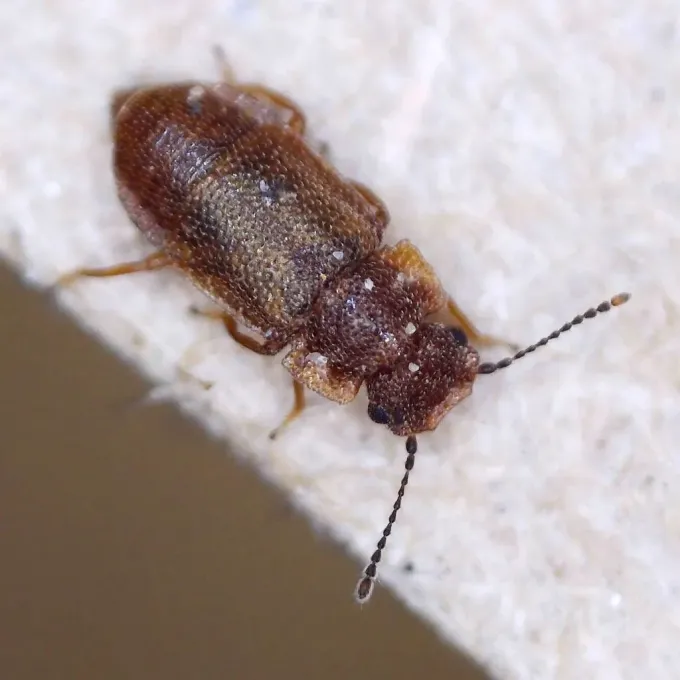
Description
How to identify
Metopsia clypeata is a small beetle belonging to the Staphylinidae family (rove beetles) within the order Coleoptera. Unlike most staphylinids which are typically predaceous, this species is known for its association with plant tissues.
The adult beetle is characterized by a flattened body, an adaptation to living in narrow crevices or within plant debris. Its coloration is generally dark brown or black, providing effective camouflage in its natural habitat.
A distinctive feature of this species is the shield-like expansion of the pronotum, which partially covers the head. This morphology is the primary diagnostic characteristic used by entomologists to identify the genus Metopsia.
Due to their small size and cryptic behavior, these insects are rarely seen unless targeted search methods, such as pitfall trapping or sweeping with an insect net, are employed during the peak of their activity.
The biology of Metopsia clypeata is closely linked to moisture, as they prefer humid and shaded environments where they can easily feed and avoid extreme desiccation.
What it damages
This pest primarily targets vegetable crops, with a particular affinity for members of the Brassicaceae family. It causes damage to both the vegetative tissues of young plants and the generative organs if conditions allow.
Adults and larvae consume leaf tissue, creating small, irregular holes known as "shot-holes." If the population density is high, these holes can coalesce, leading to significant defoliation and reduction in photosynthetic area.
Young seedlings are particularly vulnerable, as the beetles can feed on the tender growing points or stems, which may lead to plant stunting, secondary infections, or even complete crop loss in the early growth phase.
The feeding activity creates micro-wounds on the plant surface, which act as entry points for various bacterial and fungal pathogens, potentially leading to secondary disease outbreaks that compound the initial damage.
Heavy infestations, especially during the establishment phase of crops, can result in decreased quality of harvest and significant economic losses for growers who fail to detect the pest in time.
When it appears
The activity cycle of Metopsia clypeata begins in early spring, as soon as soil temperatures rise enough to trigger the emergence of overwintering adults from their dormant states.
The peak period of damage often coincides with the rapid growth phase of vegetable crops in spring and early summer, when succulent leaves are most abundant and palatable to the beetles.
During the height of summer, if dry conditions prevail, the insects often move deeper into the soil or seek shelter in thick foliage to maintain the moisture levels necessary for their survival.
A secondary increase in activity may be observed in late summer or early autumn, which corresponds with the development of late-season varieties or the movement of insects towards wintering sites.
Overwintering occurs in the soil, plant litter, or protected areas near fields, allowing the species to survive even harsh winter conditions and emerge promptly the following spring.
Signs of infestation
The first signs of infestation are typically the appearance of numerous small, irregular holes in the leaves of the affected vegetable crops, often accompanied by edges that become necrotic.
A careful inspection of the undersides of leaves, particularly early in the morning, may reveal the presence of the beetles, which are highly reactive and will quickly drop to the soil if disturbed.
Stunted plant growth and a general lack of vigor in young crops are common indicators, especially when damage to the hypocotyl or primary leaves has hindered early development.
The presence of small, dark fecal spots on the leaf surfaces is a strong indication of localized feeding activity and serves as an important visual clue for scouts checking for pests.
Increased wilting or yellowing of individual leaves without an obvious pathogen presence often suggests that the plant is under stress from feeding, warranting a closer look at the foliage and soil base.
Control measures
Integrated Pest Management (IPM) is essential for controlling Metopsia clypeata, emphasizing cultural practices that minimize the suitability of the field for the pest.
Deep plowing after harvest is an effective method for burying crop residues, thereby destroying the overwintering sites and reducing the initial population size for the next season.
Maintaining high hygiene standards in the field, including the thorough removal of weeds and debris, is crucial for limiting the alternative food sources available to the pest during the off-season.
In cases where populations reach an economic threshold, the use of targeted insecticides, including biological products containing entomopathogenic fungi, can be highly effective against these beetles.
Continuous monitoring using sticky traps and periodic field scouting allows growers to make informed decisions about intervention, ensuring that control measures are applied at the most effective stage of the pest's life cycle.
Taxonomy
- Latin name
- Metopsia clypeata
- Order
- Coleoptera (beetles)
- Family
- Staphylinidae
- EPPO code
- MTOPCL
Discussion
No discussions yet — be the first.