
Melittomma insulare
Melittomma insulare
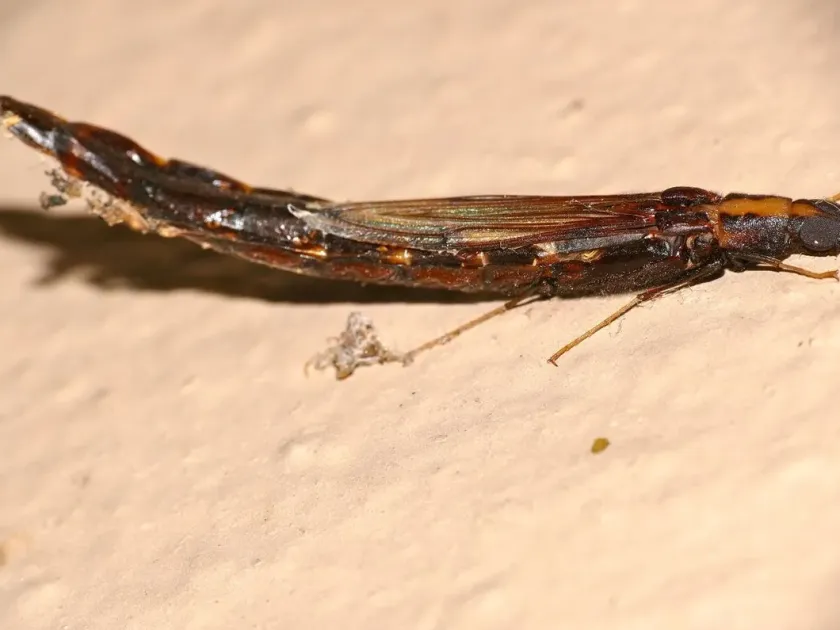
Description
How to identify
Melittomma insulare is a beetle belonging to the Lymexylidae family, commonly known as ship-timber beetles or wood-boring beetles. These insects are specialized pests that thrive within the woody structures of tropical trees.
The life cycle of this beetle consists of eggs, larvae, pupae, and adults. Unlike many other wood-boring insects, Melittomma insulare specifically targets palm species, with the adult female seeking out cracks or wounds in the trunk to deposit her eggs.
The larvae are the primary stage causing damage. They possess powerful mandibles capable of boring deep, extensive galleries through the trunk, which disrupts the vascular system and structural integrity of the palm.
The development of the species is highly dependent on environmental conditions, particularly high humidity. They are most prevalent in tropical environments where the density of coconut palms provides a stable and continuous food supply.
Entomological studies highlight this beetle as a significant factor in palm decline, as the larvae are hidden deep within the stem, making them particularly difficult to detect until substantial damage has already occurred.
What it damages
The primary host for Melittomma insulare is the coconut palm (Cocos nucifera). The pest's damage is characterized by the internal tunneling of larvae, which cuts off nutrient and water transport within the tree.
As the larvae bore deeper, the tree experiences a significant decline in vitality. This manifests as stunted growth, yellowing foliage, and a dramatic decrease in the yield of coconut fruit, leading to economic losses for growers.
In severe infestations, the galleries created by the larvae compromise the mechanical stability of the palm trunk. This makes the trees susceptible to snapping during high winds or heavy rainfall, resulting in complete tree loss.
The damage is often exacerbated by secondary fungal and bacterial infections that enter the tree through the entry and exit holes created by the beetles, causing rapid rot of the internal tissues.
Young palms are highly susceptible, but the pest also targets mature, productive trees. The cumulative effect of multiple larval generations can lead to the total death of a palm stand if left unmanaged.
Signs of infestation
One of the earliest signs of an infestation is the presence of frass (wood dust) accumulating at the base of the tree or around specific holes in the trunk bark. This indicates that larval tunneling is currently underway.
Yellowing leaves and crown dieback are critical indicators of advanced infestation. As the vascular system fails due to larval tunnels, the tree becomes unable to support its foliage, leading to rapid wilting.
The lower portion of the trunk may feel soft or hollow when inspected physically. In many cases, the entry points of the larvae are visible as small, distinct holes accompanied by sap weeping from the wounded bark surface.
During the night, adult beetles may be observed crawling on the surface of the bark, which provides a window for identifying the pest before the larvae cause deep structural damage to the heartwood.
Professional diagnostics often involve shallow probing of the trunk or the use of acoustic sensors to detect the chewing sounds of larvae working deep inside the wood, facilitating early intervention.
Control measures
Effective control of Melittomma insulare relies heavily on integrated pest management (IPM) strategies. Regular plantation inspections are essential to identify and isolate affected trees before the pest spreads.
Systemic insecticides applied via trunk injection are considered the most effective chemical method. By injecting chemicals directly into the vascular system, the toxin reaches the larvae embedded deep within the trunk.
Cultural practices, such as maintaining healthy tree vigor through proper irrigation and nutrition, are vital. A healthy tree has better natural defenses and can sometimes compartmentalize damage, preventing the pest from advancing.
Biological control, including the release of natural predators or the application of entomopathogenic fungi, serves as a sustainable way to suppress beetle populations in larger plantation areas.
- Prompt removal and burning of severely infested palms.
- Use of pheromone-based traps to monitor adult flight periods.
- Strict quarantine protocols to prevent the movement of infested seedlings.
Taxonomy
- Latin name
- Melittomma insulare
- Order
- Coleoptera (beetles)
- Family
- Lymexylidae
- EPPO code
- MEITIN
Discussion
No discussions yet — be the first.