
Large timberworm
Hylecoetus lugubris
Description
How to identify
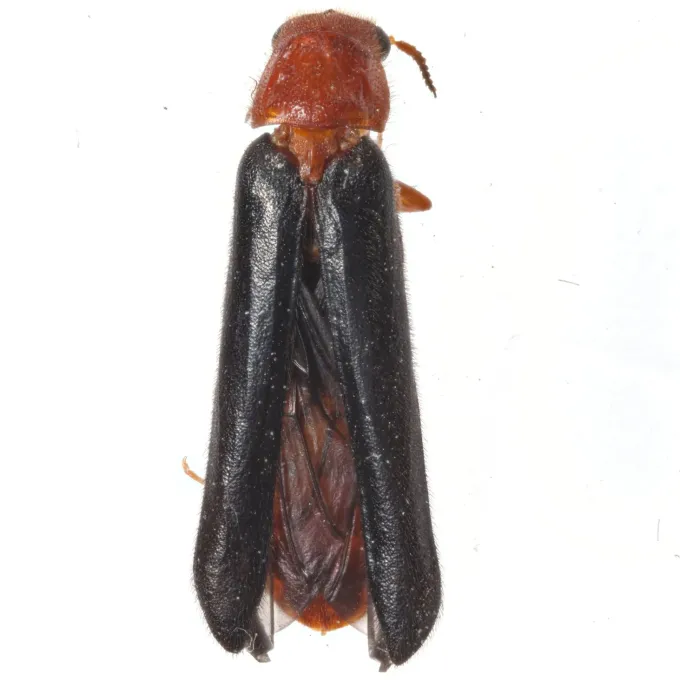
The large timberworm, known scientifically as Hylecoetus lugubris, belongs to the family Lymexylidae. Adults are elongated beetles, typically ranging from 6 to 15 mm in length.
This species displays sexual dimorphism, with males featuring prominent pectinate antennae used to detect females during the breeding season.
The larvae are cylindrical and creamy-white, characterized by a dark head capsule. They are specialized borers that spend their developmental life inside the wood tissue.
Systematically, they are classified within the order Coleoptera. A fascinating biological trait is their symbiotic relationship with specific fungi, which they cultivate within their tunnels.
Due to their cryptic lifestyle, adult beetles are rarely seen on the bark, as they prefer to remain hidden or emerge only for short periods during the mating season.
What it damages
Damage is primarily caused by larvae that infest weakened, dying, or freshly cut timber. They affect a wide range of coniferous and deciduous tree species.
The tunnels bored by the larvae significantly degrade the quality of wood, rendering it unsuitable for high-value timber use or structural construction.
The forestry industry faces significant losses when logs are left on forest floors, as this pest quickly colonizes fresh wood, especially during the spring season.
The fungi associated with the beetle cause discoloration in the wood, often referred to as 'bluestain,' which further lowers the commercial value of the timber.
Structural damage is extensive, as the network of galleries created by the larvae weakens the integrity of the trunk and allows other wood-decaying organisms to enter.
When it appears
The active flight period for adults typically begins in the spring, triggered by rising temperatures that signal the start of their reproductive cycle.
During this timeframe, adults search for suitable host trees to lay their eggs. Successful reproduction depends heavily on the moisture content and condition of the wood.
The larval stage is the longest part of the life cycle, lasting throughout the entire growing season while the larvae tunnel and feed within the timber.
Overwintering occurs in the larval stage, deep within the wood, which provides insulation against harsh winter temperatures and helps the insects survive.
As spring arrives, the larvae complete their development and pupate close to the surface, emerging as adults to start the next generation of the pest.
Signs of infestation
The most visible indicator of an infestation is the presence of fine, sawdust-like frass accumulating in crevices of the bark or at the base of the tree.
Circular exit holes, representing where the adults emerged, are clear markers of the infestation sites on the trunks of affected trees.
Removing the bark reveals a complex network of tunnels, often accompanied by dark staining caused by the symbiotic fungi cultivated by the larvae.
- Accumulation of sawdust-like frass;
- Circular exit holes in the bark;
- Discoloration or bluestain of wood;
- Weakened wood structural integrity.
Mass infestations often lead to a general decline in tree health, manifesting as chlorosis, crown dieback, or increased susceptibility to other forest pathogens.
Control measures
Effective management relies on sanitation logging, which involves removing infested timber from the forest before the adult beetles emerge in the spring.
Proper storage of logs is critical; moving fresh timber to sawmills quickly or storing it in conditions unsuitable for colonization helps minimize infestations.
Insecticidal treatments applied to valuable trees or log stockpiles during the flight period can serve as a preventative measure to reduce damage.
Forest management practices, including the removal of dead or dying trees, help maintain a healthy ecosystem and lower the overall population of the pest.
Pheromone traps are used for monitoring purposes to determine flight patterns, enabling foresters to apply protection strategies at the most opportune time.
Taxonomy
- Latin name
- Hylecoetus lugubris
- Order
- Coleoptera (beetles)
- Family
- Lymexylidae
- EPPO code
- HYLCLU
Discussion
No discussions yet — be the first.