
Hylecoetus matsushitai
Hylecoetus matsushitai
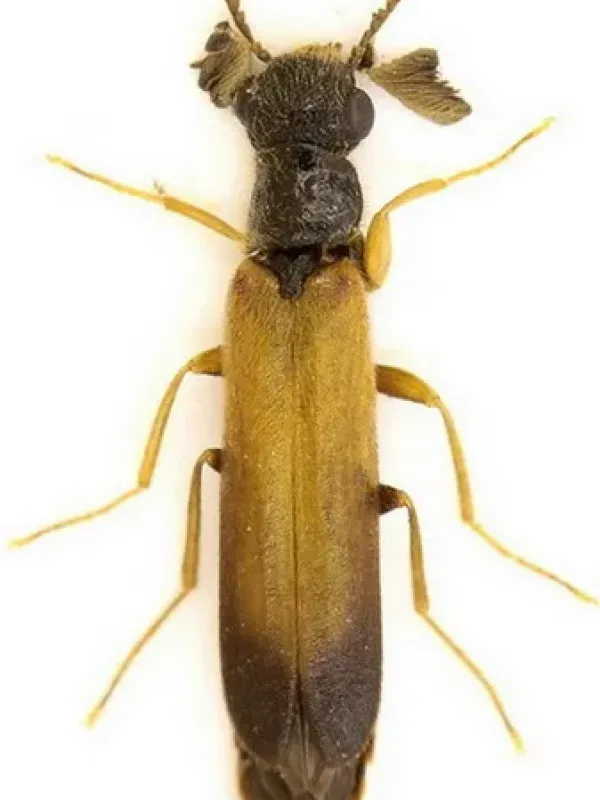
Description
How to identify
Hylecoetus matsushitai belongs to the family Lymexylidae (ship-timber beetles), order Coleoptera. Adult beetles are elongated and typically measure between 7 and 12 millimeters in length.
The body of the beetle is dark, ranging from brown to black, and may be covered with fine hairs. Males exhibit distinctive antennal structures, which are critical for accurate taxonomic identification of the species.
The larvae possess a specialized body shape adapted for navigating narrow galleries within wood. They are legless, a characteristic that allows for efficient movement through the internal tunnel networks.
The life cycle of this beetle is intrinsically linked to symbiotic fungi. The female oviposits in bark crevices, and the developing larvae feed primarily on the fungus cultivated within their galleries.
This species is a specialized xylophagous insect that completes its development entirely within the wood of weakened or freshly cut timber.
What it damages
The larvae primarily feed on broad-leaved trees. Species such as oak, beech, and maple are frequently reported as hosts, particularly in forest ecosystems and urban wooded areas.
The pest favors freshly cut timber, fallen trees, or trees undergoing physiological stress, where the natural defense mechanisms like resin or sap flow are significantly reduced.
In ornamental gardens or landscapes, the beetle may attack trees that have suffered mechanical damage or are struggling due to environmental factors such as prolonged drought.
The insect does not pose a threat to dry, properly seasoned lumber, making effective storage and timber drying primary methods of damage prevention.
The damage is hidden, as the bulk of the larval activity occurs deep inside the trunk, making early visual detection of the infestation extremely challenging.
Signs of infestation
The most prominent sign of infestation is the appearance of frass, or fine wood dust, ejected from small holes in the bark of the host tree.
The color of the frass often matches the wood, which is a useful indicator to distinguish Hylecoetus activity from that of other stem-boring insects.
Upon removing a section of the bark, one can observe deep, winding tunnels. These galleries are often lined with a dark substance caused by the growth of symbiotic fungi.
During the adult flight period, circular emergence holes become visible on the surface of the bark, indicating that the new generation of beetles has completed its development.
In cases of severe infestation, the tree's health may rapidly decline, leading to crown dieback as the internal galleries interfere with the transport of nutrients and water.
Control measures
The primary control measure is the prompt removal and processing of infested, freshly cut, or fallen timber to disrupt the pest's reproductive cycle.
Preventive application of contact insecticides on the bark during the peak flight season can be effective in protecting high-value trees in parks or gardens.
Monitoring populations using pheromone traps or sticky traps is recommended in areas where the pest has historically caused significant damage to forest resources.
Maintaining the overall health of trees through proper irrigation, fertilization, and protection from mechanical injury helps bolster natural resistance against wood borers.
Adequate management of forest residue and rapid transport of harvested timber to processing facilities are essential to minimize the risk of infestation.
Taxonomy
- Latin name
- Hylecoetus matsushitai
- Order
- Coleoptera (beetles)
- Family
- Lymexylidae
- EPPO code
- HYLCMA
Discussion
No discussions yet — be the first.