
Melittomma
Melittomma
Description
How to identify
Melittomma is a genus of wood-boring beetles belonging to the family Lymexylidae. These insects are specialized in colonizing various species of hardwood trees.
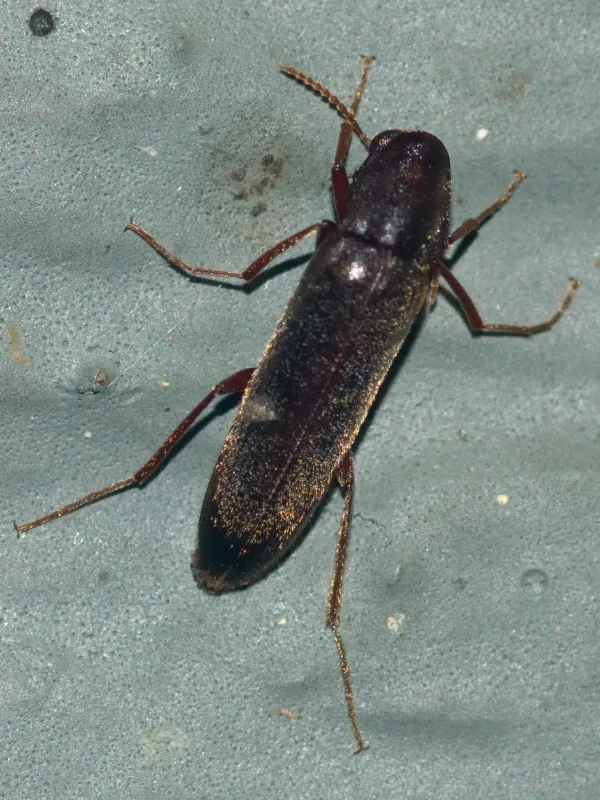
Adult beetles are elongated, typically ranging from 10 to 20 mm in length. Their bodies are cylindrical and colored in dark brown or black tones, often covered in fine pubescence.
The larvae are specialized for boring into dense wood, possessing a robust head capsule and powerful mandibles that facilitate their movement through the xylem.
These insects are highly sensitive to chemical cues released by weakened or stressed trees, which guides the female beetles to suitable sites for oviposition.
The life cycle is closely synchronized with the tree's physiological state, as larvae require specific nutrients present in the wood of susceptible host trees.
What it damages
Melittomma species primarily attack deciduous trees, including species of oak and chestnut, which are frequently found in forests and managed landscapes.
The damage is caused mainly by the larval stage, which constructs extensive galleries deep within the trunk, disrupting the tree's vascular system.
By excavating the wood, the larvae significantly weaken the structural integrity of the stem, making the tree prone to breakage during storms or high winds.
The physical damage also creates entry points for secondary pathogens, such as wood-decaying fungi and bacteria, which can accelerate the tree's decline.
Heavy infestations lead to crown dieback, reduced vigor, and eventually the death of the tree if the infestation is not managed or treated in time.
Signs of infestation
The presence of Melittomma is often indicated by small entry holes on the bark, accompanied by fine frass (boring dust) accumulating at the base of the tree.
Sap flow or "bleeding" from the trunk is a common symptom, appearing at the sites where larvae have breached the tree's outer defenses.
Cracking or loosening of the bark can reveal the underlying gallery networks, which are distinct signs of long-term colonization by the larvae.
Visual decline in tree health, such as premature leaf drop, stunted leaf development, and chlorosis, often points to internal damage caused by wood-borers.
An increased presence of woodpeckers or other insectivorous birds on the trunk can sometimes be a secondary indicator of high larval activity inside.
Control measures
Sanitation is the most critical management strategy, involving the prompt removal and destruction of heavily infested or dead trees to eliminate breeding sites.
Applying trunk injections or topical insecticide treatments can be effective, especially when timed with the adult beetle emergence period in late spring.
Pheromone traps are highly recommended for monitoring beetle flight activity and can also be used for mass trapping to reduce the local population density.
Maintaining high tree vitality through irrigation, mulching, and proper fertilization helps prevent trees from becoming attractive hosts for Melittomma.
- Sanitary logging of infested trees.
- Systemic insecticide application to the bark.
- Monitoring with pheromone-based lures.
Taxonomy
- Latin name
- Melittomma
- Order
- Coleoptera (beetles)
- Family
- Lymexylidae
- EPPO code
- MEITSP
Discussion
No discussions yet — be the first.