
Gila Woodpecker
Melanerpes uropygialis
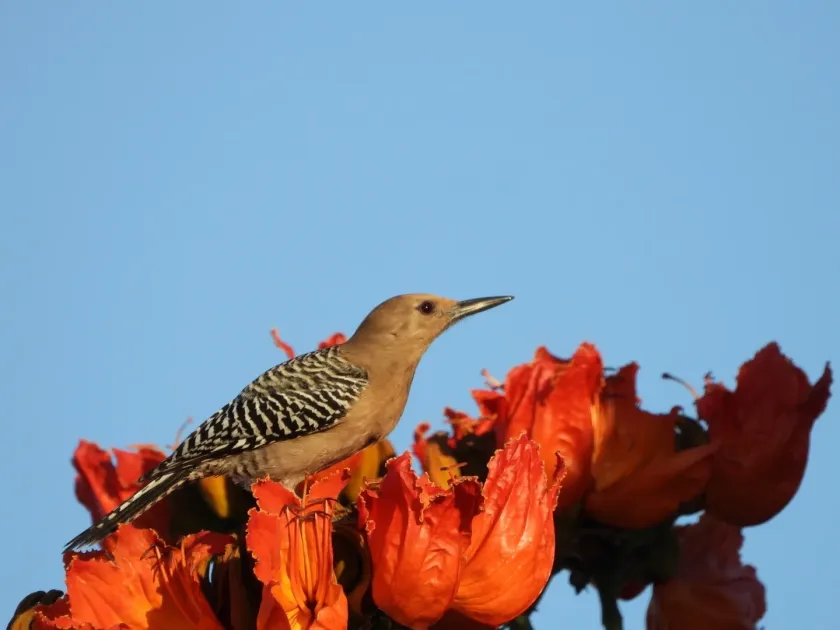
Description
How to identify
The Gila Woodpecker (Melanerpes uropygialis) is a bird species belonging to the Picidae family. While these birds are ecologically valuable, they are often considered pests in agricultural settings due to their nesting and feeding behavior on fruit and ornamental trees.
Adult Gila Woodpeckers are characterized by a grayish-brown plumage with black and white horizontal barring on their wings and back. The males of the species possess a distinctive small red patch on the top of their heads.
Their physical structure includes a sharp, strong beak designed for excavation, which they use to drill deep holes in trunks. This biological adaptation allows them to create nesting sites even in living, healthy hardwood and softwood trees.
Taxonomically, they fall under the order Piciformes. They are primarily desert-dwelling birds, but their adaptation to urban and rural landscapes has brought them into direct conflict with orchard owners and agricultural growers.
Their high metabolic rate and diurnal activity patterns mean they are frequently seen in orchards throughout the day, actively looking for sap, insects, or ripening fruit to consume.
What it damages
The damage caused by Gila Woodpeckers is primarily physical and structural. By drilling into the trunks and branches of trees, they damage the xylem and phloem, which are essential for water and nutrient transport.
Orchards with citrus, nut, or stone fruit trees are particularly vulnerable. The woodpeckers can strip large sections of bark, leaving the underlying wood exposed to weather and various opportunistic pathogens.
Beyond the structural damage, the birds directly feed on ripening fruit. This destruction of the crop reduces harvest yields and makes the remaining fruit susceptible to decay, rendering it unsuitable for commercial sale.
These birds often create multiple nesting cavities in the same tree, which significantly weakens its structural integrity. In high-wind areas, this predisposes the infested tree to snapping or significant limb failure.
- Debarking of healthy trees causing sap flow disruption.
- Direct consumption and destruction of ripening fruits.
- Creation of nesting cavities that compromise trunk strength.
- Secondary infections from bacteria and fungi entering the drilling holes.
When it appears
Activity levels fluctuate throughout the year, with nesting season being a major period of concern. During spring, Gila Woodpeckers are highly active in selecting and excavating suitable trees for rearing their offspring.
As the summer progresses and fruit begins to ripen, the woodpeckers' behavior shifts toward foraging. This phase is characterized by frequent visits to orchards to harvest the juicy, high-sugar fruits.
Autumn remains a period of high activity as the birds continue to forage before the cooler months arrive. Orchard owners should remain vigilant during the entire ripening window of their respective crops.
Winter activity is generally lower, though birds may continue to utilize existing holes for shelter. At this time, they may focus on foraging for insects in the cracks of bark, which can further aggravate existing tree wounds.
Effective pest management programs should be implemented prior to the onset of the nesting season to discourage the birds from establishing their territory within the orchard premises.
Signs of infestation
The most obvious signs of Gila Woodpecker activity are the circular or oblong holes drilled into the tree trunk. These openings are clean-cut and often lead deep into the heartwood of the tree.
Fresh wood chips scattered at the base of the tree are a clear indicator of recent excavation work. Additionally, sap or gum oozing from these holes serves as a marker that the tree's internal circulation system has been compromised.
Observations of damaged, pecked-at fruit hanging on the tree or lying on the ground provide evidence of the birds' foraging habits. Such fruit usually shows ragged edges and signs of rapid spoilage.
The birds themselves are often visible and less skittish than other wild birds, frequently allowing for easy visual identification during an orchard inspection.
Leaf yellowing or branch wilting above a specific drilling site can indicate that the vascular pathway has been disrupted, confirming significant localized damage to the tree's anatomy.
Control measures
Visual deterrents such as reflective ribbons, hanging CDs, or holographic balloons can be effective in scaring away the birds, as they disrupt their visual stability while flying.
Ultrasonic bird repellers are a modern solution that emits high-frequency sounds, which can effectively keep Gila Woodpeckers at a distance without causing harm to the trees or the environment.
Physical exclusion is the most reliable method for high-value crops. Covering branches or entire tree canopies with specialized fine-mesh netting prevents the birds from accessing the fruit and the bark.
Treating existing wounds is critical. Any holes or bark damage should be cleaned and filled with appropriate wound dressing or pruning sealant to prevent moisture buildup and the entry of wood-decay fungi.
Orchard maintenance, including balanced fertilization and proper pruning, can keep trees vigorous, making them less attractive to birds that typically seek out stressed trees with sap or insect infestations.
Taxonomy
- Latin name
- Melanerpes uropygialis
- Family
- Picidae
- EPPO code
- MLANUR
Discussion
No discussions yet — be the first.