
Red-bellied woodpecker
Melanerpes carolinus
Description
How to identify
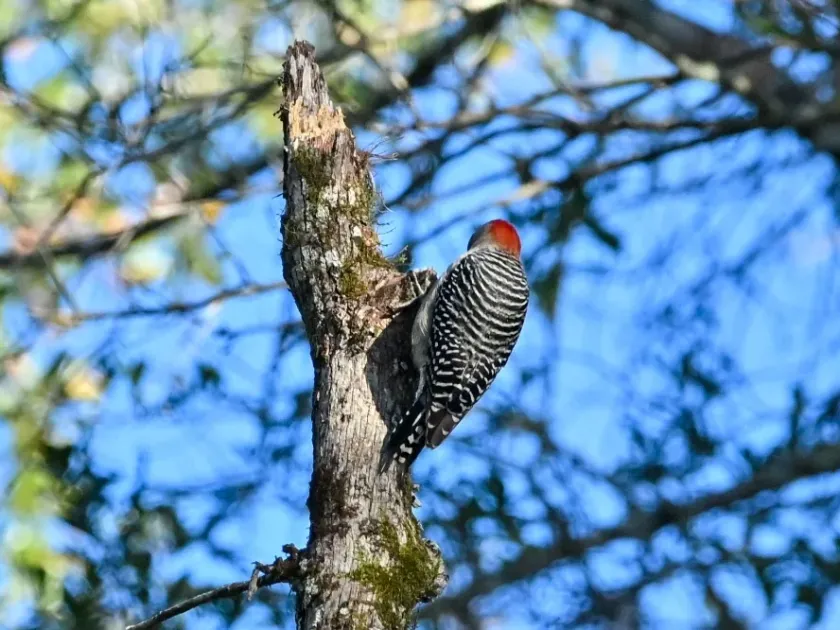
The Red-bellied woodpecker (Melanerpes carolinus) belongs to the Picidae family, order Piciformes. Despite the name, its red belly is often difficult to see, while the bright red cap and nape are more prominent.
These birds measure about 24–26 cm in length. They have a barred, zebra-like pattern on their backs and wings, which provides camouflage against tree bark while they forage.
The species is native to North America. They typically nest in cavities in dead or living trees, which they excavate themselves, showing high adaptability to forest edges and nearby human settlements.
Their life cycle involves spring breeding and the rearing of chicks until mid-summer. As year-round residents, their constant presence in agricultural areas increases their potential for crop damage.
Their powerful bills are highly specialized for drilling into wood, though they have evolved to exploit a variety of food sources, including agricultural fruits and vegetables.
What it damages
Red-bellied woodpeckers cause significant damage to orchard fruits, specifically apples, pears, peaches, and citrus, by pecking holes into the fruit to consume the pulp.
They often drill into the bark of young, thin-barked trees to reach insects, which causes physical wounding that can lead to fungal infections and systemic tree decline.
Viticulture is also at risk, as these birds peck at grapes during the ripening phase, causing mechanical damage that promotes rot and attracts secondary pests like hornets and wasps.
Field crops, especially sweet corn, are frequently attacked when the kernels reach the milk stage. The woodpeckers tear open the husks, leaving the cob exposed and vulnerable.
Beyond direct consumption, the cumulative effect of constant pecking stresses trees and reduces the quality and marketable yield of the affected harvest.
Signs of infestation
Visible signs of infestation include irregular, deep holes in fruits. These holes often have jagged edges, and half-eaten or discarded fruit parts are found underneath the trees.
Small, frequent, and circular holes on the bark of tree trunks indicate that the woodpeckers are investigating the tree for food, often causing sap flow from the wounds.
The birds are very vocal; their rolling "churr" call is a primary indicator of their presence in an orchard during early morning and late afternoon hours.
In cornfields, shredded husks at the top of the ear are a clear sign of woodpecker activity, differing from the damage caused by larger mammals or insects.
White, distinct bird droppings on branches or near the base of the tree are clear indicators that the birds are using the tree as a frequent feeding or resting station.
Control measures
Effective management includes the use of visual deterrents, such as reflective holographic tape, old CDs, or realistic owl decoys that should be rotated periodically to prevent acclimation.
Physical exclusion is the most successful method for high-value crops; using netting to cover individual trees or vine rows effectively keeps woodpeckers away from the ripening fruit.
Bioacoustic deterrents, which play recorded distress calls of the species or predatory bird sounds, can be used to create a hostile environment that discourages roosting.
Maintaining orchard hygiene is critical; removing fallen fruit and decaying wood eliminates food sources that attract the birds to the area in the first place.
Applying wound sealants to any physical damage on trunks helps prevent the onset of pathogens and makes the trees less attractive to woodpeckers looking for insects in decaying wood.
Taxonomy
- Latin name
- Melanerpes carolinus
- Family
- Picidae
- EPPO code
- MLANCA
Discussion
No discussions yet — be the first.