
Megamelus
Megamelus
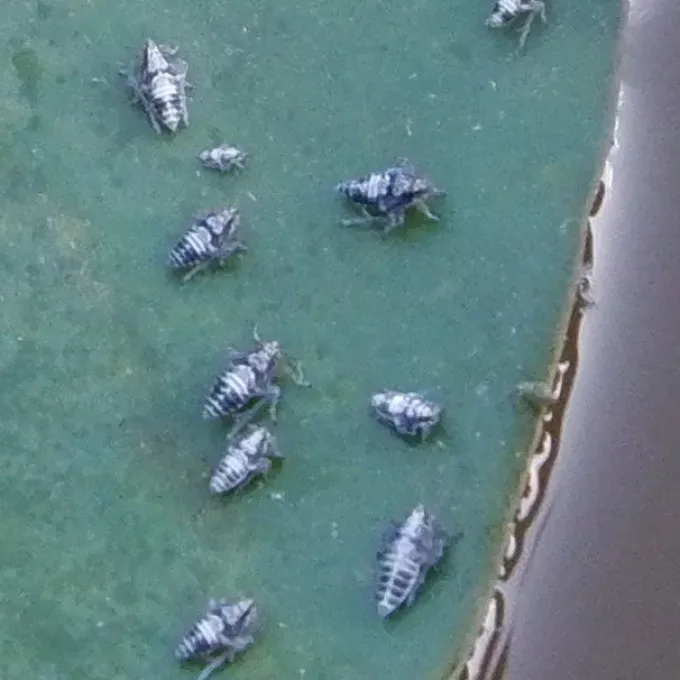
Description
How to identify
Megamelus is a genus of insects in the family Delphacidae, commonly known as planthoppers. These small insects are highly specialized for living on various aquatic and semi-aquatic plant species.
Adult insects typically possess a distinct head structure with prominent keels and specialized mouthparts adapted for piercing and sucking plant sap. They exhibit wing polymorphism, often displaying both macropterous and brachypterous forms.
Their coloration is generally cryptic, ranging from pale yellow to light brown, allowing them to blend into their host plant environment effectively. Immature stages, or nymphs, resemble smaller versions of the adults and grow through several molts.
This genus has gained significant attention in agricultural and ecological research due to its potential as a biological control agent for invasive aquatic plants.
The taxonomic classification of Megamelus highlights their adaptation to specific plant hosts, which is a crucial aspect for their implementation in environmental management programs.
What it damages
The most significant host for the Megamelus genus, particularly species like Megamelus scutellaris, is the water hyacinth (Eichhornia crassipes). The feeding activity of these insects significantly impacts the plant's health.
By consuming plant fluids, these planthoppers disrupt the nutrient transport system, leading to reduced photosynthetic capacity and overall decline in plant vigor.
In regions where water hyacinth is considered an invasive weed, the damage caused by Megamelus contributes to the reduction of large monoculture mats on water surfaces.
Although they are beneficial in weed control contexts, high populations can occasionally affect other aquatic flora if the local balance is disrupted, though this is rare.
Heavy infestations lead to leaf chlorosis, necrosis, and reduced reproductive success of the weed, ultimately aiding in the natural management of aquatic ecosystems.
When it appears
The life cycle and activity of Megamelus are strongly influenced by water temperature and climatic conditions. They are most active during warmer months when plant growth is at its peak.
In tropical environments, reproduction occurs year-round, while in temperate zones, the population cycle is synchronized with the seasonal growth and senescence of aquatic plants.
Adults typically survive the winter by finding shelter in stagnant plant debris or in the protected coastal vegetation surrounding water bodies.
As spring approaches and temperatures rise, the insects resume feeding and colonize new aquatic vegetation, starting a new cycle of population growth.
The speed of development from egg to adult is highly dependent on environmental variables, with warmer waters accelerating the metabolic processes of the insects.
Signs of infestation
Initial infestation is marked by small pin-prick lesions on the leaves and petioles, which are the primary sites where the insects feed.
- Yellowing (chlorosis) of the leaves around feeding sites.
- Wilting of the plant due to systemic damage to the vascular tissues.
- Visible presence of nymphs and adults on the underside of leaves and inside leaf sheaths.
- Sooty mold growth on leaves, which develops on the insect excrement (honeydew).
- General decay and collapse of the infested plant mats.
Heavily infested patches appear brown and decayed compared to the vibrant green of healthy plants, signaling high activity of the planthopper population.
Control measures
In most scenarios, Megamelus is not treated as a pest but rather as a beneficial organism used for the sustainable management of invasive weeds.
If population control is necessary for specific non-invasive plant protection, preventing the movement of infested plant material between water bodies is the most effective strategy.
Physical removal of heavily infested weeds can help reduce insect numbers, but caution should be exercised to maintain ecological stability.
Chemical control is generally discouraged in aquatic settings due to the significant risk of water pollution and damage to non-target aquatic organisms.
Encouraging natural biodiversity, including the presence of predators such as dragonflies and spiders, provides a balanced way to manage the insect population naturally.
Taxonomy
- Latin name
- Megamelus
- Order
- Hemiptera (bugs, aphids, leafhoppers)
- Family
- Delphacidae
- EPPO code
- MEGUSP
Discussion
No discussions yet — be the first.