
Megalomus
Megalomus
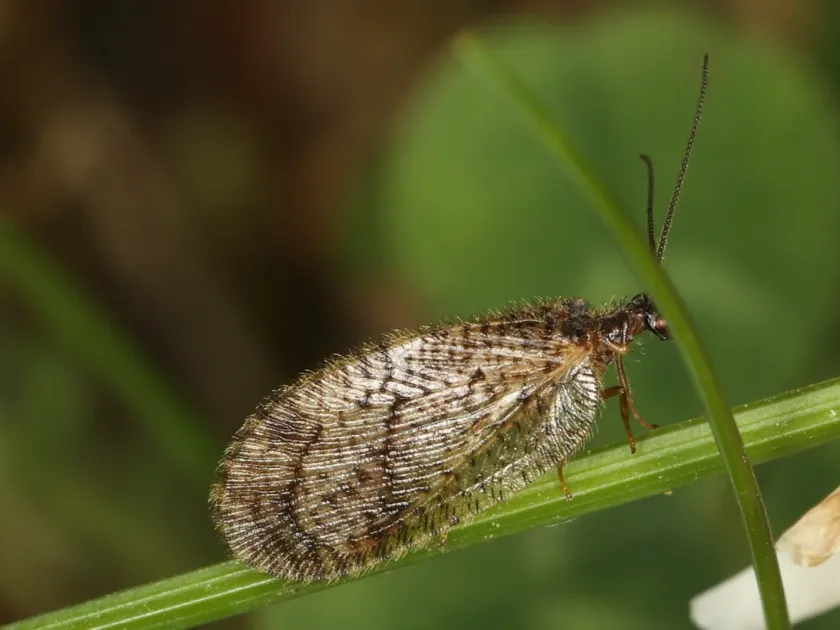
Description
How to identify
The genus Megalomus belongs to the order Neuroptera and the family Hemerobiidae, commonly known as brown lacewings. These insects are characterized by their delicate, lace-like wing venation.
Adults are typically small, brownish insects. They are nocturnal or crepuscular, making them less visible during the daylight hours compared to other species.
The larvae of Megalomus are specialized predators with elongated bodies and mandibles adapted for grasping prey. They are highly mobile and active hunters.
The life cycle encompasses four stages: egg, three larval instars, pupa, and adult. They are known for their rapid developmental rates under favorable conditions.
Taxonomic identification of species within this genus usually relies on morphological analysis of the male terminalia, which is performed by entomological experts.
What it damages
It is crucial to clarify that Megalomus species are not pests. They are strictly entomophagous, meaning they feed on other insects and mites.
These insects are highly effective at controlling populations of aphids, mealybugs, scales, and spider mites on a wide variety of agricultural crops.
By consuming large numbers of harmful pests, they provide significant ecosystem services in orchards, vegetable fields, and commercial greenhouses.
They contribute to the natural suppression of pest outbreaks, often keeping them below economic injury levels without human intervention.
As generalist predators, they adapt their feeding habits to the available prey density, making them resilient allies in sustainable agriculture.
Control measures
There is no need to control Megalomus, as they are beneficial allies to farmers and agronomists in managing pest populations.
The main strategy is conservation. Avoiding the indiscriminate use of broad-spectrum insecticides is vital to maintaining these populations in the field.
Integrating biological control methods involves fostering habitats that support these predators, including hedgerows and wildflower borders.
If chemical interventions are required for specific pests, choosing targeted, low-toxicity products helps preserve beneficial populations like Megalomus.
Promoting a diversified agroecosystem ensures the presence of these natural enemies, which is a cornerstone of modern integrated pest management (IPM).
Taxonomy
- Latin name
- Megalomus
- Family
- Hemerobiidae
- EPPO code
- MEGMSP
Discussion
No discussions yet — be the first.