
Leafcutting bee
Megachile lippiae
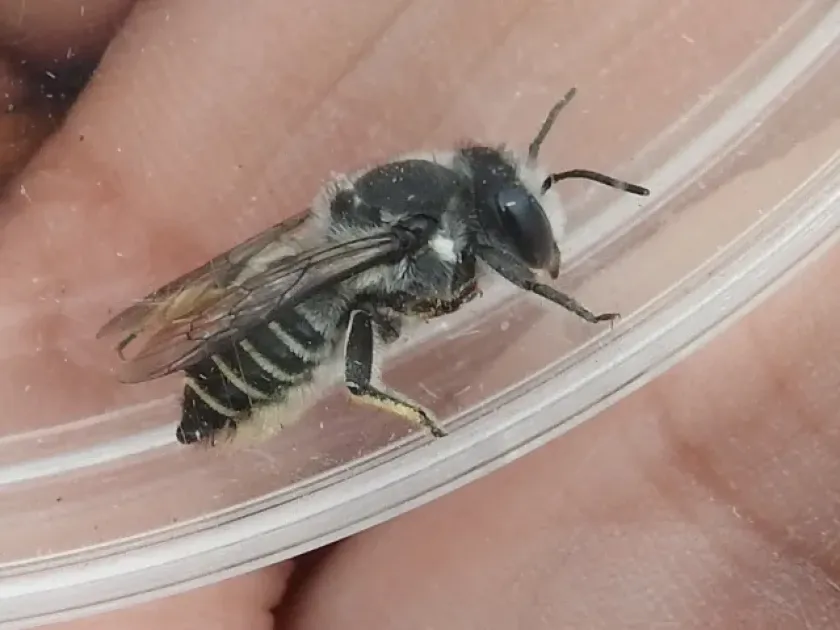
Description
How to identify
The leafcutting bee (Megachile lippiae) belongs to the Megachilidae family, order Hymenoptera. These bees are solitary insects known for their unique ability to cut pieces of leaves for nest construction.
They are characterized by their sturdy build and a specialized pollen-carrying apparatus (scopa) located on the underside of the abdomen, rather than on their legs.
The females have sharp, powerful mandibles designed for precise cutting of leaf margins, which they use to build individual brood cells in pre-existing cavities.
The development cycle follows complete metamorphosis: egg, larva, pupa, and adult. They typically overwinter as prepupae inside cocoons lined with leaf segments.
These bees thrive in sunny environments where they can easily locate both floral resources for nectar and suitable materials for nest building.
What it damages
The primary damage caused by Megachile lippiae involves the aesthetic and physiological impact on garden plants due to the removal of leaf tissue.
Commonly affected plants include roses, wisteria, lilac, and various shrubs, where the bees harvest material for their nests during the spring and summer months.
While the bees do not consume the leaf tissue as a primary food source, the reduction of leaf area hampers photosynthesis, potentially stressing the plant.
Severe infestations can lead to substantial loss of foliage, reducing the decorative appeal of ornamental gardens and impacting the plant's overall vigor.
Damage is typically scattered, as each bee selectively chooses leaves that provide the structural integrity required to seal the brood cells properly.
Signs of infestation
The hallmark of leafcutting bee activity is the presence of clean, semi-circular or oval cutouts along the edges of plant leaves, appearing as if cut by shears.
These marks are distinct from the irregular, jagged feeding patterns characteristic of caterpillars or beetles, which often eat the interior of the leaf.
You may observe the adult bees in action, flying with a piece of leaf held securely beneath their abdomen as they return to their nesting sites.
Nesting sites consist of tube-like structures packed with leaf segments, often found in old wood, hollow plant stalks, or crevices in structures.
Presence can be confirmed by inspecting the nearby vegetation for the typical circular missing segments that indicate the bee's activity in the immediate vicinity.
Control measures
Control of leafcutting bees is rarely necessary because they are beneficial pollinators, and damage to healthy, established plants is usually cosmetic rather than fatal.
For sensitive or young plants, physical barriers such as fine mesh netting are the most effective way to prevent bees from reaching the foliage.
Avoiding the use of broad-spectrum insecticides is crucial, as these chemicals harm essential pollinator populations, including the leafcutters themselves.
Managing the garden environment by removing dead wood or hollow stalks can discourage bees from setting up their nests in unwanted areas of the property.
If plant damage is persistent, maintaining plant health through proper fertilization and watering helps the foliage recover faster from the loss of leaf area.
Taxonomy
- Latin name
- Megachile lippiae
- Order
- Hymenoptera
- Family
- Megachilidae
- EPPO code
- MEGCLI
Discussion
No discussions yet — be the first.