
Megachile disjuncta
Megachile disjuncta
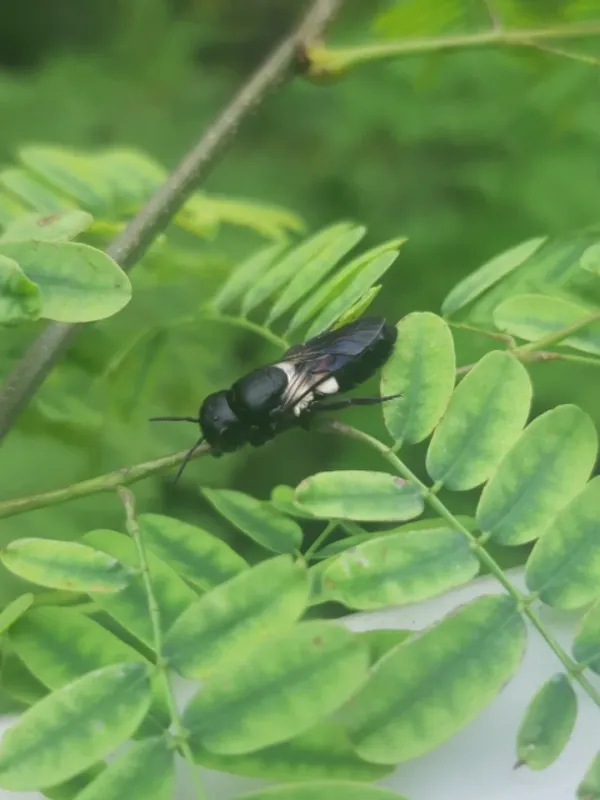
Description
How to identify
Megachile disjuncta is a species of bee belonging to the Megachilidae family within the order Hymenoptera. As a solitary bee, it does not live in colonies like honeybees, but instead constructs individual nests for its offspring.
Adult bees are typically 10–15 mm long, with a robust body covered in hairs. Females are distinguished by the presence of a specialized pollen-collecting brush located on the underside of the abdomen, known as a scopa.
The life cycle involves the transformation from egg to larva, pupa, and finally adult bee. Females spend significant time foraging for nesting materials, specifically selecting resilient leaf fragments to build their protective cells.
Nesting sites are usually found in existing cavities, such as hollow plant stems, decaying wood, or crevices in stone walls. The architecture of the nest consists of these leaf-lined cells, where the female deposits nectar and pollen as food for the larva.
While ecologically valuable as pollinators, their habit of harvesting leaves makes them occasional pests in horticultural settings where the preservation of perfect leaf aesthetics is paramount.
What it damages
The primary hosts for Megachile disjuncta are various ornamental shrubs and flowering plants. Roses, lilacs, and wisteria are among the most frequent targets due to the texture and flexibility of their leaves, which are easy for the bee to manipulate.
The damage is strictly mechanical, as the bees use their powerful mandibles to cut precise pieces of foliage. These fragments are then transported back to the nest to serve as structural material for the brood chambers.
The signature sign of this activity is the presence of near-perfect semi-circular or oval cuts on the leaf margins or interiors. The edges of these cuts are extremely smooth, distinguishing them from the irregular feeding patterns caused by caterpillars or beetles.
In cases of high bee population density, the cumulative loss of foliage can be significant. This reduces the photosynthetic capacity of the plant and severely impacts the visual appeal of landscape specimens, which is a major concern for nursery owners.
Although rare, extensive defoliation can stress plants, potentially making them more susceptible to drought or secondary diseases that gain entry through the open wounds left by the bee’s surgical-like cuts.
Control measures
Managing Megachile disjuncta requires a balanced approach, as these insects serve an essential role as pollinators in the ecosystem. Total eradication is rarely recommended; instead, focus on mitigation and protection strategies.
Physical barriers, such as lightweight row covers or fine netting, are highly effective during the bee's peak activity period in late spring. This prevents the bees from accessing susceptible foliage while the plant is young and vulnerable.
Natural repellent sprays containing essential oils or bitter plant extracts can deter bees from settling on specific plants. Regular application during the active flight season often encourages the insects to move to less desirable vegetation nearby.
Garden hygiene is another management tool. By sealing gaps in wooden fencing or garden structures and providing artificial nesting blocks placed far from ornamental areas, you can divert the bees toward non-problematic areas.
Chemical control should be avoided whenever possible due to the risk to beneficial pollinators. If an outbreak necessitates intervention, treatments should be applied at dusk when the bees are inactive, using targeted, low-toxicity formulations.
Taxonomy
- Latin name
- Megachile disjuncta
- Order
- Hymenoptera
- Family
- Megachilidae
- EPPO code
- MEGCDI
Discussion
No discussions yet — be the first.