
Leafcutter bee
Megachile concinna
Description
How to identify
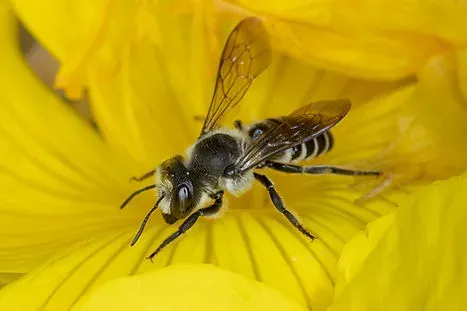
The leafcutter bee (Megachile concinna) is a member of the Megachilidae family. Unlike honeybees, these are solitary insects known for their unique nesting habits and their specialized use of leaf tissue.
Adult bees are equipped with strong, specialized mandibles designed specifically to cut sections of leaves. Their bodies are covered in dense hairs, and females possess a specialized pollen-carrying structure on their abdomen.
The life cycle of Megachile concinna is highly dependent on warm temperatures. They are most active during the peak of summer, spending their time foraging and collecting nesting material.
Instead of building large hives, these bees nest in small cavities, such as hollow plant stems, cracks in wood, or abandoned holes in the soil. Each brood cell is lined with circular pieces of leaf matter.
While they are beneficial pollinators, their nesting behavior often leads to significant leaf tissue loss on ornamental and horticultural plant species.
What it damages
The primary damage caused by leafcutter bees occurs when females harvest leaf material to construct their nests. This behavior leaves noticeable patterns on the foliage of various host plants.
Common targets include roses, fruit trees, and various herbaceous plants. The bees selectively cut pieces from the edges of leaves, leaving behind distinctive, smooth-edged holes.
Repeated harvesting can significantly reduce the photosynthetic capacity of a plant. In severe cases, extensive defoliation can stress young plants and impede their growth and overall health.
The aesthetic damage is often the most significant impact, especially for ornamental gardens. While rarely lethal to mature plants, the loss of foliage can affect the plant's vigor.
Damage tends to be localized but can become widespread if a large number of nests are established in a single area, necessitating intervention to protect plant health.
Signs of infestation
The most telltale sign of leafcutter bee presence is the appearance of perfect, semi-circular or oval-shaped cuts along the margins of leaves. These cuts do not typically cross major leaf veins.
Affected plants often appear as if they have been professionally trimmed or decorated with patterns, a symptom that distinguishes them from erratic insect herbivory or caterpillar damage.
Gardeners may observe the bees in flight, carrying small pieces of leaf matter tucked underneath their bodies as they return to their nesting sites.
Close inspection of garden structures or nearby hollow stems may reveal the presence of nests. These are recognizable by the tightly packed layers of leaf segments, which act as protective covers for the larvae.
Fresh cuts appearing daily on new growth confirm that the nesting activity is ongoing, indicating the need for immediate protective strategies.
Control measures
Physical exclusion is the most effective way to prevent damage. Covering susceptible plants with fine mesh netting or garden fleece during the peak nesting season prevents the bees from accessing the foliage.
Cultural practices, such as sealing gaps in wood or removing hollow plant stems, can eliminate potential nesting sites, encouraging the bees to relocate to less sensitive areas.
Chemical control is generally discouraged because leafcutter bees are valuable pollinators. Instead, focus on integrated pest management (IPM) to minimize harm to the local bee population.
Providing alternative nesting materials or planting "trap plants" that are highly preferred by the bees can distract them from your ornamental flowers and vegetables.
Monitoring is key to managing populations. By identifying the nesting sites early and applying gentle deterrents, gardeners can mitigate damage without resorting to harmful pesticides.
Taxonomy
- Latin name
- Megachile concinna
- Order
- Hymenoptera
- Family
- Megachilidae
- EPPO code
- MEGCCO
Discussion
No discussions yet — be the first.