
Oak hawk-moth
Marumba quercus
Description
How to identify
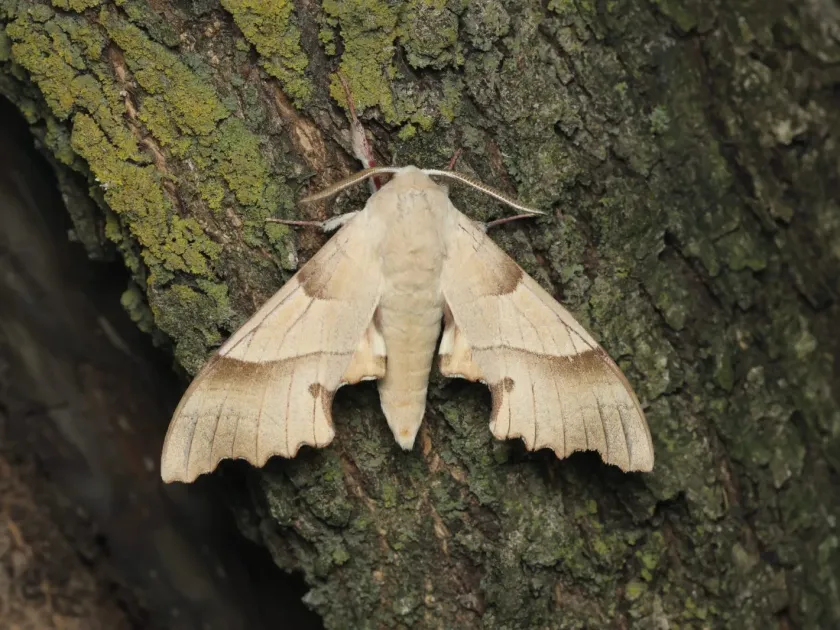
The Oak hawk-moth (Marumba quercus) is a large moth belonging to the family Sphingidae, within the order Lepidoptera. The adult has a wingspan of 75–110 mm and is characterized by ochre-brown to grayish colors with dark patterns that mimic dry leaves, providing excellent camouflage.
The caterpillar of this species reaches 80–90 mm in length. It is bright green with diagonal yellowish stripes on its sides and a distinctive blue or yellow horn on the posterior end of the body, a common feature in many hawk-moth species.
The pupa is dark brown with a glossy surface, measuring 40–50 mm. It typically overwinters in the soil, buried several centimeters deep within a firm earthen cocoon, which serves as protection against temperature fluctuations.
Adult moths do not feed, as their mouthparts are reduced. Their primary function is reproduction and egg-laying on host plants, an activity performed during nighttime hours.
This species is a typical forest dweller, favoring warm and dry oak woodlands as well as parks where its primary host tree species are present.
What it damages
The primary host plants for the Oak hawk-moth larvae are various oak species (Quercus), particularly the pedunculate and sessile oak. In rarer instances, the caterpillars may feed on the foliage of sweet chestnuts and a few other deciduous trees.
Adult caterpillars have a high metabolic rate and can quickly strip foliage, which, during outbreaks, leads to partial or total defoliation of branches and sometimes entire tree canopies.
The pest poses a particular threat to young saplings and weakened trees, as the loss of a significant leaf surface area hampers growth rates and compromises the overall vitality of the tree.
Damage tends to be patchy or localized. In favorable years, the population density can rise to critical levels, causing noticeable suppression of forest cultures and ornamental plantations in urban or garden settings.
Although the Oak hawk-moth rarely causes the death of mature trees on a large scale, its activity weakens the plant's immune system, making it more susceptible to secondary pests, such as wood-boring insects and fungal diseases.
When it appears
The flight of the adult moths occurs once a year, usually from late May to mid-July. The exact timing and duration of the flight period depend on the specific climatic conditions of the region and the current season's temperature profile.
Females lay their eggs singly or in small groups on the underside of the host plant leaves. Embryonic development lasts approximately 10–14 days, depending on the cumulative active temperatures.
The period of active caterpillar feeding covers the summer months, from June to September. During this time, the larvae pass through five larval instars, gaining significant biomass and intensively damaging the leaf cover.
Pupation takes place in late summer or early autumn. The caterpillars descend from the tree canopies and burrow into the leaf litter or the top layer of soil, where they transform into pupae.
The pupal stage is a diapause phase that lasts throughout winter and spring. The emergence of the next generation of adults occurs the following spring, once the mean daily air temperature reaches optimal values for moth flight.
Signs of infestation
The first visual sign of the pest's presence is the occurrence of skeletonized leaves or eaten leaf margins within the oak canopy. The caterpillars tend to graze actively on leaf edges, leaving only the primary leaf veins intact.
A significant amount of frass (excrement) found on the ground beneath the tree is an indirect but reliable indicator that large larvae are feeding in the canopy, necessitating a detailed inspection of the branches.
Spotting the caterpillars themselves can be difficult due to their effective mimicry of the leaf color; however, careful inspection of the underside of leaves or the petioles may reveal their presence.
A decline in canopy aesthetics and premature partial leaf drop in mid-summer within oak habitats also point to the activity of leaf-eating insects, including this hawk-moth species.
Late autumn surveys of the soil in the root zone can reveal the presence of pupae, which helps in forecasting the potential population density for the upcoming year.
Control measures
Mechanical methods include the manual collection and destruction of caterpillars, which is feasible for low-growing ornamental trees or small private gardens.
Biological control agents are the preferred choice in forestry and park management. The application of products based on Bacillus thuringiensis allows for effective management of young larvae without harming beneficial insects.
Chemical treatment of trees with systemic or contact insecticides (e.g., pyrethroids) is justified only in cases of high population density that poses a significant threat to the health of valuable tree specimens.
An important agronomic practice is the cultivation of the soil in the root zone during autumn. This helps destroy overwintering pupae through mechanical damage and by displacing them to the soil surface, where they become vulnerable to predation by birds.
- Monitoring population levels using pheromone or light traps.
- Encouraging natural entomophagous predators such as birds, insectivorous mammals, and parasitic Hymenoptera.
- Maintaining the overall health of the forest stand through proper irrigation and fertilization.
Taxonomy
- Latin name
- Marumba quercus
- Order
- Lepidoptera (butterflies)
- Family
- Sphingidae
- EPPO code
- MARBQU
Discussion
No discussions yet — be the first.