
Marionfyfea
Marionfyfea
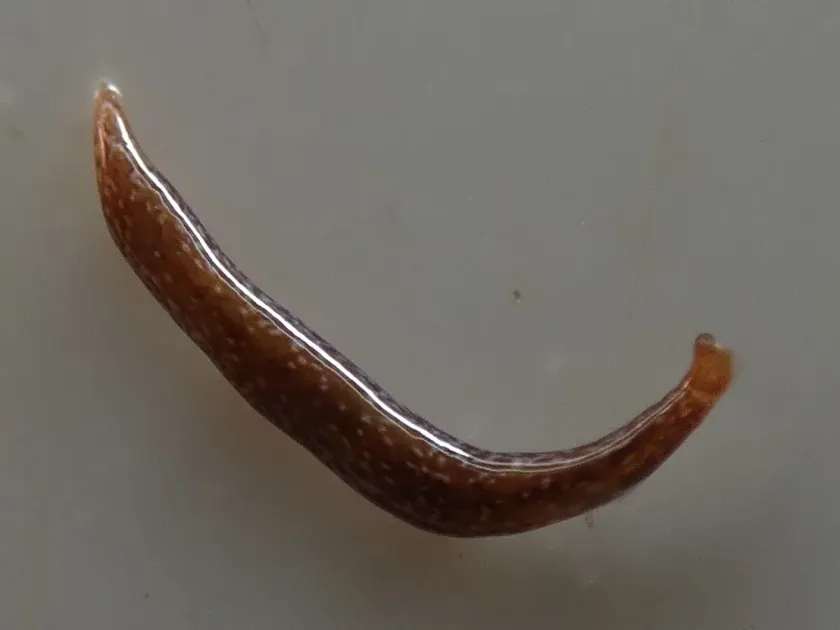
Description
How to identify
Marionfyfea is a genus of terrestrial predatory flatworms belonging to the family Geoplanidae. These invertebrates are characterized by their elongated, flattened bodies that lack distinct segments or appendages.
Their coloration typically ranges from dark brown to olive, often marked with longitudinal stripes on the dorsal side. Unlike insects, they move via ciliary action and muscular contractions, leaving a distinct mucus trail behind them.
These organisms are highly dependent on moisture, as their epidermis is permeable and prone to rapid desiccation. They possess simple eyespots at the anterior end, which are strictly used for light sensitivity.
Adult individuals vary in length but generally measure between a few millimeters to several centimeters. They are strictly nocturnal creatures, showing a strong aversion to light and dry conditions.
Taxonomically, they are categorized within the subfamily Rhynchodeminae, known for containing various terrestrial planarians found in damp environments across different climates.
What it damages
Marionfyfea acts as a specialized predator targeting terrestrial mollusks, such as slugs and snails. While this might seem beneficial, their presence often indicates an ecosystem imbalance.
In greenhouses and nurseries, these worms can become invasive, consuming not only pest mollusks but also beneficial soil organisms, including earthworms, which are crucial for soil health.
They feed by attaching to their prey and secreting potent digestive enzymes that liquefy the mollusk's tissues externally, which are then ingested through a protrusible pharynx.
While they do not cause direct mechanical damage to plant tissues, their presence can disrupt local biological pest control efforts by preying upon beneficial organisms.
Their invasive potential in new habitats poses a threat to biodiversity, as they often lack natural predators in introduced areas, leading to rapid population surges.
When it appears
Activity levels are highly dependent on environmental humidity and temperature. They thrive in damp, cool conditions typically found in greenhouses or during wet, rainy seasons outdoors.
In climate-controlled greenhouses, their activity can be continuous throughout the year, provided there is enough moisture and a steady population of mollusks to serve as food.
During periods of drought or high heat, they retreat deep into the soil profile or hide under organic debris, often forming a protective mucus cocoon to survive the harsh conditions.
Reproduction occurs in cycles, with individuals laying egg capsules that hatch under favorable moisture conditions. A full life cycle can be completed relatively quickly in stable environments.
Spring and autumn are considered the most active seasons for their spread, as the climatic conditions are ideal for their movement across the soil surface.
Signs of infestation
Detection is often difficult due to their nocturnal habits and camouflage. One of the first signs of an established population is a noticeable decline in slug and snail activity.
Presence can be confirmed by finding empty mollusk shells or observing the faint, glistening mucus trails left on moist soil or container surfaces after a rain or watering event.
- Finding dormant, curled-up planarians under pots or damp timber.
- A mysterious disappearance of small snails from infested garden beds.
- Presence of fine mucus threads on soil surfaces during nighttime inspections.
Monitoring using artificial cover traps, such as pieces of damp cardboard or black plastic left on the soil, can effectively reveal the presence of these worms during the night.
If suspicious worms are found, they should be carefully handled, as some species are highly sensitive to skin oils and can disintegrate when touched improperly.
Control measures
Effective control focuses primarily on environmental manipulation to create unfavorable living conditions for these moisture-dependent predators.
Reducing soil surface moisture by switching to drip irrigation is the most efficient method to deter their movement and reduce their survival rate in greenhouse settings.
Removing potential shelters, such as leaf litter, decaying wood, and boards from the ground, forces the worms to leave the area or exposes them to lethal drying conditions.
Implementing physical barriers like sand or ash can disrupt their ability to travel, as these materials dry out their sensitive bodies upon contact.
Strict quarantine measures for imported soil or potted plants are essential to prevent the accidental introduction of Marionfyfea into new production areas.
Taxonomy
- Latin name
- Marionfyfea
- Family
- Geoplanidae
- EPPO code
- MAFYSP
Discussion
No discussions yet — be the first.