
Tobacco hornworm
Manduca sexta
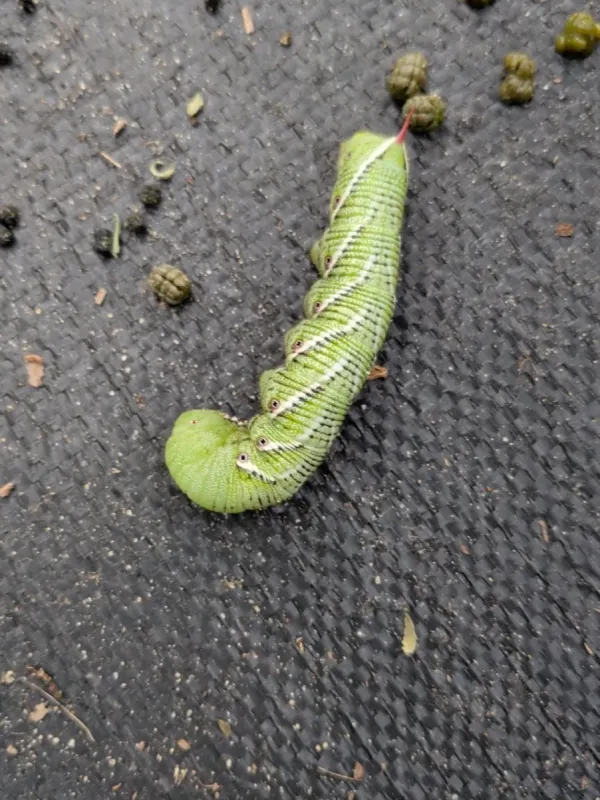
Description
How to identify
The Tobacco hornworm (Manduca sexta) is a large moth belonging to the family Sphingidae. The adult moth has a wingspan of up to 12 cm, with grayish-brown mottled patterns that provide excellent camouflage during the day.
The larvae, known as hornworms, are bright green with white V-shaped lateral markings. Their most distinctive feature is a prominent, horn-like protrusion on the posterior end of their body.
The life cycle consists of four distinct stages: egg, larva, pupa, and adult. In temperate climates, they can complete two generations in a single growing season.
Pupation occurs in the soil, where the insect overwinters. The pupae have a unique pitcher-handle-like sheath covering the developing proboscis, which is a key diagnostic feature for gardeners.
Female moths lay eggs individually on the undersides of leaves. These eggs hatch into small, ravenous larvae within a few days depending on environmental temperatures.
What it damages
The larvae cause significant damage due to their intense feeding activity. They possess strong mandibles capable of consuming large amounts of leaf tissue in a very short amount of time.
They primarily target plants within the Solanaceae family, including:
- Tomatoes
- Tobacco
- Potatoes
- Eggplants
- Peppers
In addition to stripping foliage, hornworms frequently chew into the developing fruits. This feeding damage leaves large, unsightly scars and open wounds that invite secondary pathogens and fruit rot.
A single mature larva can strip several branches of a tomato plant within days. Massive infestations can result in total defoliation, leading to plant death or total crop failure.
The rate of defoliation is alarming for growers, as these caterpillars consume up to four times their body weight in plant matter every single day as they approach the final instar stage.
Signs of infestation
The presence of hornworms is almost always indicated by the appearance of their frass (excrement). These large, dark, barrel-shaped droppings accumulate on the foliage below where the caterpillar is feeding.
The visual evidence of damage includes ragged leaf margins and missing foliage. Often, the caterpillars eat all leaf tissue between the veins, leaving a skeletonized plant appearance.
Because their green color provides near-perfect camouflage against the foliage, they are difficult to spot during the day. Inspecting plants in the early morning or late evening is highly recommended.
Using a UV flashlight at night is an extremely effective way to locate them. The caterpillars fluoresce under ultraviolet light, appearing bright and easy to spot against the backdrop of the plant.
Stunted plant growth and premature flower drop are often signs that a heavy infestation has been established for several days, causing the plant significant physiological stress.
Control measures
Hand-picking is the simplest and most effective method for small-scale gardens. Simply remove the larvae from the plants and destroy them; they are harmless to humans and do not bite or sting.
Biological control using Bacillus thuringiensis (Bt) is highly effective. This bacterium targets the caterpillars specifically while remaining safe for beneficial insects, pollinators, and the environment.
Natural predators, particularly parasitic wasps like Cotesia congregata, can manage populations. If you see white, pill-like cocoons on the back of a hornworm, leave it in the garden to allow the wasps to hatch.
Tilling the soil at the end of the season is a critical preventive measure. Disturbing the soil disrupts the pupal stage, killing the over-wintering insects and reducing the next year's population.
Chemical insecticides should be used as a last resort. If necessary, select products labeled for vegetable gardens and ensure they are applied in accordance with pre-harvest intervals to ensure safety.
Taxonomy
- Latin name
- Manduca sexta
- Order
- Lepidoptera (butterflies)
- Family
- Sphingidae
- EPPO code
- MANDSE
Discussion
No discussions yet — be the first.