
Tomato hornworm
Manduca quinquemaculata
Description
How to identify
The tomato hornworm, scientifically known as Manduca quinquemaculata, is a large moth belonging to the Sphingidae family. Adult moths have a wingspan of up to 12 centimeters and feature mottled gray-brown coloration with wavy patterns.
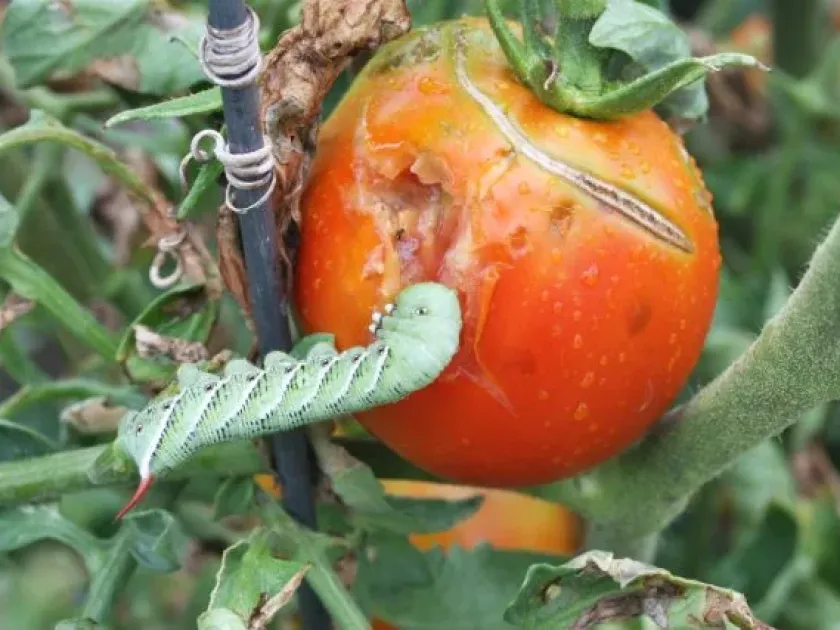
The larvae, or caterpillars, reach lengths of up to 10 centimeters. They are typically bright green with eight V-shaped white markings on each side and a characteristic horn at the posterior end, which can be blue or black.
Pupae overwinter in the soil at a depth of 10-15 centimeters. The pupae are dark brown and exhibit a unique feature: a separate sheath for the proboscis that resembles a pitcher handle, making them easy to recognize.
Adult moths are nocturnal and crepuscular, hovering over flowers to feed on nectar. The name "five-spotted" refers to the five pairs of orange-yellow spots found on the sides of the moth's abdomen.
The life cycle progresses through the egg stage, five larval instars, the pupal stage, and the adult moth. Under optimal summer temperatures, the entire cycle can be completed in about 30 to 50 days, leading to multiple generations per year.
What it damages
This pest primarily targets plants in the Solanaceae family. Its preferred hosts include tomatoes, potatoes, eggplants, peppers, and occasionally tobacco plants.
The larvae are voracious feeders and can quickly strip a plant of its foliage. They usually begin feeding on the upper leaves of the plant and proceed downward, consuming both leaves and tender stems.
Besides foliage, hornworms frequently chew into ripening fruit. These deep cavities can compromise the entire harvest and often serve as entry points for secondary pathogens and fruit rot.
Severe infestations can lead to complete defoliation of plants, severely impacting yield and vigor. Because of their large size, a single caterpillar can cause significant economic damage in a very short time.
Damage is most prevalent during the mid-to-late summer months when populations reach their peak. The later larval instars are responsible for the vast majority of the damage observed in the field.
Signs of infestation
The most immediate sign of an infestation is the sudden appearance of stripped foliage, often starting from the top of the tomato plant. If foliage is disappearing rapidly, the pest is likely present.
Frass (droppings) accumulation is a definitive indicator. These are dark, pellet-like droppings found on leaves or the ground beneath the area where the caterpillar is actively feeding.
A careful inspection of the undersides of leaves can reveal the presence of eggs. They are small, spherical, and pale green, typically laid singly, which makes them quite difficult to spot early on.
Due to their excellent camouflage, the caterpillars themselves are hard to see among the green foliage. Observing the plant during early morning hours can help spot them as they move or feed.
Fruit damage, characterized by deep, irregular gashes in tomatoes, is a late-stage sign. If such damage is noted, one should immediately look for the larvae on the plant.
Control measures
Hand-picking is the most practical and effective method for small gardens. Because they are large, they are easily visible once detected and can be manually removed and destroyed.
Cultural control through deep soil cultivation in the autumn and spring is crucial. Tilling the soil helps disrupt the soil-dwelling pupae, exposing them to environmental elements and predators.
Biological control using products containing Bacillus thuringiensis (Bt) is highly effective, especially against younger larvae, and is considered an environmentally friendly approach.
If chemical intervention is necessary, select targeted insecticides that minimize harm to beneficial predatory wasps, which act as natural biological control agents against hornworms.
- Regular monitoring of host plants
- Removal of nightshade weeds in the area
- Encouraging natural predators like braconid wasps
- Crop rotation to reduce overwintering success
Taxonomy
- Latin name
- Manduca quinquemaculata
- Order
- Lepidoptera (butterflies)
- Family
- Sphingidae
- EPPO code
- MANDQU
Discussion
No discussions yet — be the first.