
Lemon slug
Malacolimax tenellus
Description
How to identify
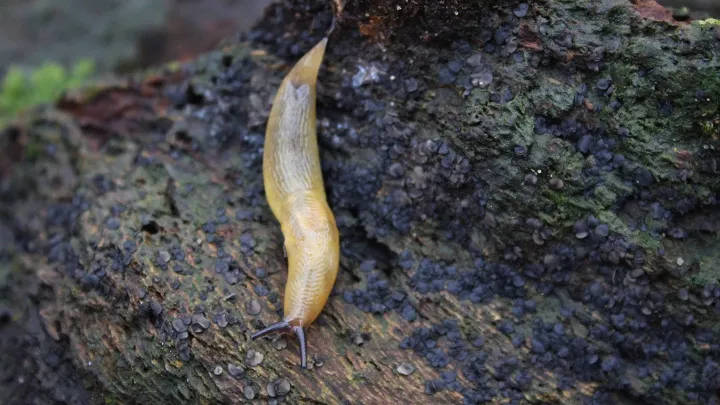
The lemon slug (Malacolimax tenellus) is a land slug belonging to the Limacidae family. It is easily recognized by its distinctive, bright lemon-yellow coloration, which sets it apart from many other common garden slug species.
Adult specimens typically reach 30–50 mm in length. Like all slugs, their body is covered in a protective layer of mucus that helps them maintain moisture and facilitates movement across various surfaces.
This species is highly sensitive to desiccation and sunlight. Therefore, they are primarily nocturnal, spending daylight hours hidden in damp, shaded environments such as leaf litter, soil crevices, or under garden debris.
While they are naturally found in woodland ecosystems, they frequently migrate into human-managed gardens, especially those that border forested areas or have high moisture levels.
Their life cycle involves laying eggs in moist soil or decaying organic matter. Once hatched, the juveniles begin feeding on fungi and vegetation, growing rapidly under favorable, humid conditions.
What it damages
The lemon slug poses a significant threat to various agricultural crops, including leafy greens, strawberries, and young vegetable seedlings. They feed by scraping the plant tissue with their radula.
Plants affected by the lemon slug often show irregular, unsightly holes in the leaves. In severe cases, the pest can consume the entire leaf lamina, leaving behind only the tougher, fibrous veins.
Young plants and seedlings are particularly vulnerable. Often, a small colony can cause complete destruction of a seedbed overnight, leading to substantial losses in greenhouse production.
Beyond direct feeding damage, the lemon slug is a vector for plant pathogens. As they crawl over foliage, they can transfer fungal spores and bacteria through their mucus, causing secondary infections.
Fruit damage is also common, especially with low-growing crops like strawberries. This ruins the commercial value of the produce and invites further rot and decomposition of the fruit.
When it appears
The activity period of the lemon slug is closely tied to humidity levels. They are most active during spring and autumn, particularly when frequent rainfall keeps the soil surface moist.
During the peak of summer, if dry spells occur, these slugs tend to burrow deeper into the soil to avoid dehydration. Their activity resumes almost immediately once moisture levels increase.
Autumn is a critical time for monitoring, as slugs are highly active while preparing for winter. They can cause significant damage to late-season vegetables and root crops left in the ground.
They overwinter in the soil as eggs or as juveniles. This survival strategy ensures a steady population presence from one growing season to the next if conditions remain suitable.
Agronomists should prioritize scouting for these pests early in the season, particularly after rainy spells, to detect early population spikes before significant damage is done.
Signs of infestation
The most tell-tale sign of a lemon slug infestation is the trail of dried, silvery mucus left on leaves, stems, and the surrounding soil. These tracks are usually most visible in the early morning.
Shredded foliage with ragged, irregular edges is another major indicator. If the damage is concentrated on low-growing plants, the presence of these slugs is highly likely.
Observing the garden at night with a flashlight is the most accurate way to confirm their presence. They are most active while the air is humid and darkness hides them from predators.
Checking under mulch, boards, or garden debris reveals where they hide during the day. Finding them in these sheltered, damp locations confirms they are utilizing the garden as a habitat.
Holes found on the surface of ripening fruits or vegetables sitting on the ground are also indicative of slug feeding, as they prefer to feed on soft, moist parts of the plant.
Control measures
Cultural control remains the foundation of management. Keeping the area clear of weeds, plant debris, and unnecessary boards removes the essential shelter required by the lemon slug for daytime survival.
Physical barriers can be effective in smaller areas. Materials such as wood ash, crushed eggshells, or coarse sand create a barrier that is uncomfortable for slugs to crawl over.
Promoting biological diversity is key to long-term control. Encouraging predators like hedgehogs, toads, frogs, and carabid beetles can significantly reduce slug populations naturally.
Trapping is a practical, non-chemical solution. Containers filled with beer, yeast, or sugar water act as effective baits, luring slugs to drown, which allows for their easy collection and removal.
When chemical control is necessary, look for formulations containing ferric phosphate. This active ingredient is effective against slugs but is generally safe for pets, wildlife, and domestic animals.
Taxonomy
- Latin name
- Malacolimax tenellus
- Order
- Molluscs
- Family
- Limacidae
- EPPO code
- LIMXTE
Discussion
No discussions yet — be the first.