
Valencia slug
Lehmannia valentiana
Description
How to identify
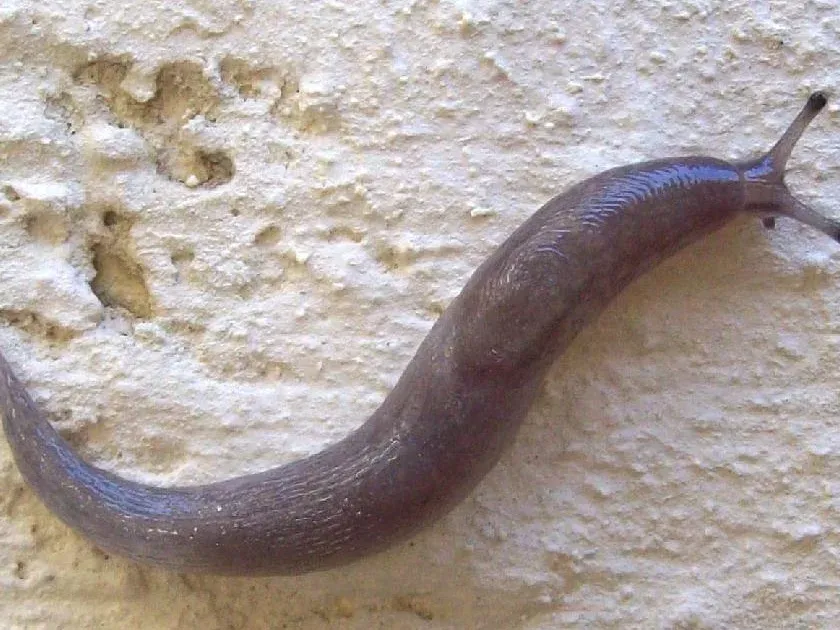
The Valencia slug (Lehmannia valentiana) belongs to the family Limacidae and the order Stylommatophora. It is a medium-sized mollusc, typically measuring 5–7 cm in length.
Its body has a characteristic appearance: light brown to yellowish-grey coloration with two dark longitudinal stripes on the mantle, often forming a lyre shape.
The skin is coated in abundant mucus, which prevents desiccation and facilitates movement across various surfaces, including vertical ones.
Unlike many other slug species, this slug is highly adapted to human-disturbed habitats, including greenhouses and residential gardens.
As a hermaphrodite species, it can reproduce rapidly, allowing populations to expand significantly even from just a few initial individuals.
What it damages
This pest is a generalist herbivore (polyphage), capable of causing severe damage to a wide range of cultivated plants in both greenhouses and open fields.
It primarily attacks vegetable crops such as lettuce, cabbage, tomatoes, and cucumbers, as well as young sprouts of decorative garden flowers.
Slugs consume tender leaves, leaving large ragged holes, and frequently tunnel into fruits and root vegetables, destroying their internal tissues.
They pose a significant threat to seedlings in greenhouse environments, where high humidity levels favor their rapid multiplication and feeding activity.
In addition to direct consumption of plant material, the slime trails left by these slugs can promote the spread of fungal and bacterial pathogens.
When it appears
The activity of the Valencia slug is directly dependent on environmental humidity and temperature levels throughout the growing season.
Peak activity typically occurs during humid, mild months in spring and autumn, especially when nighttime temperatures remain above 10–12 degrees Celsius.
In greenhouse environments, this pest can remain active throughout the entire year, provided that optimal moisture and temperature are maintained.
During hot or excessively dry periods, slugs migrate to deep soil layers or hide under debris and vegetation to avoid dehydration.
They overwinter both as adult individuals and as eggs, which are highly resilient to cold and other adverse climatic conditions.
Signs of infestation
The first indicator of an infestation is the presence of shiny, silvery trails of dried mucus on leaves, stems, or the surface of the soil.
Visible ragged edges on foliage and irregular holes of varying sizes indicate that slugs are actively feeding in the vicinity.
Inspect plants during the early morning or evening hours, when slugs are most likely to be found hiding beneath leaves or within plant crevices.
Fruit damage is often accompanied by rapid tissue decay at the feeding sites, which quickly leads to the loss of commercial product value.
The presence of slug feces near the affected areas is another clear sign of their ongoing feeding activity.
Control measures
Good agricultural practice is essential: regularly remove weeds and decaying plant matter that serve as shelter for these molluscs.
Use coarse mulching materials such as gravel or crushed eggshells to create abrasive barriers that hinder slug locomotion across the garden.
Biological control methods involve encouraging natural predators like hedgehogs, toads, frogs, and ground beetles to live in your garden area.
Chemical control options include the use of specialized molluscicides, such as metaldehyde or iron phosphate pellets, applied as directed.
- Water plants in the morning instead of evening.
- Install homemade traps using beer or sugar-yeast solutions.
- Apply copper tape barriers around raised beds.
Taxonomy
- Latin name
- Lehmannia valentiana
- Order
- Molluscs
- Family
- Limacidae
- EPPO code
- LEHMVA
Discussion
No discussions yet — be the first.