
Tree slug
Lehmannia marginata
Description
How to identify
The tree slug (Lehmannia marginata) is a terrestrial gastropod mollusc belonging to the family Limacidae and the order Stylommatophora.
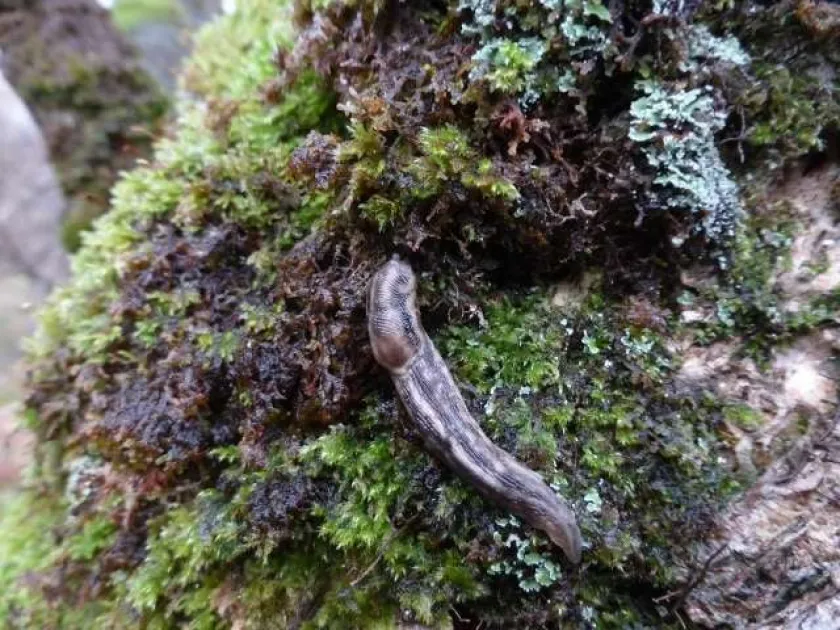
It is a relatively slender and agile slug, typically reaching a body length of 50 to 75 mm when fully extended.
The body color ranges from light grey to yellowish-brown, often featuring prominent dark longitudinal stripes along the sides that can form a mottled appearance.
A key diagnostic feature of this species is the mantle, which usually displays three dark stripes, with the middle one often appearing fainter or interrupted.
The mucus produced by this slug is thin, transparent, and watery, distinguishing it from other common slug species that produce thicker, stickier slime.
What it damages
This slug acts as a generalist herbivore (polyphage), feeding on a wide range of agricultural, horticultural, and ornamental plant tissues.
It poses a significant threat to young seedlings of vegetable crops, such as lettuce, cabbage, beans, and various root vegetables.
Beyond vegetable gardens, tree slugs can damage ornamental plants by chewing holes in petals and leaves, significantly reducing their aesthetic value.
In humid conditions or poorly managed gardens, these slugs can multiply rapidly, destroying a large portion of the crop within a short time frame.
Feeding damage not only results in biomass loss but also facilitates the entry of secondary pathogens, leading to fungal and bacterial rot infections.
When it appears
The life cycle of the tree slug is strongly correlated with temperature and humidity levels throughout the growing season.
Peak activity occurs during dusk, nighttime hours, and periods of consistent rain, as high moisture levels facilitate their movement across surfaces.
They overwinter as both adults and eggs, residing in sheltered areas such as plant debris, under stones, or within damp, loose soil.
Spring activity begins as temperatures rise, with slugs emerging from their shelters to seek out food sources, affecting early seasonal plantings.
Intense egg-laying occurs during the summer months, ensuring high population density by the mid-to-late summer period if conditions remain favorable.
Signs of infestation
The primary sign of an infestation is irregular, chewed edges on leaf blades, often leaving only the major leaf veins intact.
Characteristic trails of dried, transparent mucus are visible, appearing shiny or silvery when exposed to sunlight on leaves or soil.
Direct sightings of the slugs near the root zone during the morning hours or in damp, shaded spots during the day.
Presence of excrement on the leaf surface, which is usually specific in shape and consistency, typical for Limacidae species.
The appearance of localized rot spots on produce or vegetables that are in contact with damp soil, signaling mollusc feeding activity.
Control measures
Agrotechnical management includes consistent weeding, thinning of plant stands, and removing organic debris or stones to eliminate shelters.
Optimizing irrigation practices to ensure the top layer of soil dries out, which creates a hostile environment for slug movement.
- Trap methods: Placing boards, burlap sacks, or wet cloths to capture slugs that congregate underneath during the day.
- Barrier application: Spreading ashes, lime, or granulated superphosphate around garden beds to deter movement.
- Chemical control: Utilizing authorized molluscicides (e.g., metaldehyde-based pellets) according to the product label instructions.
- Biological control: Encouraging natural predators, including hedgehogs, toads, frogs, and ground-feeding birds, to help reduce population levels.
Taxonomy
- Latin name
- Lehmannia marginata
- Order
- Molluscs
- Family
- Limacidae
- EPPO code
- LEHMMA
Discussion
No discussions yet — be the first.