
Lehmannia nyctelia
Lehmannia nyctelia
Description
How to identify
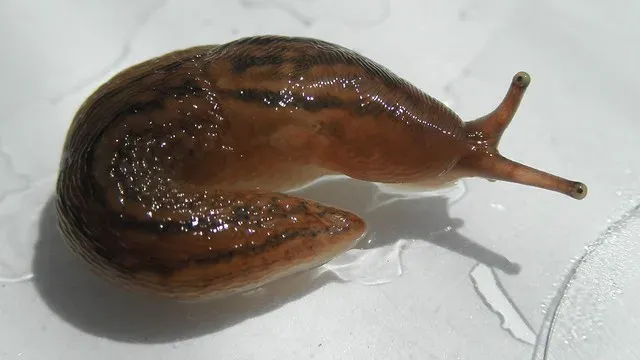
Lehmannia nyctelia is a species of air-breathing land slug belonging to the family Limacidae. Adult specimens typically measure between 40 and 70 millimeters in length.
The body is characterized by a greyish-brown coloration, often featuring distinctive longitudinal stripes on the mantle. The skin is covered in mucus that serves as a protective layer during movement.
This species is primarily nocturnal, making daytime observation difficult. Their presence is closely linked to environments with high humidity levels and available shelter.
They are capable of hiding in narrow crevices, under rocks, or within decaying plant matter to escape dry conditions. Their biological success depends on maintaining moisture levels in their habitat.
Reproduction involves laying clusters of eggs in moist soil or organic substrate. These eggs are translucent and often go unnoticed until they hatch in large groups.
What it damages
This slug is a polyphagous pest capable of damaging a wide variety of cultivated crops. Leafy vegetables and fruit-bearing plants are particularly susceptible to their feeding habits.
Commonly affected plants include lettuce, cabbage, potatoes, and strawberries. Slugs feed on the leaves, leaving behind jagged holes and skeletonized tissue.
In ornamental gardening, they frequently attack hostas, marigolds, and other succulent plants. They can cause significant damage to young seedlings, often destroying entire beds in a short period.
Beyond the destruction of plant tissues, they contaminate produce with slime and feces, rendering vegetables and fruits commercially unacceptable and unappetizing.
In greenhouse conditions, the damage potential is intensified by constant humidity, allowing the pest to thrive and reproduce continuously throughout the year.
When it appears
The active season for Lehmannia nyctelia begins in early spring when soil temperatures consistently rise above 5-8 degrees Celsius. They are most active during wet, rainy spells.
Population peaks are typically observed in late summer and autumn when humidity levels are high and night temperatures remain mild and favorable for foraging.
During dry summer heatwaves, slug activity declines sharply as they retreat into the soil or dense ground cover to maintain their moisture balance.
The life cycle can involve multiple generations annually depending on climatic conditions. In regions with mild winters, some individuals may remain active throughout the cold season.
Population dynamics are highly dependent on rainfall patterns, with prolonged wet weather serving as the primary driver for massive outbreaks and rapid garden colonization.
Signs of infestation
The most prominent sign of an infestation is the appearance of large, irregular holes in leaves, where the soft tissue between the veins has been consumed by the slugs.
A tell-tale silver, dried-out mucus trail is often found on the surfaces of leaves, stems, and soil, marking the paths the slugs traveled during their nightly feeding sessions.
Nocturnal inspections using a flashlight reveal the slugs themselves resting on or consuming the above-ground portions of the vegetation.
Damaged strawberries or other fruits display deep, crater-like pits, which often become sites for secondary bacterial or fungal rot infections shortly after the damage occurs.
Finding clusters of translucent eggs hidden under mulch or near roots is a strong indication that the slug population is establishing itself within the garden area.
Control measures
Effective management begins with good cultural practices, such as removing debris and weeds, which provide essential hiding spots for the slugs during the day.
Mechanical traps, such as wooden planks or damp burlap placed in the garden, can be used to attract slugs at night, allowing for easy collection and disposal in the morning.
Biological control using parasitic nematodes, specifically Phasmarhabditis hermaphrodita, offers an environmentally friendly solution that effectively reduces slug populations.
Chemical control options include using pellets formulated with metaldehyde or iron phosphate. These should be placed strategically around susceptible crops to minimize potential environmental impact.
- Practice regular weeding to eliminate daytime shelter.
- Create abrasive barriers using crushed eggshells, ash, or lime.
- Use drip irrigation to reduce the surface moisture of the soil.
- Encourage natural predators such as toads, frogs, and hedgehogs.
- Harvest crops promptly to minimize the time they are vulnerable to attack.
Taxonomy
- Latin name
- Lehmannia nyctelia
- Order
- Molluscs
- Family
- Limacidae
- EPPO code
- LEHMNY
Discussion
No discussions yet — be the first.