
Sugarcane spittlebug
Mahanarva posticata
Description
How to identify
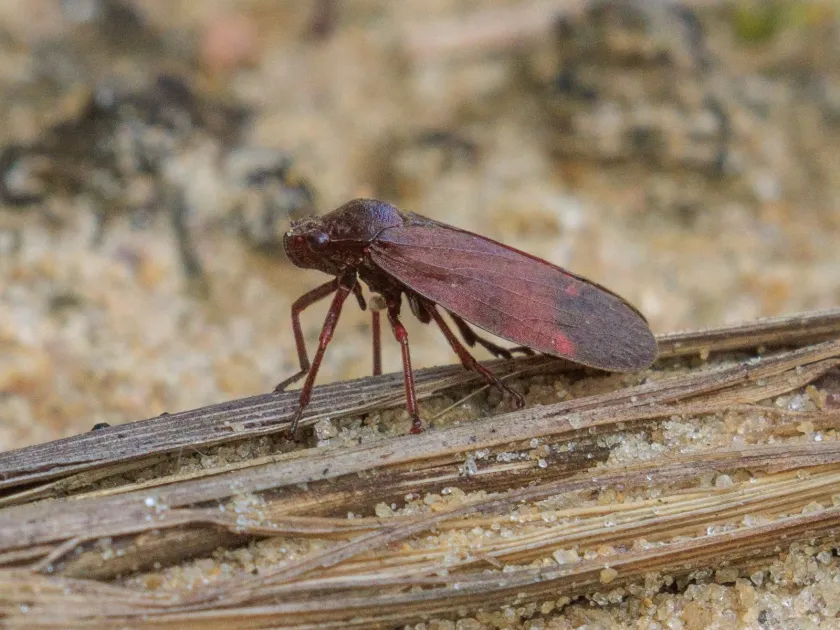
The sugarcane spittlebug (Mahanarva posticata) is a member of the Cercopidae family within the order Hemiptera. Adults are generally 10–12 mm long, characterized by their dark wing coloration, often featuring distinctive orange or reddish transverse bands.
The nymphs go through five developmental stages, during which they produce a thick, white foam. This substance serves as a protective layer, shielding the nymphs from dehydration and natural predators, which makes them difficult to spot during routine field scouting.
The life cycle of M. posticata is highly responsive to environmental factors, specifically temperature and humidity. In tropical conditions, breeding can occur throughout the year, with population explosions often occurring during the rainy season.
Eggs of this pest exhibit remarkable resilience, capable of entering a state of diapause during dry or unfavorable conditions. They are typically deposited in the soil or within dry plant debris, ensuring the survival of the species across cycles.
For adult monitoring, light traps are commonly deployed. These devices are highly effective at attracting nocturnal adults, providing agronomists with critical data regarding population density and the timing of necessary interventions.
##damage##Sugarcane is the primary host for Mahanarva posticata, though it can also infest various other grasses. Both adults and nymphs feed on the plant, causing severe physiological stress and potentially significant yield reduction.
Adults focus on feeding from the xylem of leaves and stems, extracting vital sap. This constant drainage of nutrients weakens the plant and stunts its growth, making it less productive during the harvesting season.
Nymphs cause more localized but severe damage to the root system and the plant base. By attacking the root zone, they disrupt the plant's ability to uptake water and essential minerals, which is particularly detrimental during dry spells.
Secondary infections are a major concern, as the feeding wounds created by the spittlebugs act as entry points for various pathogenic fungi and bacteria. These infections can lead to further tissue necrosis and systemic plant health decline.
In cases of high infestation, the total sugar content (sucrose levels) of the sugarcane is drastically reduced, rendering the crop economically unviable for processing and causing substantial financial losses for producers.
Signs of infestation
The most reliable field sign of an infestation is the presence of masses of white foam at the base of the sugarcane stalks. These foam clusters are the tell-tale sign of nymphal activity and should trigger immediate inspection.
Chlorosis, or the yellowing of leaves, is an early indicator of plant stress. As the nymphs and adults deplete the plant's resources, the leaves begin to dry out, curl, and eventually lose their photosynthetic capacity.
Upon closer inspection, the stalks may show visible punctures and dark necrotic spots where the insects have been feeding. These areas are often covered by sooty mold, which grows on the honeydew excreted by the spittlebugs.
Reduced internode length and overall stunting of the plant are clear indications of chronic feeding damage. The plants appear significantly smaller and less vigorous compared to healthy sections of the field.
The presence of predators or ants scavenging for the honeydew produced by the nymphs can also be a helpful visual indicator, pointing to localized areas where the pest population is most concentrated.
Control measures
Chemical control often involves the use of systemic insecticides, which are applied to the soil or sprayed over the canopy. Correct timing, matching application with the peak hatching of nymphs, is crucial for success.
Biological control represents a sustainable alternative, utilizing entomopathogenic fungi such as Metarhizium anisopliae. When applied correctly, these fungi can effectively reduce nymphal populations without harming the surrounding ecosystem.
Cultural management practices are essential, including the removal of crop residues and deep plowing. These actions destroy the resting eggs and nymphs, breaking the pest's life cycle before the next planting season.
Maintaining proper weed control and crop rotation is necessary, as alternative hosts can allow the pest to maintain a stable population even when the main crop is not present.
- Deployment of pheromone traps to disrupt mating cycles.
- Selecting and planting resistant or tolerant sugarcane varieties.
- Regular field scouting and monitoring with light traps.
- Encouraging the presence of natural enemies and parasitoids.
Taxonomy
- Latin name
- Mahanarva posticata
- Order
- Hemiptera (bugs, aphids, leafhoppers)
- Family
- Cercopidae
- EPPO code
- MAHAPO
Discussion
No discussions yet — be the first.