
Sugarcane spittlebug
Mahanarva fimbriolata
Description
How to identify
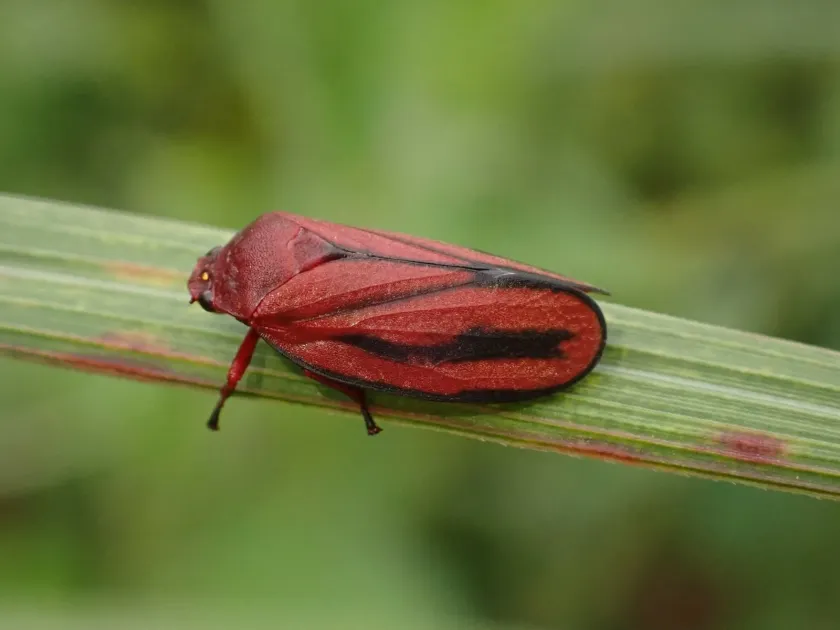
The sugarcane spittlebug, scientifically known as Mahanarva fimbriolata, is a member of the Cercopidae family within the order Hemiptera. Adult insects typically measure between 8 and 10 mm in length, possessing a dark, metallic body with distinctive yellowish-orange transversal bands across their wings.
The nymphs go through five distinct instars. Their most notable biological characteristic is the production of a frothy, spittle-like mass. This foam serves as a protective layer, shielding the nymphs from dehydration and predators while they feed on the host plant.
What it damages
The primary host for this pest is sugarcane (Saccharum officinarum). It attacks various parts of the plant, significantly impacting biomass production and sucrose accumulation within the stems.
Apart from sugarcane, the spittlebug is known to infest other Poaceae family plants, including various forage grasses. This ability to survive on alternative hosts makes it a persistent challenge for integrated crop management.
When it appears
The life cycle of Mahanarva fimbriolata is highly dependent on rainfall patterns. The arrival of the rainy season triggers the hatching of nymphs from diapausing eggs located in the soil or plant debris.
Depending on regional climate conditions, the insect can complete multiple generations within a single year. During the dry season, the pest predominantly survives in the egg stage, waiting for moisture to initiate the next cycle.
Signs of infestation
The most diagnostic sign of an infestation is the presence of white, bubbly froth found at the base of the sugarcane stalks. These masses are most visible during the early morning hours before high temperatures cause them to dry out.
Infested crops often exhibit stunted growth, yellowing foliage, and a notable reduction in stalks' quality. In severe cases, the plant vigor is severely compromised, leading to substantial yield losses during the harvest.
Control measures
Biological control is highly recommended, specifically the application of the entomopathogenic fungus Metarhizium anisopliae. This fungus effectively targets nymphs, reducing the population density in the soil environment.
Cultural management practices include post-harvest field cleaning and strategic tillage to destroy overwintering sites. Ensuring proper field drainage can also make the environment less conducive to nymphal survival.
Chemical control should be implemented based on economic injury thresholds. Using systemic insecticides applied to the soil or foliage is effective, but programs must prioritize rotating active ingredients to mitigate the risk of resistance development.
Taxonomy
- Latin name
- Mahanarva fimbriolata
- Order
- Hemiptera (bugs, aphids, leafhoppers)
- Family
- Cercopidae
- EPPO code
- MAHAFI
Discussion
No discussions yet — be the first.