
Giant burrowing cockroach
Macropanesthia rhinoceros
Description
How to identify
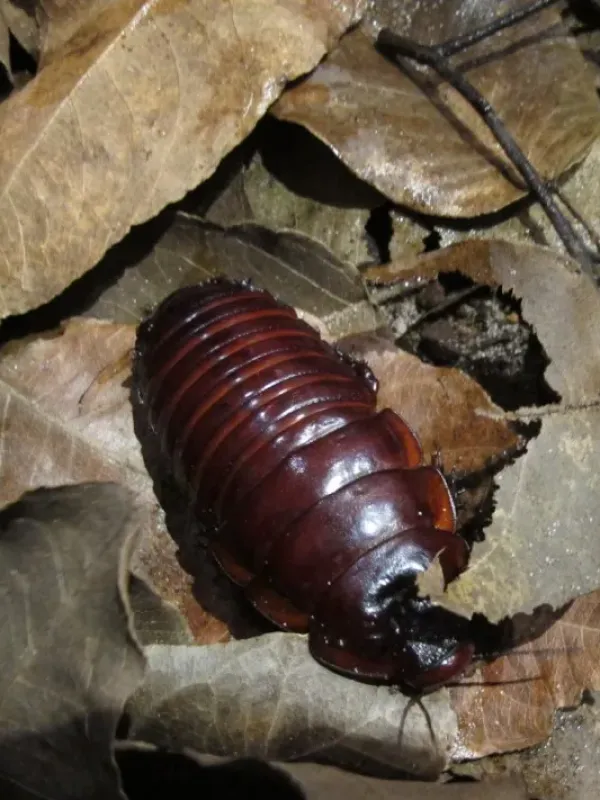
The giant burrowing cockroach, scientifically named Macropanesthia rhinoceros, is the world's heaviest species of cockroach.
These insects can weigh up to 35 grams and grow to 8 centimeters in length, showcasing a robust and glossy dark-brown exoskeleton.
They are wingless creatures specifically adapted for a subterranean lifestyle, featuring strong legs designed for digging through dense soil.
Unlike common household pests, these insects prefer living in deep burrows and do not typically enter human dwellings or storage areas.
Their life cycle is relatively long, with individuals living for several years, which is quite unique for the Blattodea order.
What it damages
As detritivores, Macropanesthia rhinoceros primarily feeds on decaying organic matter such as dead eucalyptus leaves.
They are not considered a significant agricultural pest, as they rarely cause harm to healthy, living plant tissues in open fields.
In greenhouses or controlled garden environments, they may occasionally gnaw on young, succulent plant shoots if organic litter is scarce.
Damage to roots is largely accidental, occurring while the insects excavate their tunnels rather than through direct feeding on the crop.
Economic damage to commercial agriculture is negligible, making them more of a curiosity than a threat to farmers and gardeners.
When it appears
Activity levels are highly dependent on environmental conditions, particularly soil moisture and temperature levels in their native range.
During the warmer and wetter months, they are more active on the surface, expanding their burrows and foraging for fresh leaf litter.
As temperatures drop or dry conditions persist, they retract deeper into their soil tunnels to conserve moisture and regulate body temperature.
Reproductive activities usually align with the peak of the warm season, ensuring that nymphs can develop in stable underground conditions.
While they are present year-round in their native Australian habitats, their surface visibility is distinctly seasonal.
Signs of infestation
The presence of this species is usually indicated by large, rounded burrow entrances visible on the soil surface in shaded areas.
Small piles of frass, resembling granular organic matter, are frequently found clustered near the exits of their subterranean tunnels.
In cases of high population density, one might notice small circular excavations around the base of ornamental shrubs or potted plants.
Audible rustling sounds near leaf mulch during the night can serve as a primary indicator of their nocturnal foraging activity.
Regular inspection of the ground beneath thick mulch layers is the most effective way to confirm the presence of an active colony.
Control measures
Strict control is rarely necessary given the beneficial role these insects play in breaking down organic matter in the ecosystem.
Mechanical cultivation of the soil is the most effective way to disturb their tunnels and encourage them to migrate elsewhere.
Removing unnecessary organic litter or mulch from around vulnerable seedlings will make the area less attractive for burrowing.
For greenhouse management, installing fine mesh barriers around the base of plants provides an adequate physical defense.
Integrated pest management strategies focusing on habitat modification are preferred over chemical treatments to maintain soil health.
Taxonomy
- Latin name
- Macropanesthia rhinoceros
- Family
- Blaberidae
- EPPO code
- MPANRH
Discussion
No discussions yet — be the first.