
Hummingbird hawk-moth
Macroglossum stellatarum
Description
How to identify
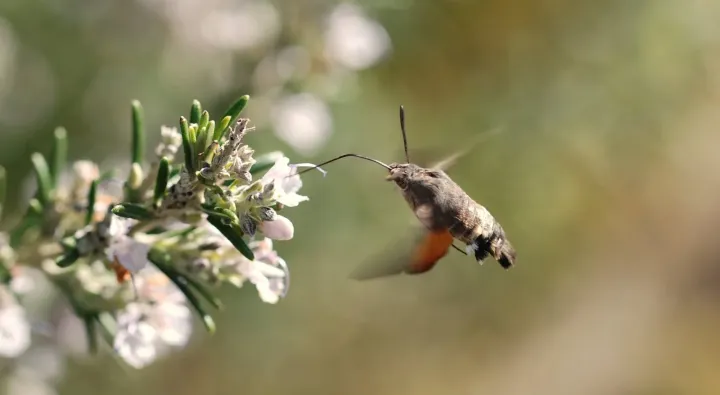
The Hummingbird hawk-moth is a diurnal moth species from the Sphingidae family. It is renowned for its incredible ability to hover in mid-air while feeding, which makes it look almost identical to a hummingbird.
The adult moth has a wingspan of about 40-50 mm with greyish-brown forewings. The hindwings are bright orange, which creates a distinct visual effect when the insect is in flight.
A very long proboscis is the most significant anatomical feature, allowing the moth to extract nectar from deep-throated flowers without ever landing on the petals.
The caterpillars are typically green with white or yellow stripes and a characteristic horn on the posterior end. They are mostly found on bedstraw (Galium) species.
Pupation occurs in a loose cocoon, often hidden in leaf litter or shallow soil near the host plant, where the insect waits for the next warm season.
What it damages
The Hummingbird hawk-moth is not considered a pest to agricultural or horticultural crops. It does not damage vegetables, fruits, or ornamental plants in any significant way.
Instead, these moths are highly efficient pollinators. By visiting a wide range of flowers, they play a crucial role in the reproductive success of many garden plants.
While the larvae consume foliage, they prefer weeds such as Galium, meaning they rarely compete with crop production or damage valuable garden vegetation.
The presence of this species is actually an indicator of a healthy, non-toxic garden ecosystem. It is a sign that the environment is suitable for a wide range of biodiversity.
Gardeners should view this insect as a natural asset that contributes to the overall productivity of the landscape rather than a threat to be managed.
When it appears
This species is highly mobile and can migrate over long distances. In many regions, they appear as early as spring, with generations continuing throughout the warm months.
Adult moths are most active during the peak of summer, specifically during sunny, warm days when flowers are producing the most nectar for feeding.
The life cycle from egg to adult is relatively short, typically taking about four to five weeks, allowing for multiple overlapping generations in warmer climates.
As temperatures drop in autumn, adults may hibernate in rock crevices, hollow trees, or even buildings until the following spring.
They are known to be active until the very late season, as long as there is an available nectar source and the temperature remains above a certain threshold.
Signs of infestation
The primary sign of their presence is the distinctive high-pitched humming sound produced by their rapid wing beats while they hover near nectar-rich flowers.
Observation is easiest near gardens filled with petunias, phlox, jasmine, or lavender. They are daytime visitors and are very noticeable due to their unique flight pattern.
Caterpillars are difficult to spot because they match the color of the host plant foliage. Their feeding damage on host weeds is usually insignificant.
Egg-laying behavior can be observed in mid-summer when females briefly hover and deposit single eggs on the host plant leaves.
Because they do not form groups or clusters, there are no widespread signs of infestation that would concern a gardener or an agronomist.
Control measures
There are no control measures required for the Hummingbird hawk-moth. They are beneficial insects that provide essential pollination services to the garden.
The use of broad-spectrum insecticides should be strictly avoided, as these chemicals will harm the hawk-moth populations and disrupt the natural balance of the garden.
If you wish to manage your garden effectively, focus on providing a diversity of nectar sources to attract these insects rather than attempting to eradicate them.
No agronomic intervention, such as spraying or trapping, is necessary or recommended for this species, as it is a valued member of the ecosystem.
Maintaining a healthy, chemical-free garden is the best way to support these beautiful pollinators and ensure the long-term health of your plants.
Taxonomy
- Latin name
- Macroglossum stellatarum
- Order
- Lepidoptera (butterflies)
- Family
- Sphingidae
- EPPO code
- MACGST
Discussion
No discussions yet — be the first.