
Macroglossum saga
Macroglossum saga
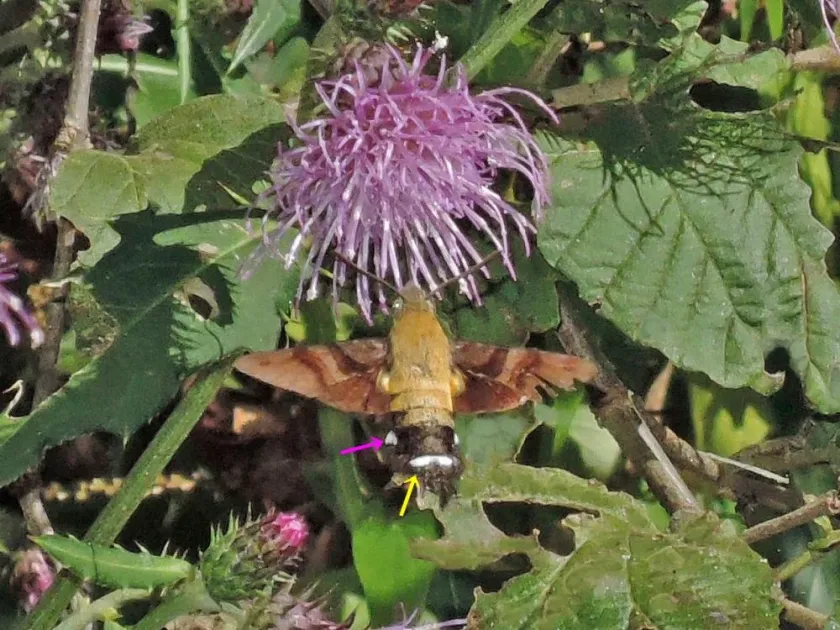
Description
How to identify
Macroglossum saga is a species of moth belonging to the family Sphingidae, commonly known as hawkmoths. These insects are easily recognized by their hovering flight, which allows them to feed on nectar similarly to hummingbirds.
Adult moths feature robust, spindle-shaped bodies with greyish-brown wings marked by subtle patterns. These markings serve as excellent camouflage when the moth rests on tree bark or foliage during the day.
The larvae, or caterpillars, typically possess a distinct horn-like appendage on their posterior end. As they develop through several larval stages, their coloration evolves to mimic the surrounding plant tissues.
The species undergoes complete metamorphosis: egg, larva, pupa, and adult. Hibernation generally occurs at the pupal stage, with the insects burying themselves in the soil or hiding within leaf litter.
Unlike many other hawkmoths that are strictly nocturnal, Macroglossum saga is known for its diurnal activity, frequently seen visiting flowers in bright sunlight.
What it damages
The primary damage is caused by the caterpillars, which feed on the leaves of various plants. Although not typically classified as a major agricultural pest, they can cause significant localized stress to ornamental plantings.
Host plants often include species from the Rubiaceae family and others. The caterpillars consume leaf tissue starting from the edges, working inwards, which impairs the plant's ability to photosynthesize effectively.
In cases of high infestation, the loss of leaf mass can lead to stunted growth in seedlings or young ornamental bushes, reducing their decorative value and overall vigor.
Damage to the apical buds can cause permanent deformation in the growth patterns of young plants, making them more susceptible to further environmental stress.
Adult moths do not damage plants directly, as they only consume nectar; however, their presence indicates potential egg-laying sites on your vegetation.
When it appears
The adult flight season spans from late spring through the summer months. Peak activity is usually observed during warm, sunny periods, which are ideal for their high-metabolism flight style.
Eggs are typically deposited singly on the undersides of host plant leaves, providing a shielded environment for the developing embryo until hatching occurs after approximately 7 to 12 days.
The larval stage is the most active feeding period, lasting about a month. During this time, the caterpillar must accumulate sufficient energy reserves to prepare for successful pupation.
In warmer climates, this species may complete multiple generations within a single season, necessitating ongoing vigilance for newly hatched larvae throughout the growing year.
As temperatures drop, the final generation enters a dormant pupal state in the soil, awaiting the arrival of favorable conditions in the following spring.
Signs of infestation
The most visible sign of infestation is the presence of irregular, notched feeding patterns on leaf edges, often accompanied by frass (caterpillar droppings) on the leaves or soil below.
Close inspection of the underside of the foliage often reveals the presence of caterpillars, which are well-camouflaged and may remain motionless during the day to avoid detection.
Audible cues, such as the low-frequency buzzing sound produced by the wings of adult moths while hovering, are often the first alert that these insects are active in the area.
Localized thinning of foliage in specific parts of a bush or plant can indicate a concentrated feeding site of older larvae, which consume much larger quantities of plant matter.
Significant leaf stripping, if left untreated, will leave bare stems, indicating a high density of larvae that requires immediate management action.
Control measures
Hand-picking remains the most effective and eco-friendly control method for small-scale gardens. This is best performed in the early morning when larvae are slower.
Cultural practices, such as deep-mulching or regular soil cultivation around the base of host plants, can help disturb or destroy overwintering pupae, thereby reducing the population for the next season.
Biological insecticides, specifically those containing Bacillus thuringiensis, are highly effective against larval stages while remaining safe for bees and other beneficial pollinators.
Maintaining plant health through proper fertilization and irrigation helps ensure that plants can withstand minor defoliation without suffering permanent physiological damage.
Encouraging natural predators, including insectivorous birds and parasitic wasps, can provide long-term sustainable control of the hawkmoth population in the garden ecosystem.
Taxonomy
- Latin name
- Macroglossum saga
- Order
- Lepidoptera (butterflies)
- Family
- Sphingidae
- EPPO code
- MACGSA
Discussion
No discussions yet — be the first.