
Hummingbird moth (Macroglossum pyrrhostica)
Macroglossum pyrrhostica
Description
How to identify
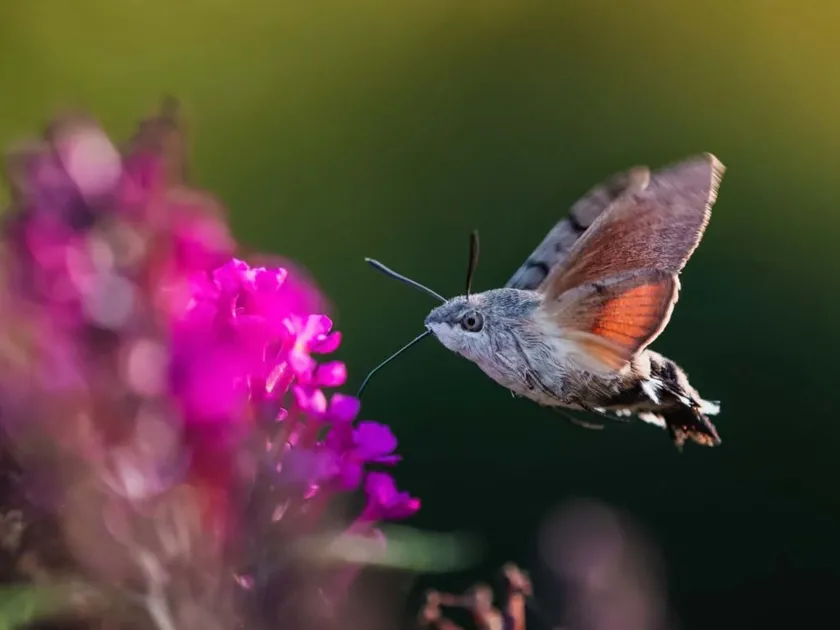
Macroglossum pyrrhostica belongs to the Sphingidae family, order Lepidoptera. These moths are well-known for their rapid, hovering flight, which makes them look like small hummingbirds while they feed on nectar.
Adult moths possess streamlined bodies and wings featuring camouflage patterns. This adaptation allows them to rest on bark or leaves during the day, remaining virtually invisible to predators.
The larvae, or caterpillars, are distinct in appearance and typically feature a horn-like projection on the posterior end. Their coloration serves as effective camouflage within the foliage of their host plants.
The life cycle encompasses four stages: egg, larva, pupa, and adult. Development is highly sensitive to ambient temperatures, which dictate the speed at which each generation reaches maturity.
Pupation occurs in the soil or among organic debris on the ground. This protective layer ensures that the insect can survive through dormancy until conditions become favorable for emergence.
What it damages
The primary damage is caused by the caterpillars, which are voracious feeders. They consume leaf tissue, potentially causing significant defoliation of host trees and shrubs.
Young nursery plants and saplings are particularly vulnerable. Heavy feeding can lead to stunted growth, reduced vigor, and an increased susceptibility to secondary infections by fungi or bacteria.
In cases of high population density, the larvae may skeletonize leaves, leaving only the primary veins. This severely impacts the plant's ability to photosynthesize and accumulate necessary nutrients.
The economic damage is particularly felt in nurseries and ornamental gardens, where the aesthetic quality and health of the vegetation are the primary concerns for maintenance.
While isolated feeding is rarely lethal to established trees, persistent infestation over multiple seasons can lead to the decline of weakened specimens, necessitating active management.
Control measures
Effective pest management begins with consistent monitoring. Regularly inspect the undersides of leaves during the spring and summer for eggs or early-instar larvae to catch infestations early.
Biological control is highly recommended. Applications of Bacillus thuringiensis sprays are effective at targeting caterpillars while sparing beneficial insects like bees and predators.
For more severe outbreaks, systemic or contact insecticides may be necessary. Always ensure these products are approved for the specific plant species and follow all safety guidelines.
Cultural practices, such as tilling or loosening the soil beneath host plants in the fall, can help disrupt the pupal stage, effectively reducing the number of adults that emerge the following year.
Promoting a healthy garden ecosystem by providing habitats for natural predators like parasitic wasps and birds is an essential long-term strategy to keep pest populations at manageable levels.
Taxonomy
- Latin name
- Macroglossum pyrrhostica
- Order
- Lepidoptera (butterflies)
- Family
- Sphingidae
- EPPO code
- MACGPY
Discussion
No discussions yet — be the first.