
Prometheus hawkmoth
Macroglossum prometheus
Description
How to identify
The Prometheus hawkmoth (Macroglossum prometheus) is a member of the Sphingidae family, known for its robust and aerodynamic body shape typical of these moths.
Adult moths are impressive fliers, often seen hovering over flowers in a manner similar to hummingbirds, which is a common trait of the Macroglossum genus.
Their wings feature muted brownish-grey patterns that provide excellent camouflage against foliage, making them difficult to spot during the resting phase.
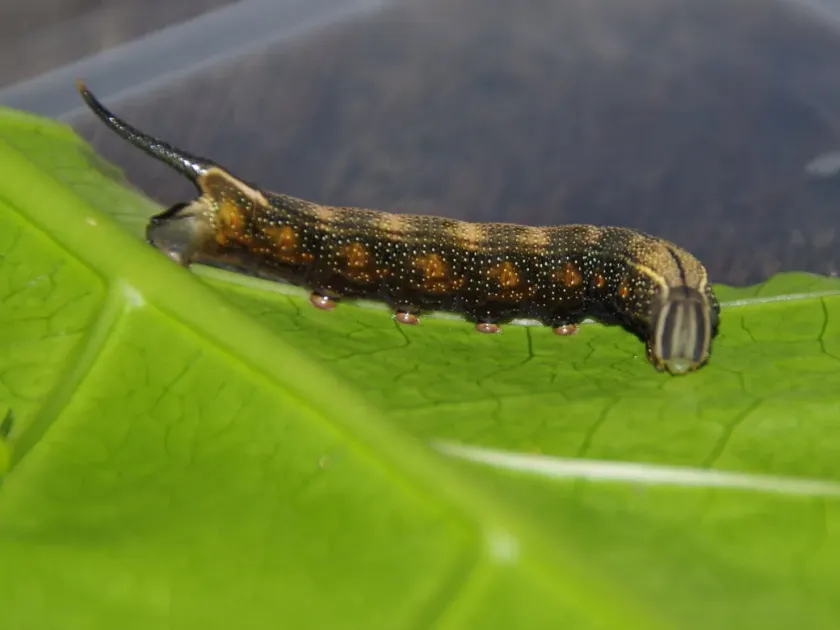
Larvae are characterized by a fleshy body and a distinctive horn-like projection on the posterior segment, which is a hallmark of the hawkmoth caterpillar.
The pupal stage occurs either underground or within a dense cocoon hidden among leaf litter, where the insect remains throughout the winter season.
What it damages
The larval stage is responsible for the damage, as these caterpillars feed voraciously on the foliage of host plants, particularly those in the Rubiaceae family.
In agricultural and garden settings, significant defoliation can occur if a population of these caterpillars reaches high densities on susceptible ornamental plants.
Feeding damage involves consuming large portions of leaf blades, which disrupts the photosynthetic capacity of the host and weakens the plant over time.
Young seedlings and ornamental shrubs are particularly vulnerable, as even limited defoliation can compromise their structure and aesthetic value.
While often considered a minor pest, high infestations can lead to stunted growth and increased susceptibility to secondary infections and opportunistic diseases.
When it appears
The flight activity of the adult moths generally occurs during the warmer months, spanning from late spring to early autumn, depending on local climate conditions.
Moths are primarily crepuscular, meaning they are most active during twilight, although some activity can be observed during the day as they visit flowers for nectar.
Caterpillar development typically peaks during mid-summer, aligning with the period of maximum vegetative growth of the host plants.
As autumn approaches, the larvae conclude their feeding phase and descend into the soil or find protected spots to prepare for the overwintering pupal stage.
Unfavorable weather patterns, such as periods of prolonged cold or excessive humidity, can significantly impact the survival rate of the moth population.
Signs of infestation
Presence of frass, or larval excrement, appearing as small pellets on the ground beneath host plants is a primary indicator of active feeding in the canopy.
Visual inspection often reveals ragged edges on leaves, which are caused by the distinct mandibles of the caterpillars during their feeding process.
Direct spotting of the caterpillars, which often rest on the undersides of leaves or along the stems, confirms their presence in the area.
The discovery of pupal cases or discarded larval skins in the soil or under debris near the base of the plant provides evidence of past infestation cycles.
Occasional sighting of adult moths hovering over floral gardens in the evening serves as a warning sign for potential egg-laying activity in the vicinity.
Control measures
Integrated pest management strategies are the most effective way to control the Prometheus hawkmoth without causing unnecessary harm to the ecosystem.
Autumn soil cultivation is a recommended practice, as it disturbs the overwintering pupae and exposes them to predators and harsh environmental conditions.
- Manual removal of caterpillars from small gardens or container plants.
- Use of biological pesticides like Bacillus thuringiensis for targeted larval control.
- Selective application of contact insecticides when populations exceed damage thresholds.
Maintaining a weed-free environment, particularly by removing alternate host plants such as various Rubiaceae species, helps reduce the local breeding population.
Always follow local guidelines and safety protocols when applying any chemical control to ensure the protection of beneficial pollinators and surrounding wildlife.
Taxonomy
- Latin name
- Macroglossum prometheus
- Order
- Lepidoptera (butterflies)
- Family
- Sphingidae
- EPPO code
- MACGPR
Discussion
No discussions yet — be the first.