
Corythus hummingbird moth
Macroglossum corythus
Description
How to identify
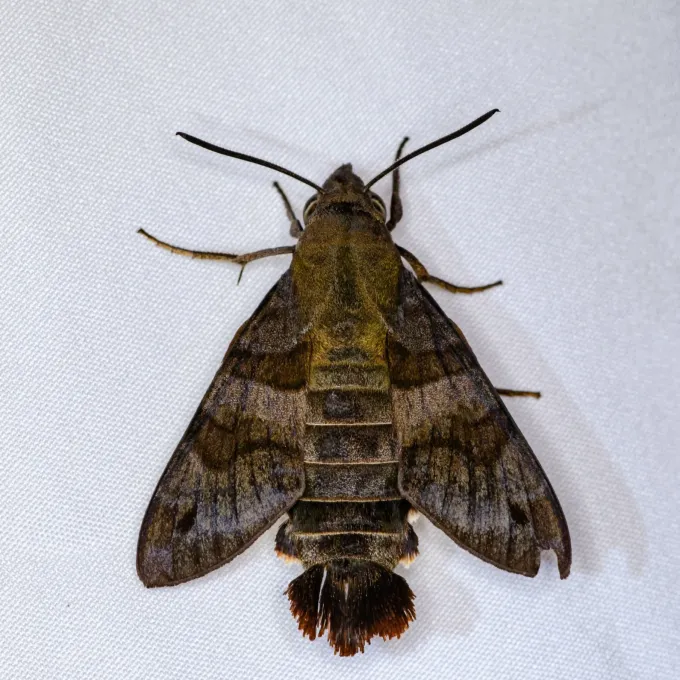
Macroglossum corythus belongs to the family Sphingidae, order Lepidoptera. Commonly known as a species of hummingbird moth, the adult moth is noted for its rapid, hovering flight pattern which allows it to feed on nectar without landing.
The adult moth typically has a wingspan ranging from 50 to 60 mm. Its wings feature intricate grey and brown patterns, providing camouflage against bark and foliage during the resting period.
The larvae, or caterpillars, undergo several instars, frequently changing colors ranging from bright green to dark brown or purple. A distinct tail horn is present, which is a diagnostic feature of many hawkmoth species.
Pupation usually occurs within the soil or ground litter. The pupa is smooth, dark brown, and robust, designed to survive through seasonal shifts in their native tropical and subtropical habitats.
These moths are primarily nocturnal or crepuscular, though they are frequently spotted during the day due to their active feeding habits, which can lead to accidental introduction into greenhouses.
What it damages
The primary damage is caused by the larval stage feeding on foliage. They are specialized defoliators, feeding heavily on species within the Rubiaceae family, including various ornamental shrubs.
High infestation levels can result in significant leaf loss, which severely hinders the plant's ability to undergo photosynthesis, leading to reduced growth rates and increased susceptibility to secondary infections.
Signs of infestation
The presence of Macroglossum corythus is often revealed by unevenly eaten leaf margins. In severe cases, the caterpillars strip the leaves entirely, leaving only the central midribs.
Frass (caterpillar droppings) found on the soil surface directly beneath infested branches is a reliable indicator of active feeding. These signs are particularly visible during the evening hours.
Control measures
Hand-picking caterpillars during the early morning or late evening is the most environmentally friendly and effective control method for home gardens and small plant collections.
Biological control using Bacillus thuringiensis (Bt) sprays can be highly effective, as it specifically targets the lepidopteran larvae while remaining safe for most beneficial insects and pollinators.
For larger infestations in commercial ornamental settings, targeted applications of systemic insecticides may be necessary, provided that environmental safety protocols are followed strictly.
Taxonomy
- Latin name
- Macroglossum corythus
- Order
- Lepidoptera (butterflies)
- Family
- Sphingidae
- EPPO code
- MACGCL
Discussion
No discussions yet — be the first.